How to Build a Fashion Design Portfolio for Admission in 2026
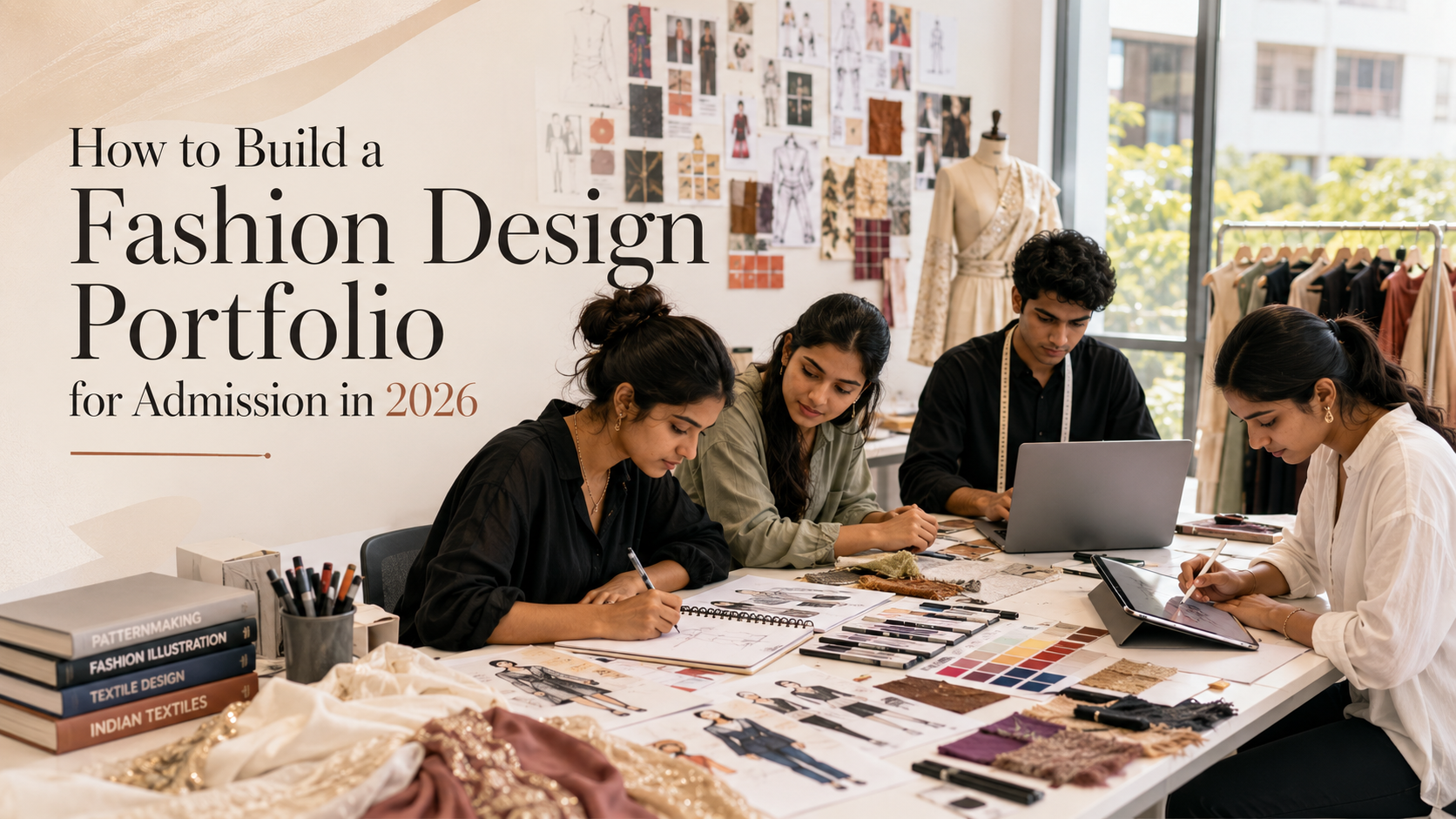
A fashion design portfolio is one of the most important parts of getting admission into a fashion design course. It shows your creativity, design thinking, drawing skills, observation, presentation style, and interest in fashion. For many students, a portfolio becomes the first strong impression before an interview or admission discussion.
In 2026, fashion design is not limited to sketches and garments only. Institutes and brands now look for students who can think creatively, understand trends, explore materials, present ideas clearly, and show originality. A good portfolio should not only look beautiful but also tell a story about your creative journey.
Many students after 10th, 12th, or graduation want to join fashion design courses but feel confused about what to include in their portfolio. Some students think they need professional-level work, while others believe only fashion illustrations are enough. The truth is that a student portfolio does not need to be perfect. It should be honest, creative, organized, and expressive.
A strong fashion design portfolio should show your ideas, process, experiments, sketches, inspirations, color understanding, fabric sense, and final designs. It should help the admission team understand how you think as a future designer.
What Is a Fashion Design Portfolio?
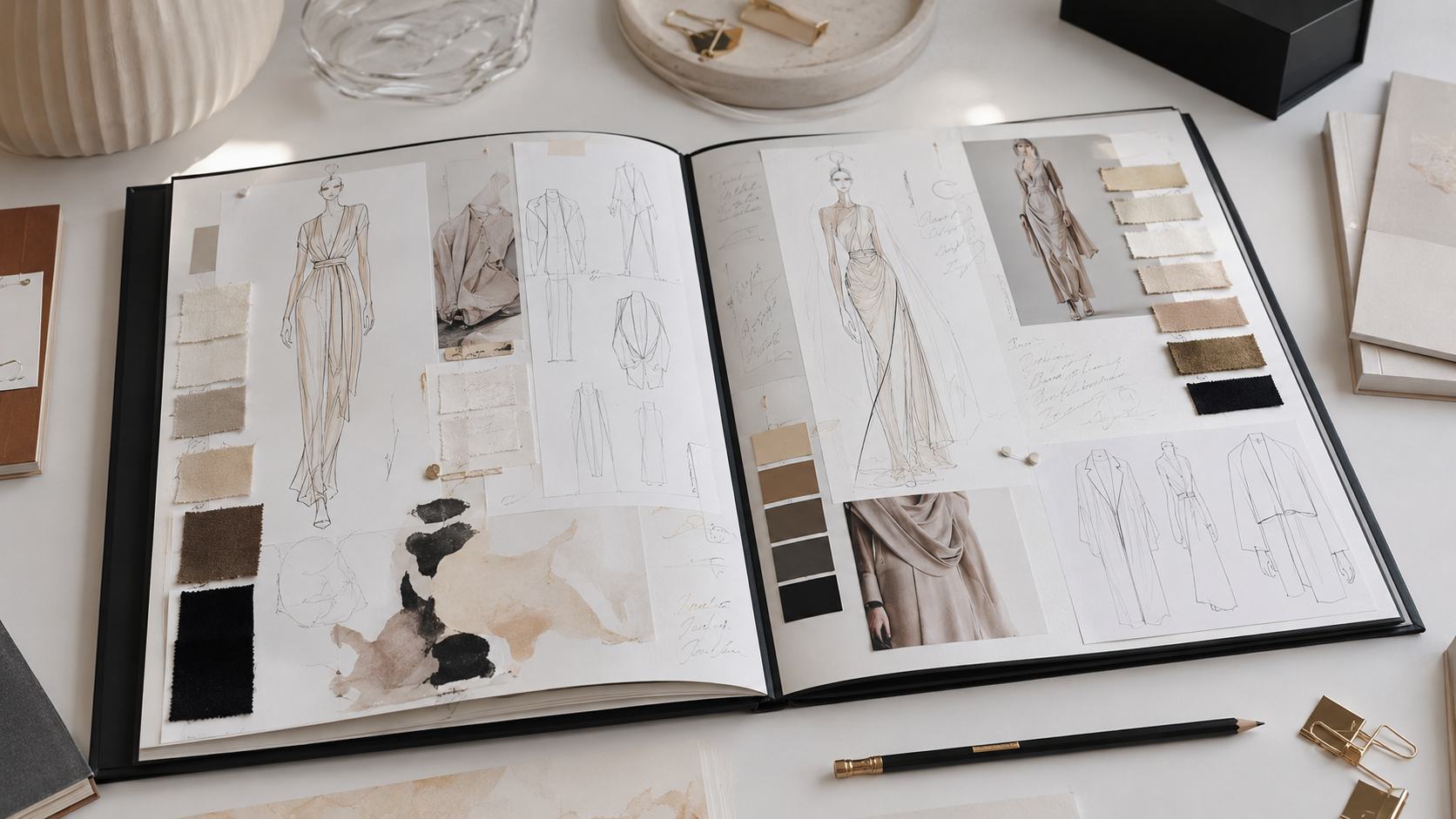
A fashion design portfolio is a collection of your creative work. It can include sketches, illustrations, moodboards, fabric experiments, garment ideas, styling concepts, photography, artwork, craft work, digital designs, and completed fashion projects.
It is like a visual resume for a fashion design student. Instead of only telling people that you are creative, your portfolio shows your creativity through your work.
A portfolio can be physical, digital, or both. A physical portfolio is usually printed or handmade in a file or folder. A digital portfolio can be created as a PDF, website, slideshow, or online presentation.
For fashion design admission, your portfolio should show your personal style and your ability to develop ideas. It should not look like random drawings placed together. It should have a proper flow, neat presentation, and clear project sections.
Why Is a Fashion Design Portfolio Important for Admission?
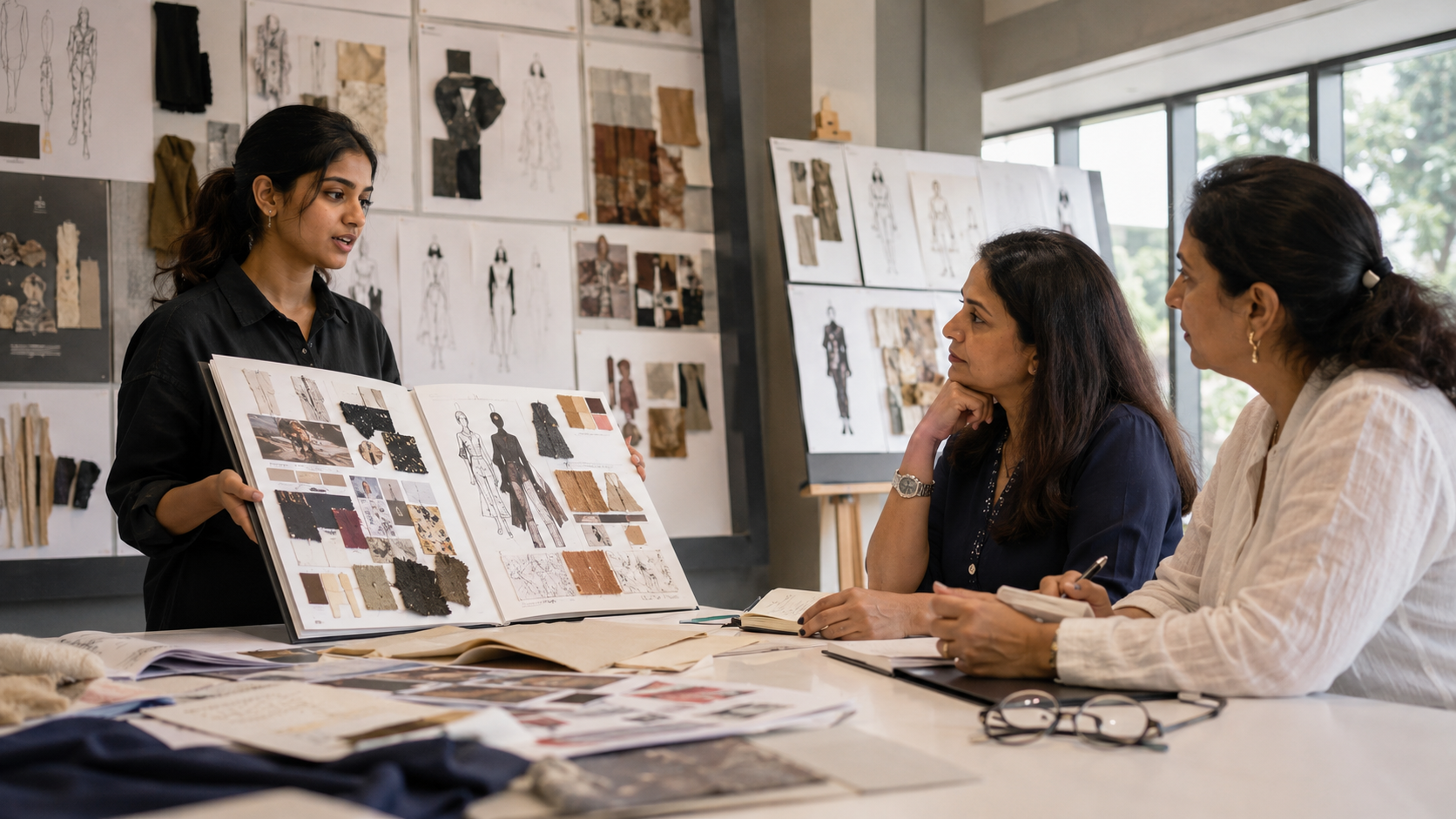
Fashion design institutes use portfolios to understand a student’s creative potential. Marks and academic background are important, but design education also needs imagination, visual thinking, and practical creativity.
A portfolio helps the institute understand your interest in fashion. It shows whether you observe colors, fabrics, silhouettes, patterns, culture, lifestyle, and trends. It also shows whether you can present ideas in a structured way.
Your portfolio can make your admission application stronger because it gives proof of your creative skills. Even if you are a beginner, a well-made portfolio can show your passion and willingness to learn.
A good portfolio also helps during interviews. When you show your work, you can explain your ideas, inspirations, and design process. This makes the discussion more interesting and personal.
What Should a Fashion Design Portfolio Include?
A fashion design portfolio should include a balanced mix of creativity, technical understanding, and personal expression. It should not be overcrowded with too many pages. Quality matters more than quantity.
For admission, your portfolio can include fashion sketches, moodboards, color palettes, fabric swatches, inspiration boards, garment concepts, illustrations, styling ideas, photography, craft work, and any creative project that shows your design ability.
The best portfolio is one that reflects your thinking process. It should show how an idea starts, how you explore it, and how it becomes a final design.
Start with a Simple Portfolio Introduction
The first page of your portfolio should introduce you as a creative student. It can include your name, course interest, and a short creative statement.
Your introduction does not need to be very long. It should simply explain who you are and why you are interested in fashion design.
For example, you can mention your interest in clothing, colors, styling, Indian textiles, fashion illustration, sustainable design, streetwear, ethnic wear, or modern fashion trends.
This introduction helps the admission team understand your personality before they see your work.
Add Fashion Illustrations
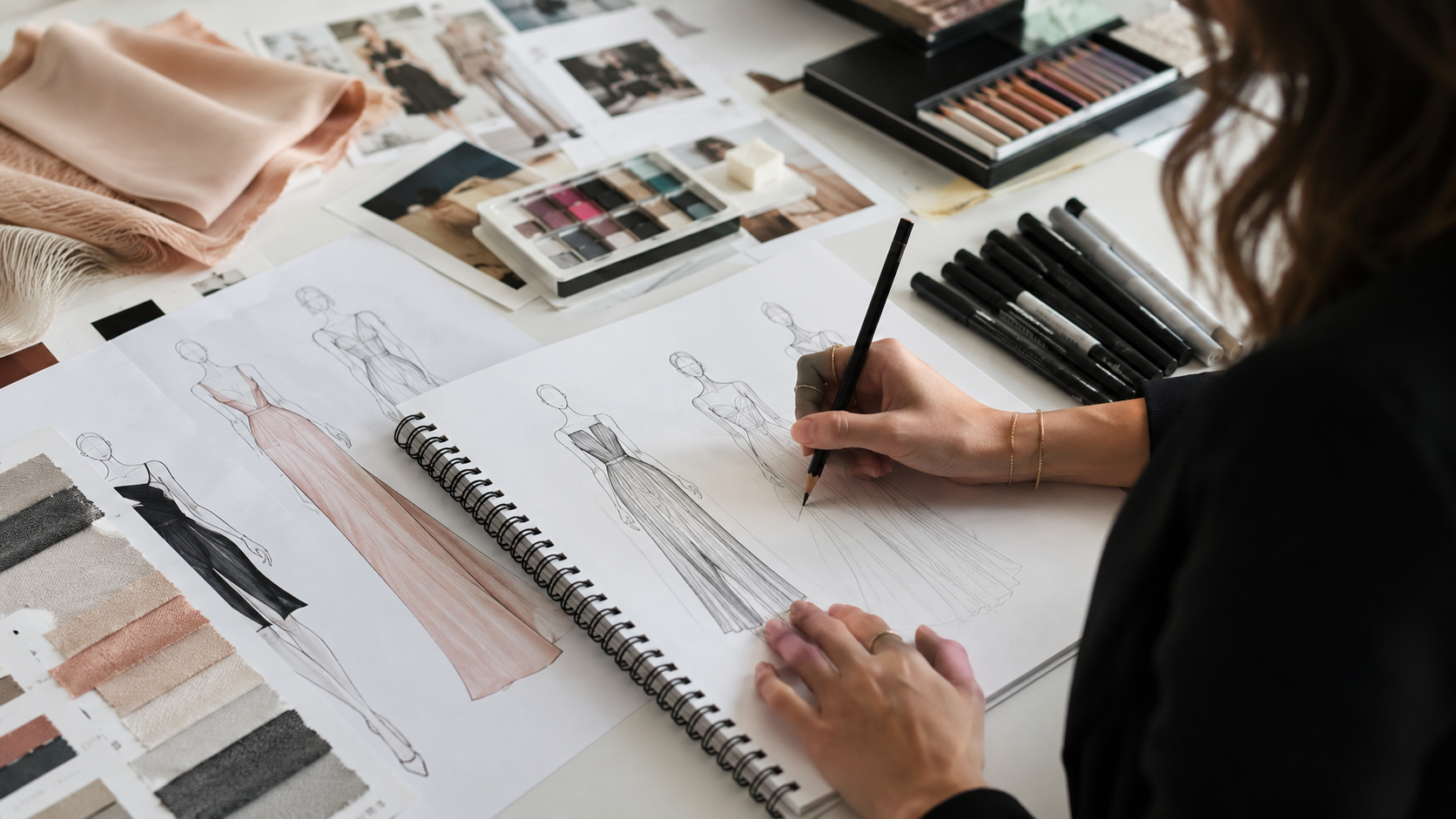
Fashion illustrations are an important part of a fashion design portfolio. They show your ability to imagine garments and present them visually.
You can include hand-drawn illustrations or digital fashion illustrations. Your sketches do not have to be perfect, but they should be neat, expressive, and original.
Try to include different types of fashion illustrations such as casual wear, party wear, ethnic wear, fusion wear, streetwear, evening wear, menswear, womenswear, or children’s wear.
While making illustrations, focus on garment details like neckline, sleeves, fabric fall, silhouettes, pleats, drapes, embroidery, buttons, pockets, and accessories.
Avoid copying complete designs from the internet. You can take inspiration from trends, but your final design should have your own creative touch.
Include Rough Sketches and Idea Development
Many students only include final drawings in their portfolio. But admission teams also like to see rough sketches and development work because it shows how you think.
Rough sketches show your design process. They explain how your ideas evolved before becoming final illustrations.
You can include small thumbnail sketches, garment variations, sleeve options, collar ideas, fabric placement, print ideas, and silhouette experiments.
This section does not need to look extremely polished. It should look creative and natural. It should show that you are exploring different possibilities.
A strong portfolio is not only about the final design. It is also about the journey from inspiration to final concept.
Create Moodboards
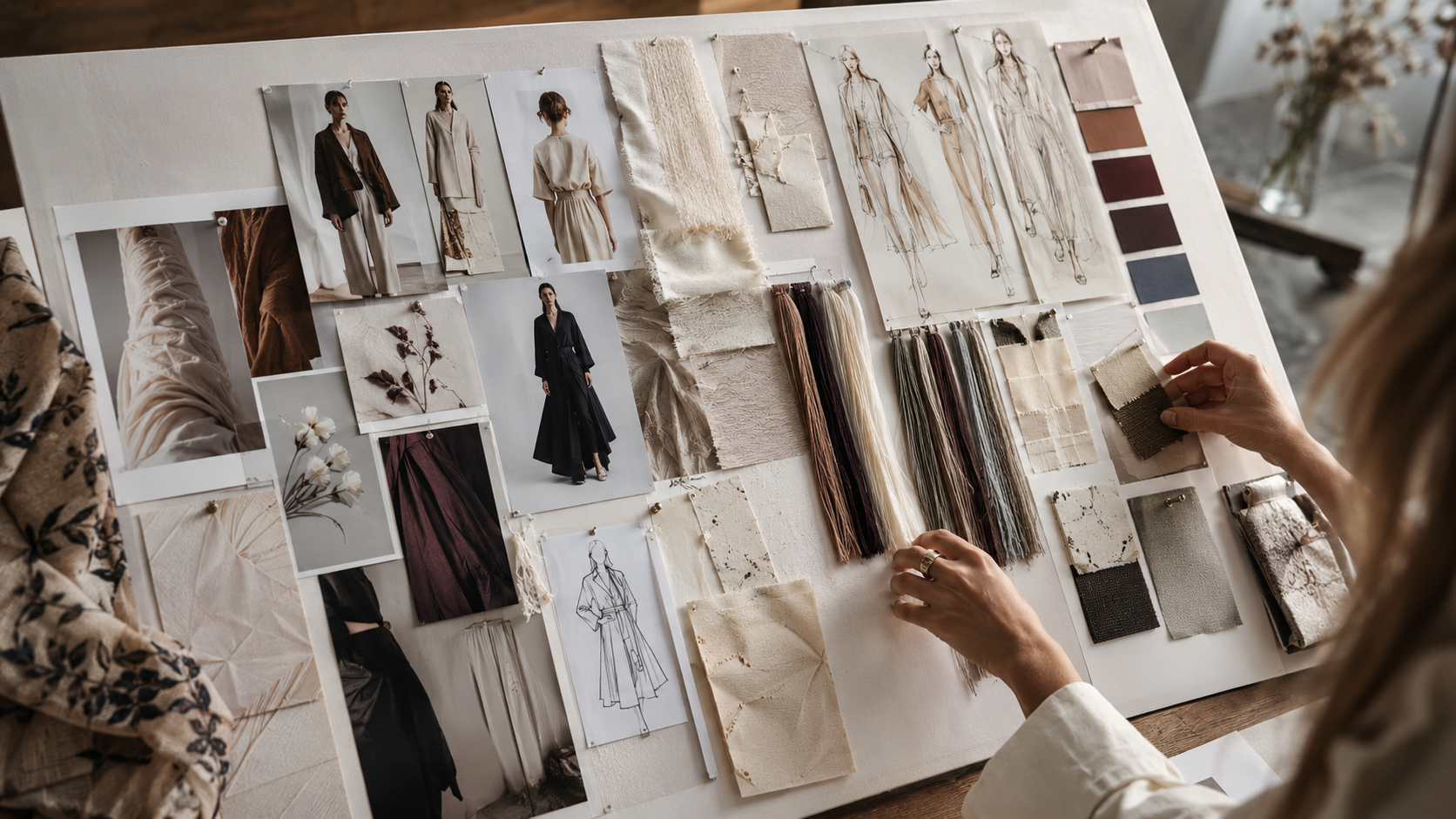
Moodboards are very important in fashion design. They help explain the inspiration and direction of a collection.
A moodboard can include images, colors, textures, patterns, architecture, nature, art, culture, films, lifestyle references, traditional crafts, or fashion inspiration.
For example, if your collection is inspired by Rajasthan, your moodboard may include desert colors, mirror work, traditional textiles, architecture, jewelry, folk art, and festive elements.
If your collection is inspired by streetwear, your moodboard may include graffiti, sneakers, urban photography, oversized silhouettes, denim textures, and bold colors.
A moodboard should have a clear theme. It should not look like random images pasted together. The images, colors, and textures should connect with your design idea.
Show Color Palettes
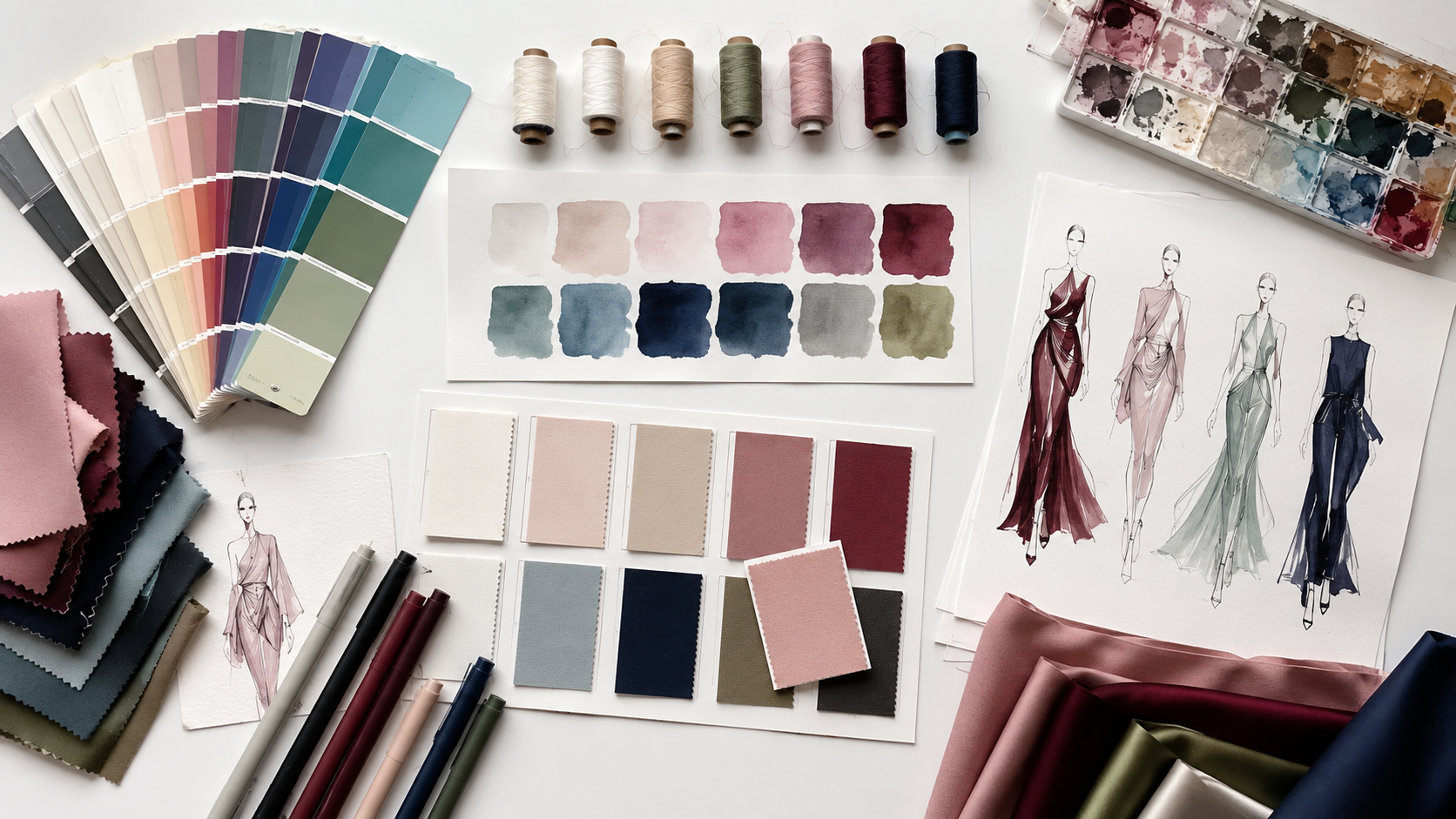
Color understanding is an important skill for fashion designers. Your portfolio should show how you use colors in your design concepts.
You can create a separate color palette for each project. A good palette usually includes main colors, supporting colors, and accent colors.
For example, a summer resort wear collection may use soft pastels, ivory, sky blue, mint green, and coral. A festive collection may use deep maroon, gold, emerald, navy, and beige.
Color palettes help show the mood of your designs. They also make your portfolio look more professional and organized.
When choosing colors, think about the season, target audience, occasion, fabric, and inspiration.
Add Fabric Swatches and Material Exploration
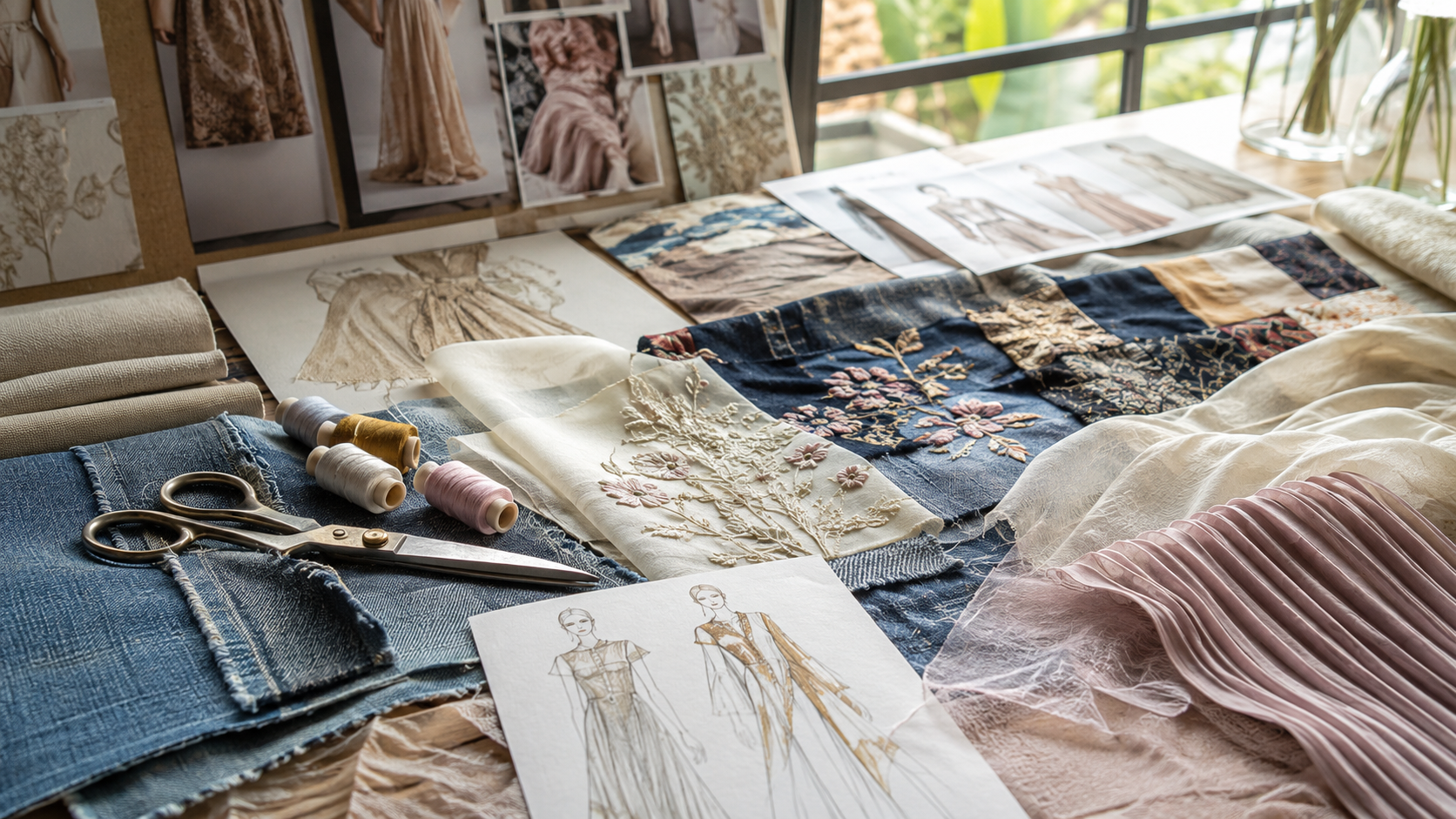
Fashion design is not only about drawing. It is also about understanding fabrics and materials.
If possible, include fabric swatches in your physical portfolio or scanned fabric textures in your digital portfolio. You can use cotton, silk, denim, linen, chiffon, georgette, organza, velvet, khadi, jute, wool, or any material related to your concept.
You can also include experiments such as tie-dye, embroidery, block printing, fabric painting, patchwork, pleating, smocking, weaving, macramé, or surface ornamentation.
This section shows that you understand texture, fabric behavior, and garment feel.
Even simple fabric experiments can make your portfolio more interesting and practical.
Include Garment Details
A good fashion design portfolio should show that you can think beyond the front view of a garment.
You can add detail sketches of collars, cuffs, sleeves, pockets, buttons, zippers, embroidery, seams, pleats, drapes, belts, and accessories.
These small details show your observation and design understanding.
For example, if you design a jacket, show close-up details of the collar, pocket, sleeve, button placement, lining, or embroidery. If you design a dress, show the neckline, sleeve design, hemline, drape, and back detail.
Garment details help make your designs look more complete and thoughtful.
Add One Mini Fashion Collection
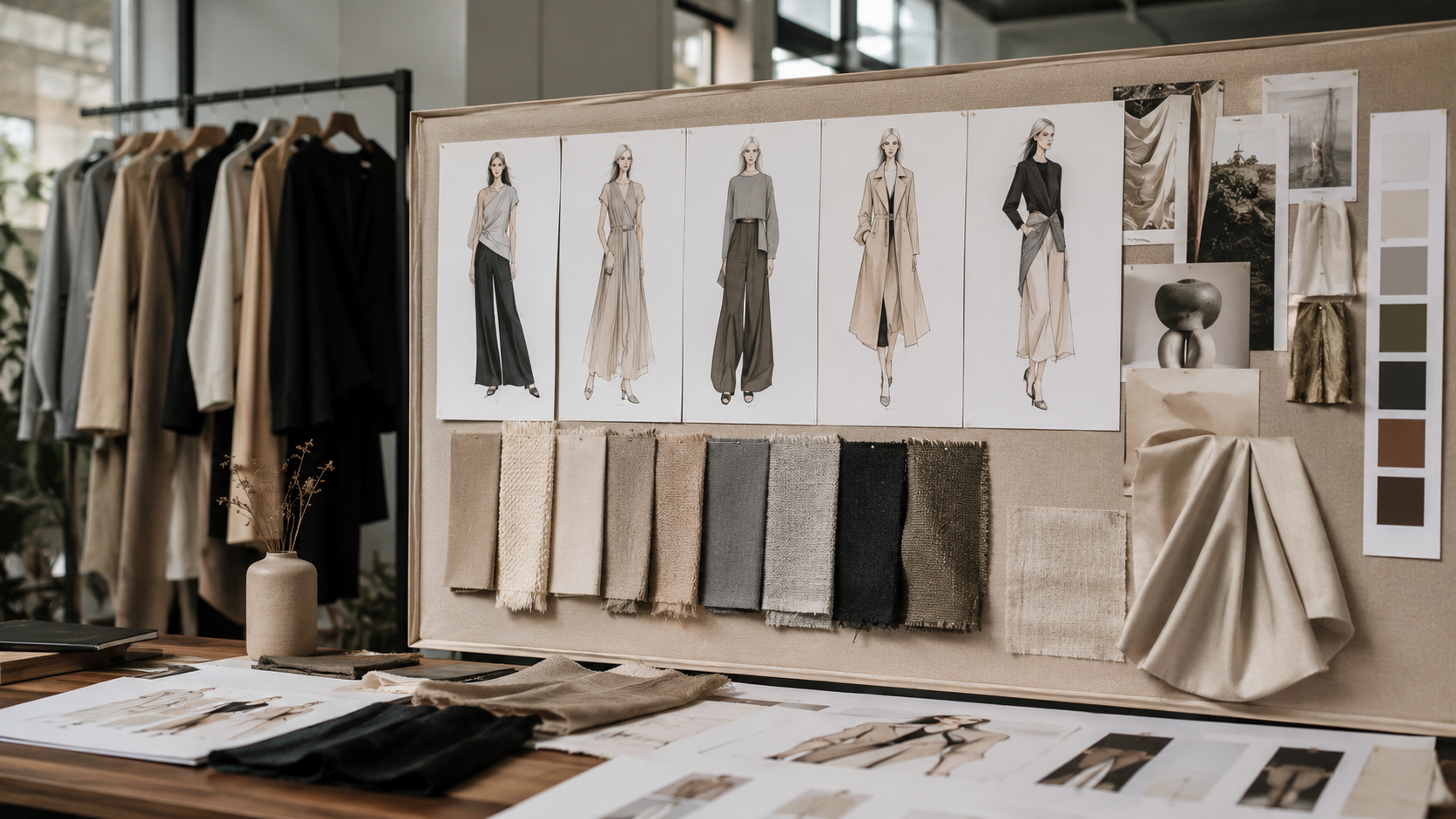
One of the best things you can include in your portfolio is a mini fashion collection.
A mini collection can have 4 to 6 looks based on one theme. It should include a moodboard, color palette, fabric ideas, rough sketches, final illustrations, and design explanation.
For example, your mini collection can be based on themes like:
Nature-inspired resort wear, sustainable streetwear, Indian festive fusion, modern office wear, denim upcycling, traditional craft revival, futuristic fashion, or minimalist summer wear.
A mini collection shows that you can think like a designer. It shows your ability to create a complete concept instead of only separate sketches.
Make sure all looks in the collection connect with each other through theme, color, fabric, silhouette, or style.
Include Styling and Photography Work
Fashion design is closely connected to styling and visual presentation. If you have styled any outfit, photoshoot, college project, or personal look, you can include it in your portfolio.
You can also include fashion photography, flat-lay styling, accessory styling, or outfit coordination.
This section is helpful because it shows your sense of fashion, composition, colors, and presentation.
If you do not have professional photos, you can use simple clean photography with natural light. Make sure the images are clear and the styling looks intentional.
Avoid adding blurry or low-quality photos because they can reduce the overall impact of your portfolio.
Add Art and Creative Work
For admission-level portfolios, you can include other creative work apart from fashion. This can include painting, drawing, craft, collage, photography, digital art, textile work, embroidery, handmade accessories, or DIY projects.
Fashion institutes like to see creativity in different forms. Your art and craft work can show your imagination, patience, hand skills, and visual sense.
However, do not fill the entire portfolio with unrelated artwork. Keep it limited and connect it with your design interest wherever possible.
For example, if you have made a painting inspired by flowers, you can also show how that painting inspired a print design or garment concept.
Show Digital Design Skills
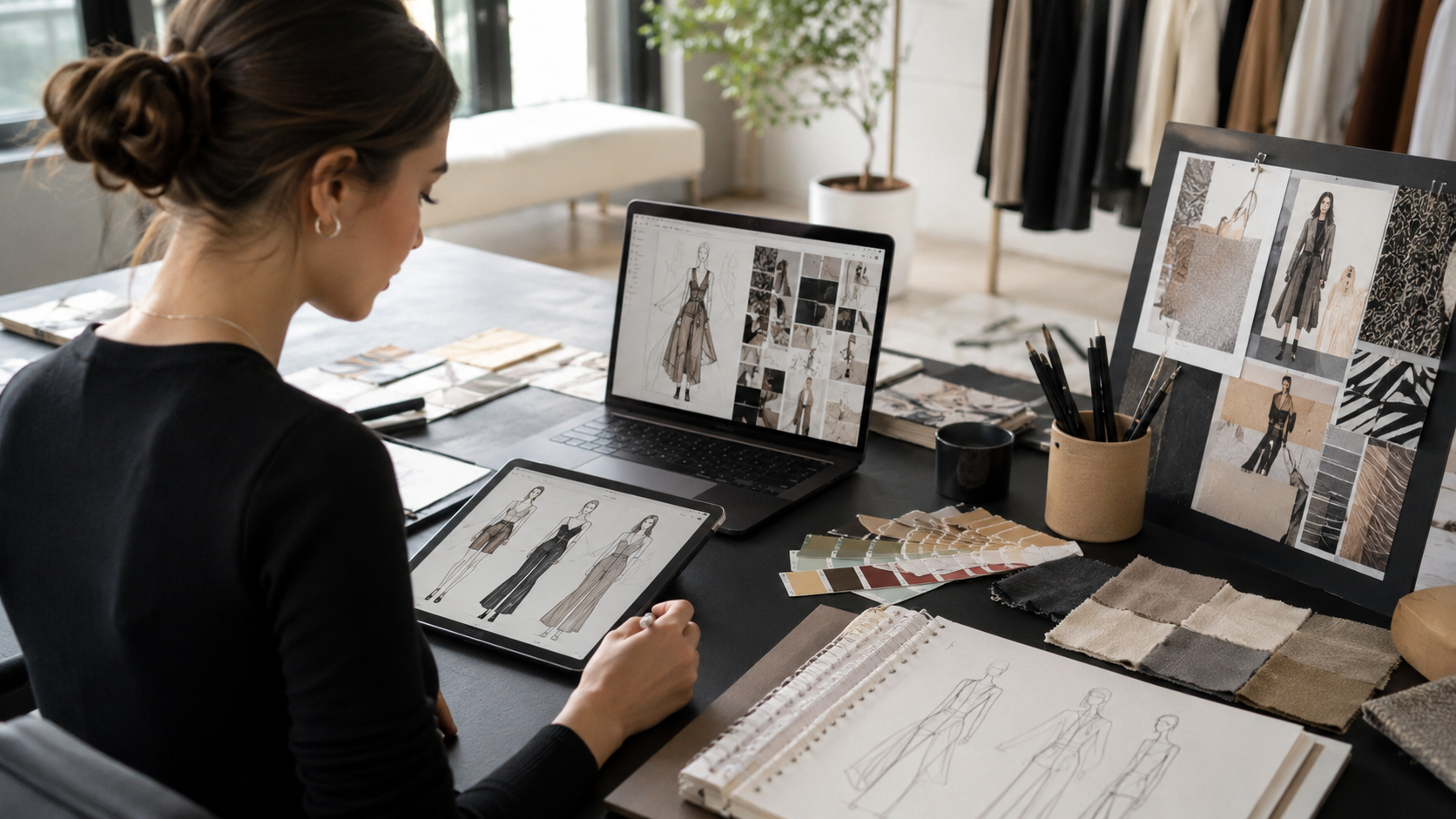
In 2026, digital presentation is becoming very important in fashion design. Students who can use digital tools have an added advantage.
You can include digital sketches, digital moodboards, Canva layouts, Photoshop work, Illustrator designs, Procreate illustrations, or simple digital presentations.
Even if you are a beginner, showing basic digital presentation skills can make your portfolio look modern and professional.
Digital work also helps if you are submitting your portfolio online.
Make sure your digital pages are neat, readable, and not overloaded with too many elements.
Keep the Portfolio Organized
A portfolio should have a clear structure. It should not feel confusing or random.
You can arrange your portfolio in this order:
Start with your introduction, then add your best fashion illustrations, rough sketches, moodboards, color palettes, fabric swatches, mini collection, styling work, creative artwork, digital designs, and final project pages.
Your strongest work should appear in the first few pages. This creates a good first impression.
Keep similar work together. Do not mix unrelated sketches, photos, and fabric samples without explanation.
Each section should feel connected and easy to understand.
Focus on Quality, Not Quantity
A common mistake students make is adding too many pages. A long portfolio is not always better.
For admission, a portfolio with 15 to 25 strong pages is usually enough. It should show variety but not feel repetitive.
Do not add every drawing you have ever made. Select your best work. Remove weak, unfinished, copied, or messy pages.
A clean and focused portfolio looks more professional than a large portfolio with average work.
Every page should add some value. If a page does not show your skill, idea, or creativity, it is better to leave it out.
Make Your Portfolio Original
Originality is very important in fashion design. Admission teams can often identify copied work.
It is okay to take inspiration from fashion magazines, Pinterest, Instagram, runway collections, nature, culture, films, and designers. But copying exact outfits, poses, illustrations, or designs should be avoided.
Your portfolio should show your own thinking. Even if your drawing skills are not perfect, original ideas are more valuable than copied polished work.
Try to add your own interpretation to every design. Change the silhouette, color, fabric, styling, detail, or theme to make it personal.
Explain Your Design Ideas Clearly
A portfolio should be visual, but short explanations can make it stronger.
For each project, you can write 2 to 4 lines explaining the theme, inspiration, target audience, fabric choice, and design idea.
For example, if your collection is inspired by Indian handloom, mention why you chose the theme, what colors you used, and what type of customer the collection is designed for.
Do not write long paragraphs on every page. Keep your explanation short and clear.
Good writing helps the viewer understand your concept quickly.
Use a Clean Layout
Presentation matters a lot in a fashion design portfolio. Even good work can look weak if the layout is messy.
Use clean backgrounds, proper spacing, readable headings, and balanced page design. Avoid too many fonts, colors, stickers, or decorative borders.
Your portfolio should look creative but not overcrowded.
If you are making a digital portfolio, use a consistent page size and layout style. If you are making a physical portfolio, use good-quality paper and neat pasting.
The goal is to make your work look professional and easy to view.
Physical Portfolio vs Digital Portfolio
Both physical and digital portfolios are useful. Many institutes may ask for a digital submission first and then a physical or printed portfolio during the interview.
A physical portfolio is useful because it allows you to show fabric swatches, handmade work, embroidery, and texture samples. It feels more personal and practical.
A digital portfolio is useful because it can be shared easily through email, online forms, or admission portals. It also looks clean and modern when designed well.
Students should ideally prepare both. You can create the work physically, scan or photograph it properly, and then make a digital PDF version.
How to Prepare a Digital Fashion Portfolio
A digital fashion portfolio should be clean, lightweight, and easy to open.
Save your portfolio as a PDF. Keep the file size manageable so it can be uploaded or emailed easily.
Use high-quality images of your sketches and projects. Make sure the images are not blurry, dark, tilted, or poorly cropped.
Use a simple layout with headings and short descriptions. Keep page numbers if the portfolio is long.
Avoid using too many animations, heavy graphics, or unnecessary decoration.
A good digital portfolio should look professional on both laptop and mobile screens.
Common Mistakes to Avoid in a Fashion Design Portfolio
Many students make small mistakes that reduce the quality of their portfolio.
One common mistake is copying designs directly from the internet. This makes the portfolio look less original.
Another mistake is adding too many unrelated artworks without structure. A fashion portfolio should mainly focus on fashion, textiles, styling, and design thinking.
Poor photography is also a common issue. If your sketches or projects are not photographed clearly, they may not look impressive.
Messy layouts, spelling errors, weak page order, too many fonts, and overcrowded pages should also be avoided.
Students should also avoid adding only final illustrations. A strong portfolio should include process work, moodboards, rough sketches, colors, and fabric exploration.
How to Make Your Portfolio Stand Out
To make your fashion design portfolio stand out, focus on storytelling. Every project should have a clear idea behind it.
Choose themes that are meaningful to you. You can take inspiration from Indian textiles, local culture, architecture, nature, street fashion, sustainability, music, films, travel, or personal experiences.
Try to show your personal style. Some students may like bold colors, while others may prefer minimal design. Some may be interested in ethnic fashion, while others may like streetwear or luxury fashion.
Your portfolio should reflect your creative identity.
Also, show variety. Include sketches, fabric work, styling, digital layouts, and one complete collection. This shows that you are open to learning different parts of fashion design.
Portfolio Ideas for Fashion Design Admission
If you are confused about what projects to create, you can start with simple themes.
You can create a collection inspired by Indian festivals, modern bridal wear, sustainable fashion, college street style, office wear for young professionals, resort wear, denim upcycling, nature-inspired prints, monochrome fashion, or traditional craft with a modern twist.
You can also create a styling project where you show how one garment can be styled in multiple ways.
Another idea is to create a fabric surface design project using embroidery, hand painting, block print inspiration, tie-dye, or patchwork.
You can also create a mini brand concept with logo style, target customer, collection theme, color palette, and product range. However, keep the focus on fashion design and presentation.
What Admission Teams Look for in a Portfolio
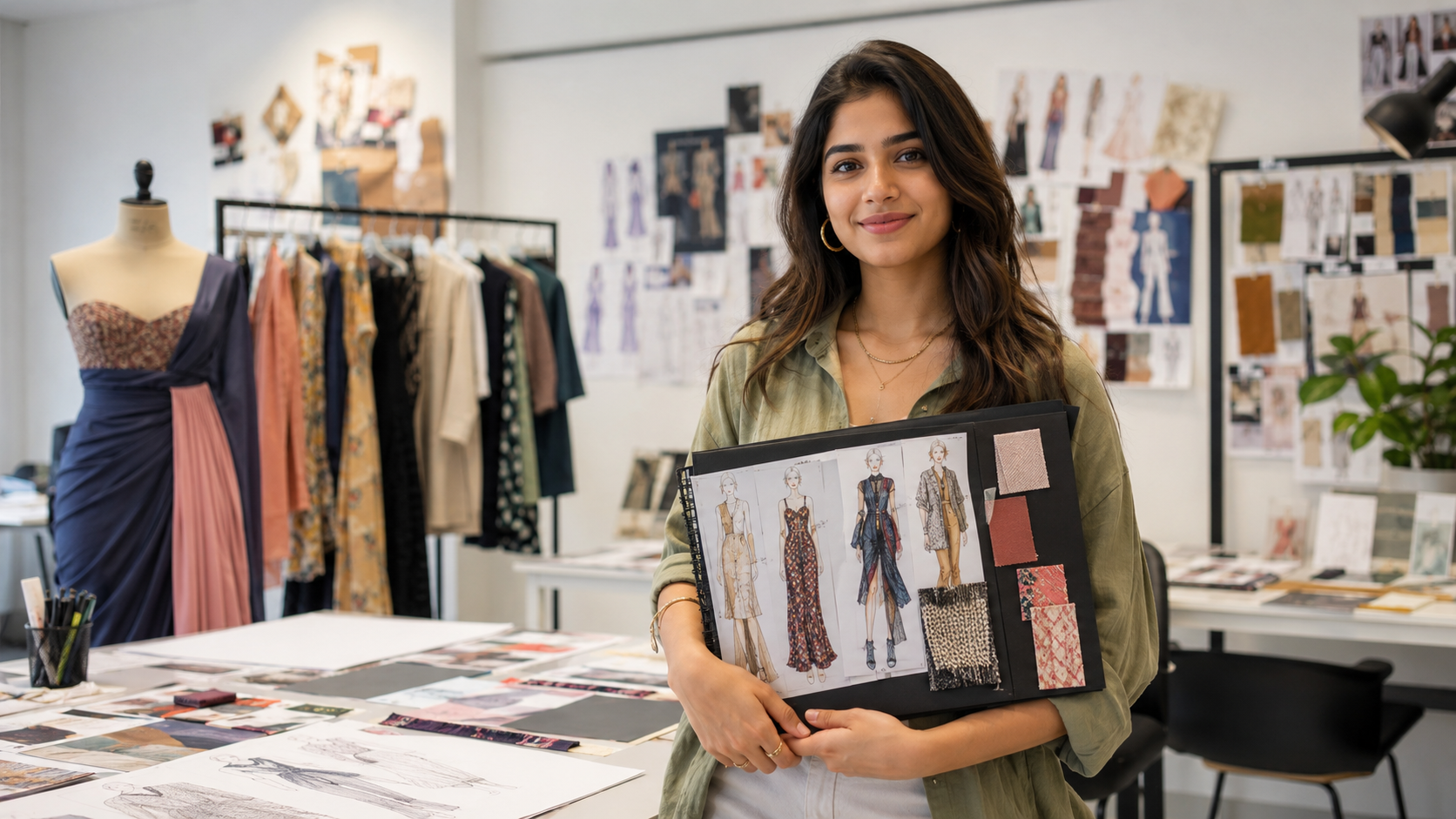
Admission teams do not expect beginners to have perfect professional work. They mainly look for potential.
They want to see creativity, originality, observation, effort, design thinking, presentation skills, and interest in fashion.
They also look for whether you can explain your work. During an interview, you may be asked why you chose a theme, what inspired your design, what fabric you imagined, and who the outfit is designed for.
A student who can explain their ideas clearly often creates a better impression.
Your portfolio should show that you are serious about learning fashion design and ready to explore new creative possibilities.
Conclusion
A fashion design portfolio is more than a collection of drawings. It is a visual story of your creativity, ideas, inspiration, skills, and design thinking. For admission in 2026, students should create a portfolio that is original, well-organized, and expressive.
A strong portfolio should include fashion illustrations, rough sketches, moodboards, color palettes, fabric swatches, garment details, styling work, creative projects, and at least one mini fashion collection. It should show both your final work and your creative process.
Students should focus on quality instead of quantity. Clean presentation, original ideas, clear explanations, and thoughtful page arrangement can make your portfolio more impressive.
Whether you are applying after 12th or planning to enter the fashion industry after graduation, a good portfolio can help you present your passion and potential with confidence. If you are creative, curious, and serious about fashion design, your portfolio can become the first step toward building a successful career in the fashion world.