Exhibition and Set Design: How Designers Create Immersive Experiences
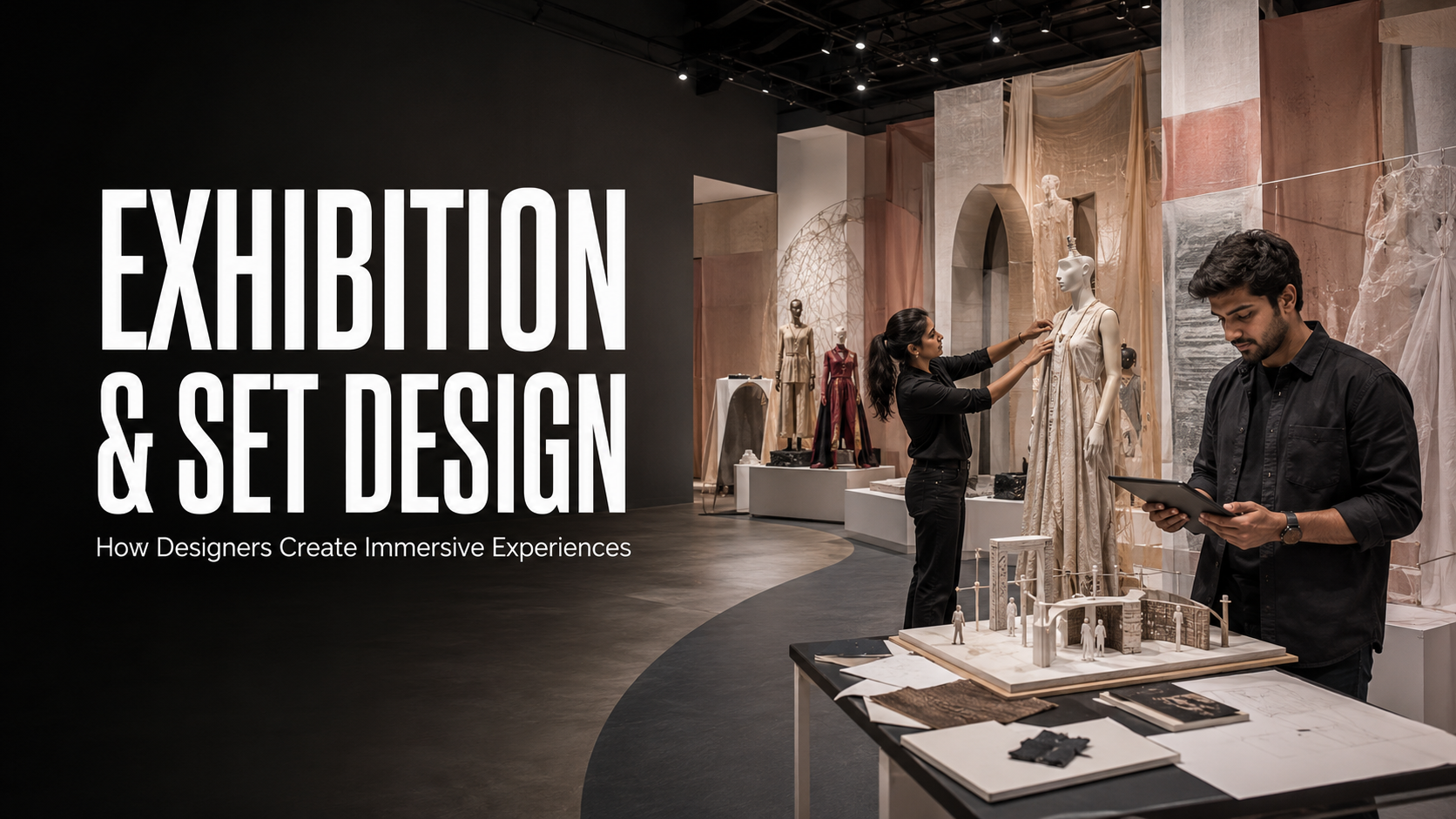
A memorable exhibition, fashion show or product launch is more than a collection of objects placed inside a room.
Every surface, pathway, light source, graphic panel, sound and display element contributes to the way visitors understand and experience the story.
This process is known as exhibition and set design.
Exhibition and set designers transform ideas into physical environments. They decide what visitors see first, how they move through a space, where they pause and how the atmosphere changes from one area to another.
Their work can be seen in museums, fashion exhibitions, trade shows, theatre productions, film sets, retail installations, cultural events, product launches and live performances.
The field brings together several design disciplines, including:
- Interior and spatial design
- Graphic communication
- Fashion communication
- Lighting design
- Visual merchandising
- Architecture
- Storytelling
- Model making
- Digital media
- Event production
For design students, exhibition and set design provides an opportunity to create experiences instead of designing only individual objects or graphics.
Leher School of Design’s Fashion Communication curriculum connects this field with visual merchandising, store design, set design, exhibition design, display development and fashion-event production.
What Is Exhibition Design?
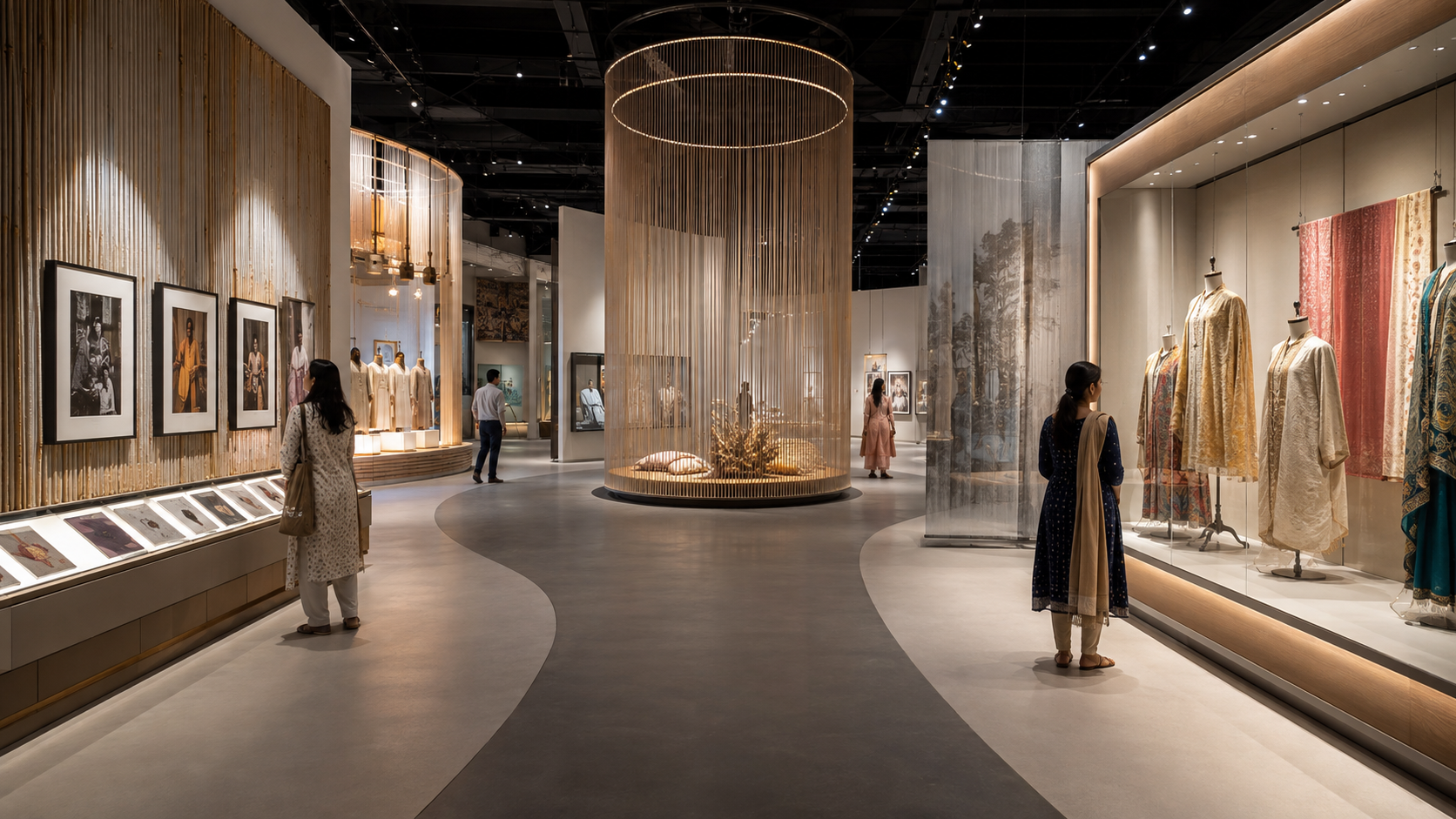
Exhibition design is the planning and creation of spaces where information, objects, products or stories are presented to an audience.
An exhibition may be created for:
- A museum
- An art gallery
- A fashion collection
- A trade fair
- A cultural institution
- A college showcase
- A brand launch
- A retail pop-up
- A historical display
- A public-awareness campaign
The exhibition designer organises the complete visitor experience.
This includes deciding:
- What information should be presented
- Which objects should receive greater importance
- How visitors will enter and move
- How displays will be grouped
- Where text and graphics will appear
- How lighting will support the content
- Which materials will be used
- How digital media will be integrated
- How the space will remain accessible and safe
An exhibition should not feel like a room filled with unrelated objects.
It should have a clear structure and a carefully planned sequence. Visitors should be able to understand where the experience begins, what the main story is and how different sections are connected.
What Is Set Design?
Set design is the creation of physical or digital environments for performances, films, television, photography, fashion shows and live events.
A set designer interprets a story, script, concept or campaign and develops a visual environment that supports it.
Set design may be required for:
- Theatre productions
- Films
- Television programmes
- Fashion-show runways
- Advertising campaigns
- Music videos
- Product photography
- Window installations
- Concert stages
- Award ceremonies
- Digital productions
Professional set and exhibit designers may work as scenic designers, projection designers, installation designers, display coordinators or exhibit designers. Their responsibilities can include interpreting scripts or briefs, developing concepts, planning layouts and creating environments for film, theatre and exhibitions.
A successful set does not only create an attractive background.
It helps communicate:
- Time
- Location
- Mood
- Character
- Brand personality
- Cultural context
- Narrative tension
- Scale
- Movement
For example, a fashion-show set may communicate minimalism through an open monochromatic runway. Another set may use dramatic structures, changing light and layered materials to present an experimental collection.
Exhibition Design and Set Design: What Is the Difference?
Exhibition and set design share many creative and technical principles, but their purposes are slightly different.
Exhibition Design
Exhibition design is generally focused on presenting information, products, artworks or objects to visitors.
The audience usually moves through the space and decides how long to spend in each area.
The exhibition designer therefore considers:
- Visitor circulation
- Information hierarchy
- Display systems
- Accessibility
- Object protection
- Wayfinding
- Reading distance
- Dwell time
Set Design
Set design is usually connected to a performance, production, photoshoot or event.
The audience may remain in one place while performers, models, cameras or objects move within the designed environment.
The set designer considers:
- Camera angles
- Performer movement
- Stage visibility
- Scene changes
- Lighting positions
- Production timing
- Safety
- Construction
- Audience viewpoints
Despite these differences, both fields use space, composition, materials, lighting and storytelling to create an intended experience.
Why Are Exhibition and Set Design Important?
Modern audiences are surrounded by visual content.
A physical experience must do more than present information that could have been viewed on a screen. It should give people a reason to enter, explore and remember the environment.
Exhibition and set design can help:
- Make complex ideas easier to understand
- Create emotional connections
- Establish a strong visual identity
- Guide attention
- Support brand storytelling
- Improve visitor movement
- Encourage interaction
- Create memorable photographs and videos
- Connect physical and digital media
- Communicate culture and history
Industry organisations continue to emphasise that immersive exhibition design should be meaningful, inclusive and connected to the visitor’s experience rather than simply adding technology for visual effect.
Where Is Exhibition and Set Design Used?
The field is broader than museums and theatre.
Designers can work across many creative and commercial environments.
Fashion Exhibitions
Fashion exhibitions may present:
- Historical garments
- Designer archives
- Textile traditions
- Student collections
- Costume development
- Craft techniques
- Fashion photography
- Brand history
Garments require careful presentation because they may contain delicate fabrics, detailed surfaces and three-dimensional forms.
The designer must decide:
- Whether garments will be shown on mannequins
- How much space each garment requires
- What type of lighting is appropriate
- How visitors will see front, side and back details
- How sketches, films and fabric samples will support the display
- How the collection story will unfold
A fashion exhibition should allow garments to remain the main focus while providing enough context to help visitors understand them.
Fashion-Show Set Design
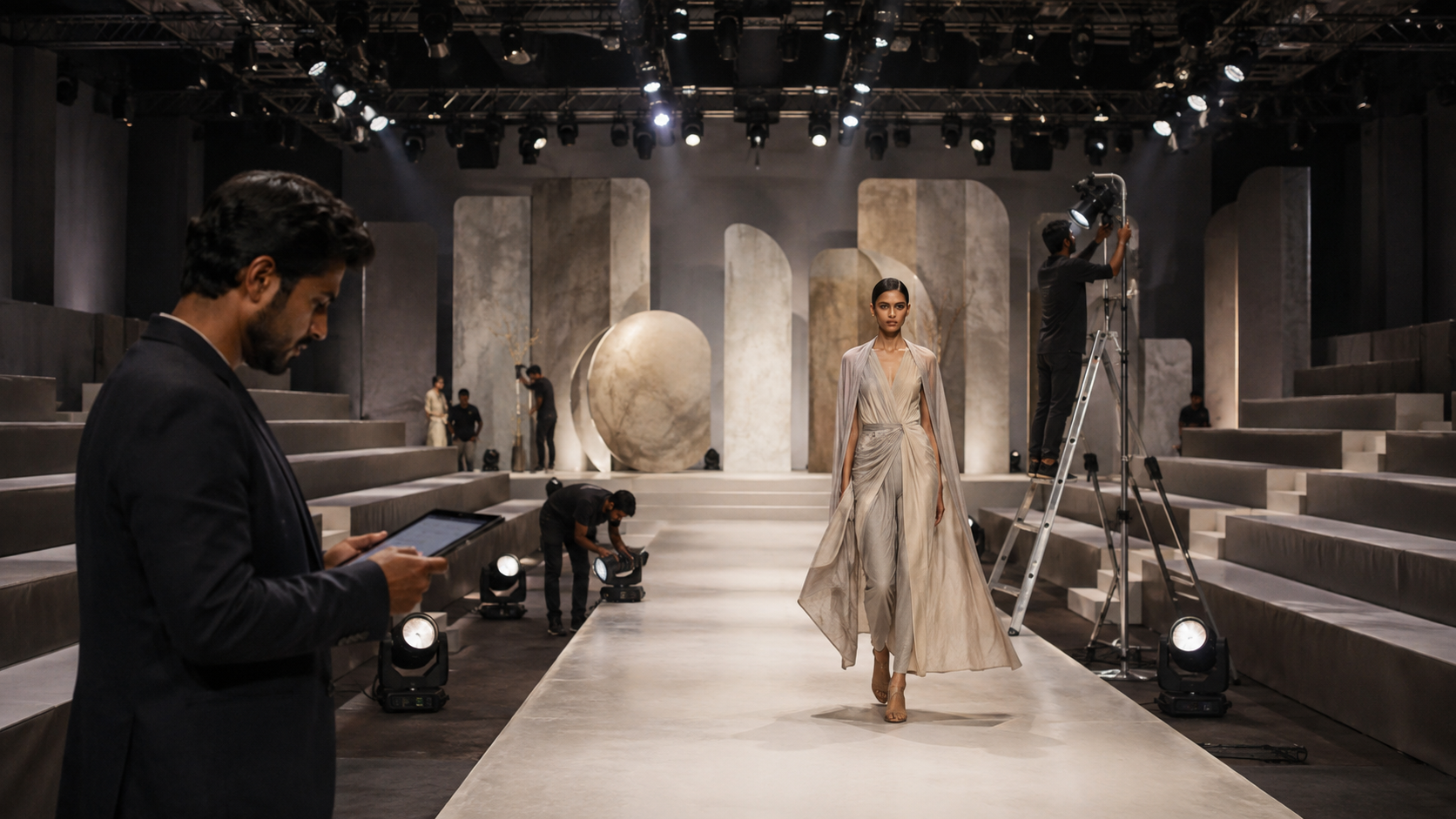
A fashion-show set establishes the world in which a collection is presented.
It may include:
- Runway shape
- Audience seating
- Entrance and exit points
- Background structures
- Lighting
- Projection
- Music
- Props
- Screens
- Floor materials
The set should support the garments rather than compete with them.
A highly detailed collection may require a simple set. A minimal collection may allow more experimental staging.
The designer must also consider model movement, visibility, backstage circulation, photography and live-video coverage.
Museum and Cultural Exhibitions
Museum exhibitions combine objects, information and interpretation.
Designers may work with:
- Curators
- Historians
- Researchers
- Conservators
- Graphic designers
- Lighting specialists
- Digital-media teams
The environment should help visitors understand why the objects matter.
This can be achieved through:
- Chronological storytelling
- Thematic zones
- Maps
- Timelines
- Reconstructions
- Audio
- Interactive displays
- Material samples
- Immersive scenes
Cultural exhibition design requires careful research. Decorative elements should not oversimplify, misrepresent or commercialise the subject.
Trade Shows and Brand Exhibitions
Brands use exhibition spaces to introduce products, communicate services and meet potential customers.
A trade-show stand may include:
- Product displays
- Demonstration zones
- Meeting areas
- Digital presentations
- Storage
- Seating
- Brand graphics
- Interactive elements
The challenge is to attract attention within a crowded environment while remaining clear and functional.
Visitors should quickly understand:
- What the brand offers
- Which product is most important
- Where to obtain information
- How to interact with the display
Theatre and Performance Sets
Theatre set design supports live storytelling.
A set may be realistic, symbolic, abstract or transformable.
The designer must consider:
- Script
- Time period
- Location
- Character movement
- Scene changes
- Audience sightlines
- Lighting
- Sound
- Stage size
- Construction limits
Because the performance happens live, sets must be stable, safe and practical.
Even a visually impressive design can fail if actors cannot move comfortably or scene changes take too long.
Film, Television and Advertising Sets
Camera-based sets require attention to framing and technical production.
Designers consider:
- Camera positions
- Lens perspective
- Background depth
- Surface reflections
- Lighting equipment
- Continuity
- Sound recording
- Product visibility
Some areas of a set may look incomplete when viewed directly but appear convincing through the camera.
The designer therefore works closely with the director, cinematographer, photographer and production team.
Pop-Up and Retail Installations
Temporary installations allow brands to create short-term experiences inside malls, streets, events or existing stores.
They may be created for:
- Product launches
- Collaborations
- Seasonal campaigns
- Fashion collections
- Interactive experiences
- Community events
Pop-up installations must communicate quickly because visitors may encounter them for only a few moments.
They often use modular structures that can be assembled, transported and removed efficiently.
Important Elements of Exhibition and Set Design
A successful environment is built through several connected design elements.
1. Concept and Narrative
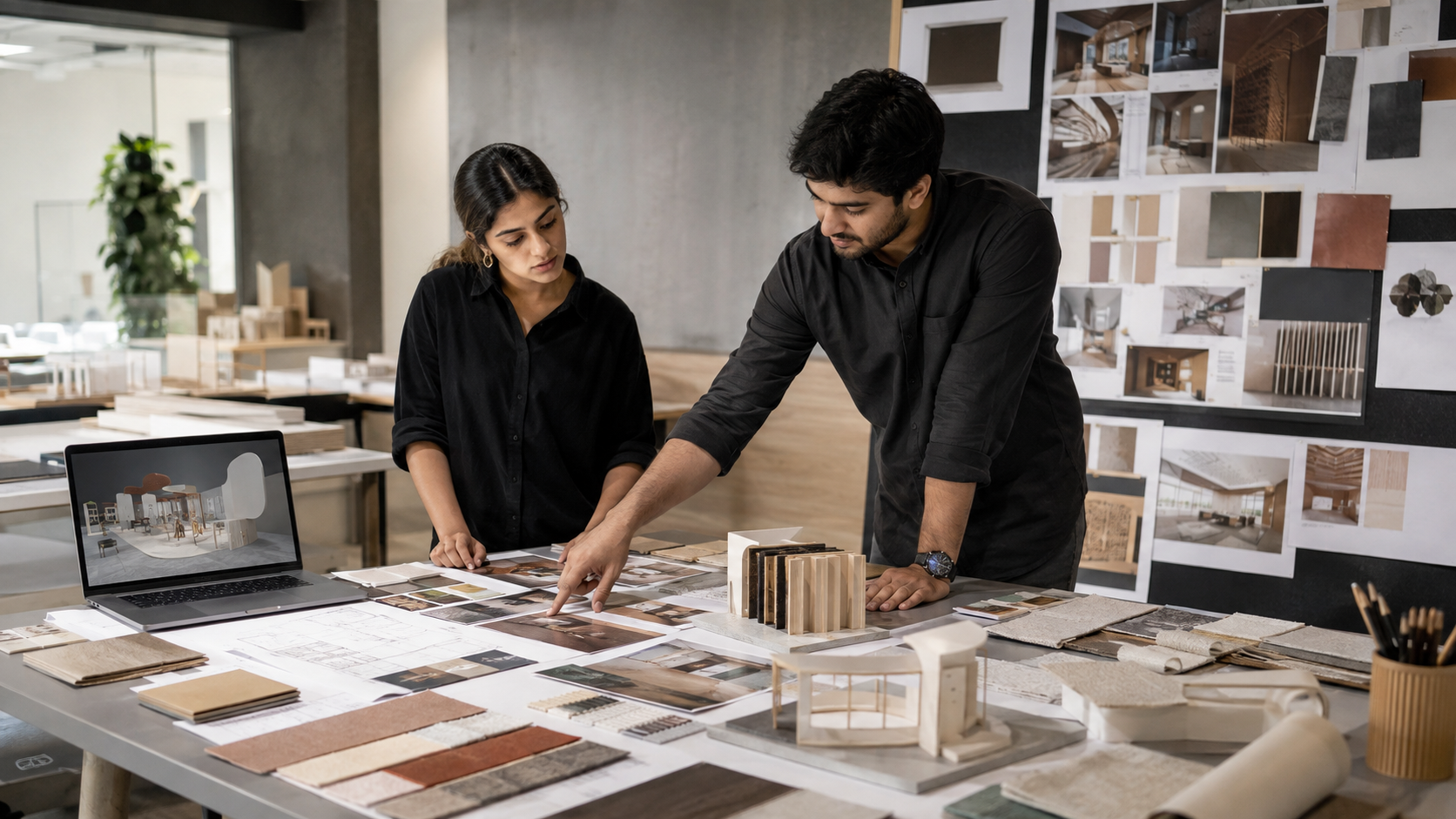
Every project should begin with a clear concept.
The concept explains the main idea or emotion behind the experience.
It may be based on:
- A historical period
- A cultural movement
- A designer’s collection
- A fictional story
- A material
- A social issue
- A brand value
- A natural environment
The concept should guide every later decision.
If the main idea is unclear, the designer may select attractive colours, props and materials that do not work together.
A strong concept can usually be explained in one or two clear sentences.
2. Spatial Planning
Spatial planning determines how the environment is organised.
The designer considers:
- Entrance
- Exit
- Main pathway
- Display zones
- Performance areas
- Seating
- Interactive points
- Storage
- Technical areas
- Emergency access
Visitors should be able to move without confusion or unnecessary congestion.
The designer may create:
- Linear journeys
- Circular journeys
- Open exploration
- Central focal spaces
- Multiple thematic zones
The chosen layout should support the story.
A historical exhibition may follow chronological order, while a conceptual fashion installation may allow visitors to explore freely.
3. Visual Hierarchy
Visual hierarchy helps visitors understand where to look first.
It can be created through:
- Scale
- Position
- Contrast
- Lighting
- Colour
- Movement
- Spacing
- Sound
The most important object or message should receive the strongest emphasis.
When every element is large, bright and highly decorated, the visitor may not know what deserves attention.
4. Display Systems
Display systems support and present objects.
They may include:
- Plinths
- Cases
- Shelves
- Frames
- Mannequins
- Hanging systems
- Platforms
- Wall panels
- Digital screens
- Suspended structures
The system should suit the size, weight, material and importance of the displayed object.
A fashion garment may require a custom mannequin. A small accessory may require a secure case. A large installation may need structural support.
Display systems should be visually consistent without making every object appear identical.
5. Lighting
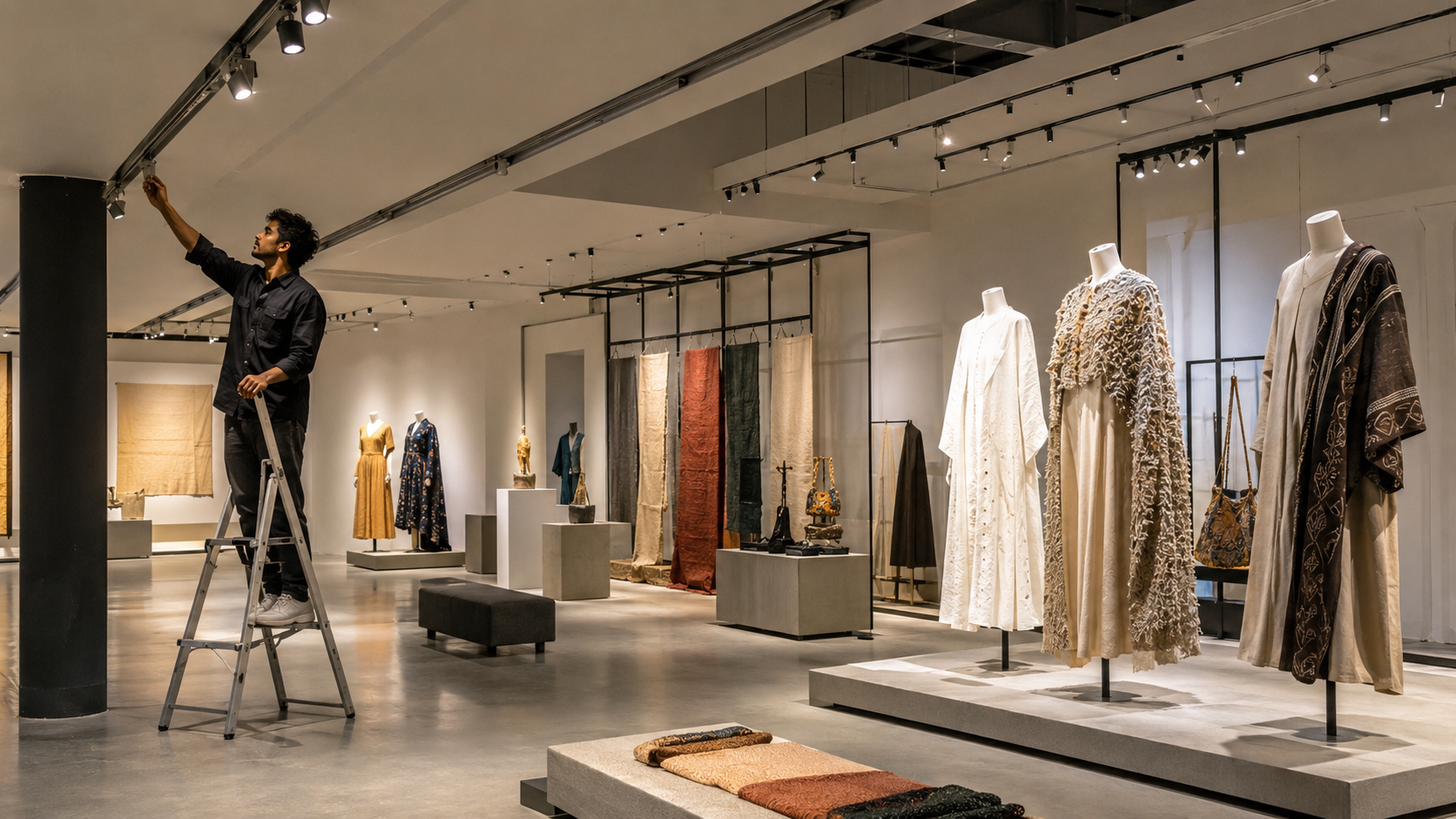
Lighting shapes the atmosphere and controls attention.
Exhibition and set lighting may provide:
- General visibility
- Focal emphasis
- Dramatic shadows
- Colour changes
- Direction
- Depth
- Movement
- Scene transitions
Designers should consider how lighting affects:
- Fabric colours
- Artwork
- Reflective surfaces
- Skin tones
- Photography
- Screen visibility
- Visitor comfort
Lighting must also respect the sensitivity of displayed materials.
Some textiles, artworks and historical objects can be damaged by excessive light exposure.
6. Colour
Colour can establish mood, divide spaces and connect different parts of an experience.
A colour system may be used to:
- Identify thematic zones
- Support a brand identity
- Reflect a historical period
- Create emotional contrast
- Guide movement
- Highlight important elements
Designers should consider how colour appears under artificial light and how it interacts with garments, objects and graphics.
The background should support the content rather than overpower it.
7. Materials and Texture
Materials influence how a space looks, feels and sounds.
Designers may work with:
- Wood
- Metal
- Fabric
- Paper
- Glass
- Acrylic
- Foam
- Recycled board
- Paint
- Digital surfaces
- Natural materials
Material selection depends on:
- Concept
- Budget
- Safety
- Duration
- Transportation
- Construction
- Reuse
- Maintenance
A temporary set may use lightweight materials that appear solid from the audience viewpoint. A museum display may require durable materials that can remain stable for several years.
8. Graphics and Typography
Graphics provide information and strengthen the visual identity.
They may include:
- Titles
- Captions
- Maps
- Timelines
- Diagrams
- Quotes
- Directional signs
- Object labels
- Background imagery
- Animated content
Typography should be readable from the expected viewing distance.
Designers must consider:
- Font size
- Contrast
- Line length
- Position
- Lighting
- Language
- Accessibility
Graphics should help visitors understand the experience without covering every surface.
9. Sound
Sound can influence mood and guide attention.
It may include:
- Music
- Spoken narration
- Environmental sound
- Performance audio
- Directional sound
- Interactive responses
Sound should be planned spatially.
Audio from one section should not interfere with another section unless overlap is intentional.
Silence can also be an important design element.
10. Digital and Interactive Media
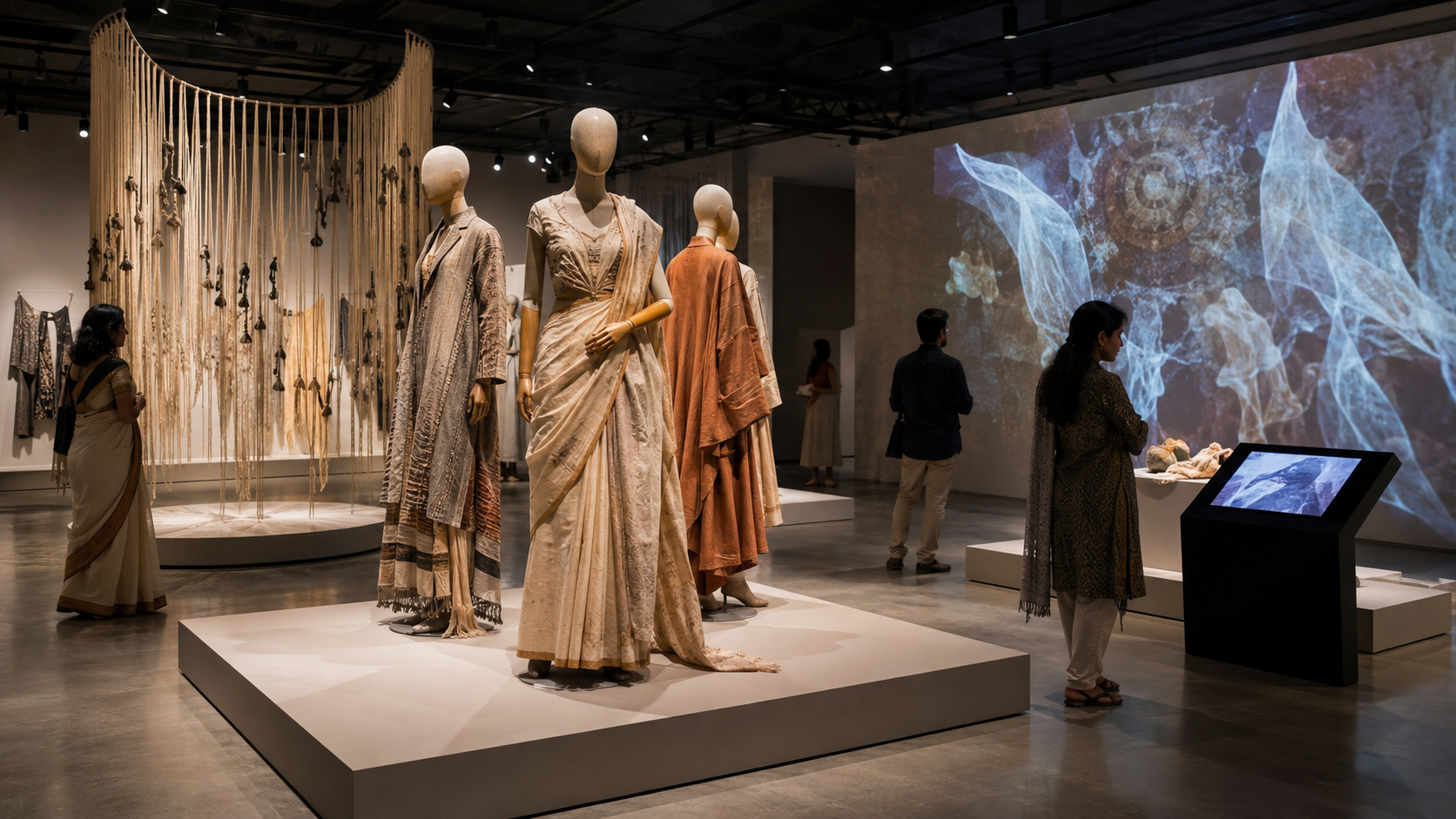
Digital media can add movement, information and participation.
Designers may use:
- Projection
- Touchscreens
- Motion sensors
- Augmented reality
- Virtual reality
- Interactive maps
- Digital archives
- Sound-responsive visuals
Mixed-reality research published in 2026 has explored how digital content can be embedded into physical public spaces while still responding to location, context and visitor behaviour.
Technology should have a clear purpose.
A touchscreen may allow visitors to explore information that cannot fit on a wall. A projection may recreate an environment. Augmented reality may reveal an earlier version of a building or garment.
Digital elements should not be added only because they appear modern.
11. Visitor Movement and Interaction
Designers should think about how people behave inside the space.
Visitors may:
- Walk quickly
- Stop unexpectedly
- Gather in groups
- Take photographs
- Read from different distances
- Use mobility devices
- Carry bags
- Visit with children
- Return to previous sections
The design must remain comfortable under real conditions, not only in a clean three-dimensional rendering.
How an Exhibition or Set Is Designed
A professional project usually moves through several stages.
Step 1: Understanding the Brief
The designer begins by studying:
- Purpose
- Audience
- Content
- Location
- Budget
- Timeline
- Technical restrictions
- Safety requirements
- Required outcomes
A fashion exhibition, commercial trade stand and theatre set may use similar tools but require completely different solutions.
Step 2: Research
Research may include:
- Historical context
- Cultural references
- Brand identity
- Audience behaviour
- Site conditions
- Materials
- Technology
- Competitor experiences
- Existing objects or garments
Research should help the designer understand the subject before choosing a visual style.
Step 3: Concept Development
The designer develops several possible directions.
Each concept may include:
- Written statement
- Mood board
- Colour palette
- Material references
- Preliminary sketches
- Spatial ideas
- Lighting direction
The selected concept should be visually strong, relevant to the content and realistic within the available resources.
Step 4: Site Analysis
Designers study the actual location.
They record:
- Dimensions
- Ceiling height
- Doors
- Windows
- Columns
- Existing lighting
- Power supply
- Loading access
- Emergency exits
- Audience capacity
A concept should respond to the site rather than ignore it.
Step 5: Zoning and Visitor Flow
The space is divided into functional zones.
These may include:
- Introduction
- Main display
- Interactive section
- Performance area
- Rest area
- Conclusion
- Exit
The designer tests whether visitors can move naturally between these areas.
Step 6: Sketching and Storyboarding
Sketches help explore:
- Composition
- Scale
- Key viewpoints
- Sequence
- Transitions
- Visitor interaction
For performance and event projects, storyboards may show how the set changes over time.
Step 7: Technical Drawings
Technical drawings communicate how the design will be built.
They may include:
- Floor plans
- Elevations
- Sections
- Construction details
- Lighting positions
- Graphic locations
- Electrical requirements
Accurate drawings help different teams work together.
Step 8: Models and Digital Visualisation
Designers may create:
- Cardboard models
- Foam models
- Material samples
- Three-dimensional renders
- Walkthroughs
- Virtual simulations
Models help identify problems related to scale, visibility and movement before construction begins.
Step 9: Material and Prototype Testing
Before full production, designers may test:
- Colours
- Finishes
- Joints
- Graphic printing
- Lighting
- Digital interfaces
- Structural stability
Prototypes reduce the risk of discovering problems during final installation.
Step 10: Fabrication and Installation
Fabricators, carpenters, electricians, painters, graphic installers and technicians construct the environment.
The designer monitors the process to ensure that the built result follows the intended concept.
Adjustments may be required because of site conditions, material availability or technical restrictions.
Step 11: Testing
The completed environment should be tested for:
- Visitor movement
- Lighting
- Readability
- Sound
- Interaction
- Safety
- Accessibility
- Photography
- Technical performance
The designer should experience the space from the visitor’s perspective before opening.
Creating an Immersive Experience
An immersive environment makes visitors feel surrounded by and connected to the story.
Immersion does not necessarily require virtual reality or large digital screens.
It can be created through:
- Scale
- Light
- Sound
- Texture
- Movement
- Sequence
- Participation
- Spatial contrast
- Material detail
A small, quiet room can feel immersive when every element supports one focused atmosphere.
A large digital installation may fail to feel immersive when the technology is disconnected from the content.
The designer should ask:
- What should visitors notice first?
- What should they feel?
- What should they understand?
- What should they do?
- What should they remember?
Immersion is strongest when spatial design and content work together.
Exhibition and Set Design Trends in 2026
Current experience-design discussions are moving beyond spectacle towards meaningful interaction, inclusivity, context and stronger connections between physical and digital environments.
Physical and Digital Integration
Designers are combining physical materials with:
- Projection
- Interactive screens
- Digital archives
- Augmented reality
- Responsive sound
- Motion tracking
The most successful projects integrate technology into the story rather than treating it as a separate attraction.
Adaptable and Modular Environments
Temporary exhibitions and events often require structures that can be reconfigured.
Modular design can help:
- Reduce construction time
- Support different layouts
- Simplify transportation
- Allow future reuse
- Respond to changing content
The same platform, frame or panel system may support several exhibitions when it is designed carefully.
More Personal Visitor Journeys
Digital systems can allow visitors to select themes, languages or levels of information.
However, personalisation should not make the shared physical environment confusing.
Designers must balance individual choice with a clear overall story.
Inclusive Experience Design
Accessibility is becoming a central part of exhibition planning rather than a final technical adjustment.
Inclusive exhibitions consider:
- Wheelchair movement
- Seating and rest points
- Clear language
- Readable typography
- Captioned media
- Audio description
- Tactile information
- Lighting sensitivity
- Different learning styles
SEGD’s 2026 programming highlights the role of lived experience and user expertise in creating more meaningful and inclusive exhibitions.
Sustainable Production
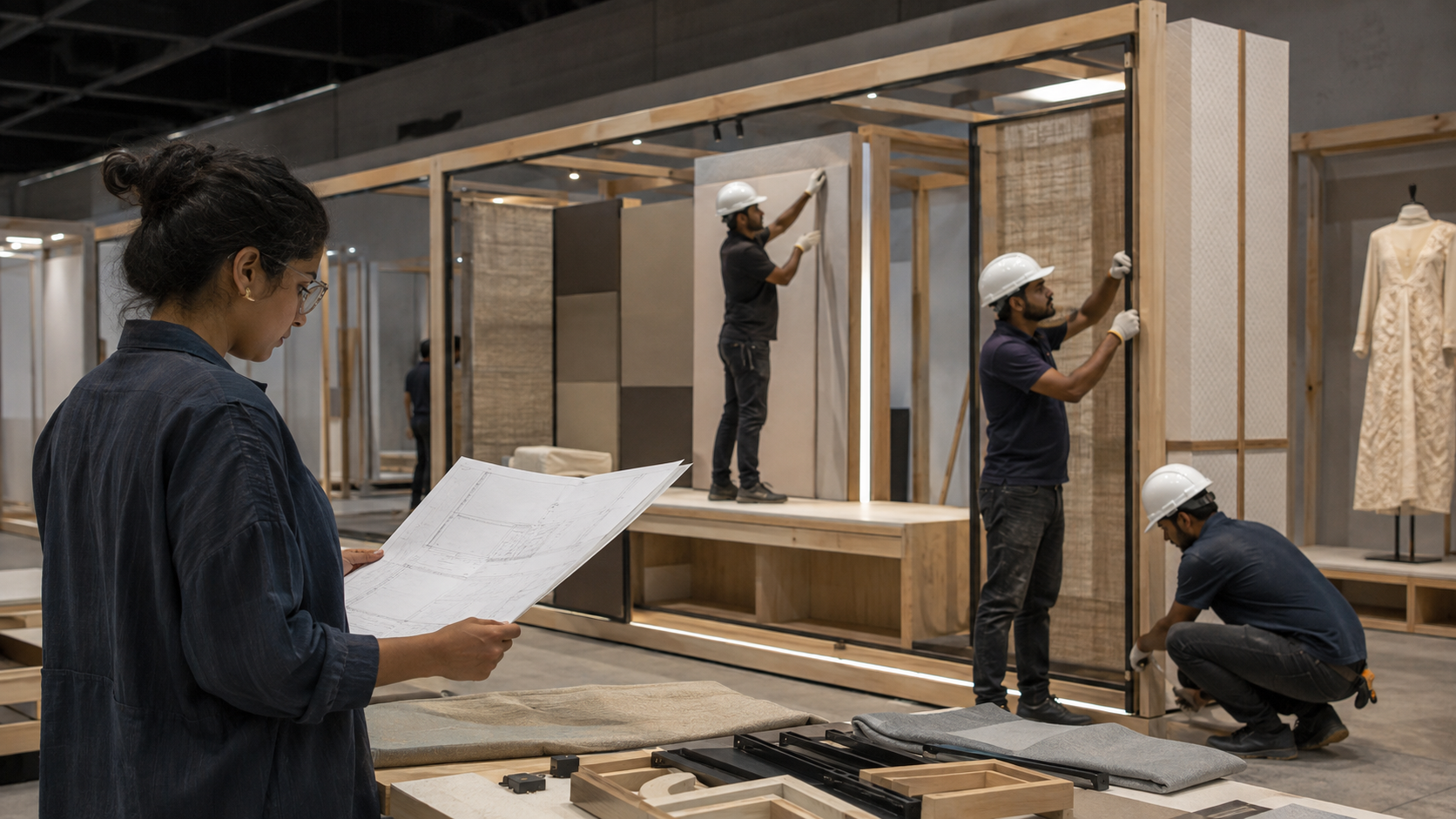
Temporary sets can generate significant material waste if every structure is discarded after one event.
Designers can reduce waste through:
- Reusable frameworks
- Modular construction
- Rented equipment
- Recyclable panels
- Digital graphics
- Local fabrication
- Material recovery plans
- Efficient transportation
Sustainable set design is not only about appearance. It requires planning what will happen to every major component after the event closes.
Local and Contextual Storytelling
Exhibitions are increasingly expected to respond to their location, community and cultural context.
Local references may appear through:
- Materials
- Craft techniques
- Language
- Oral histories
- Architecture
- Community contributions
- Regional visual culture
Contextual design can make an experience more relevant, but it requires research and collaboration rather than surface-level decoration.
Collaboration Between Design Disciplines
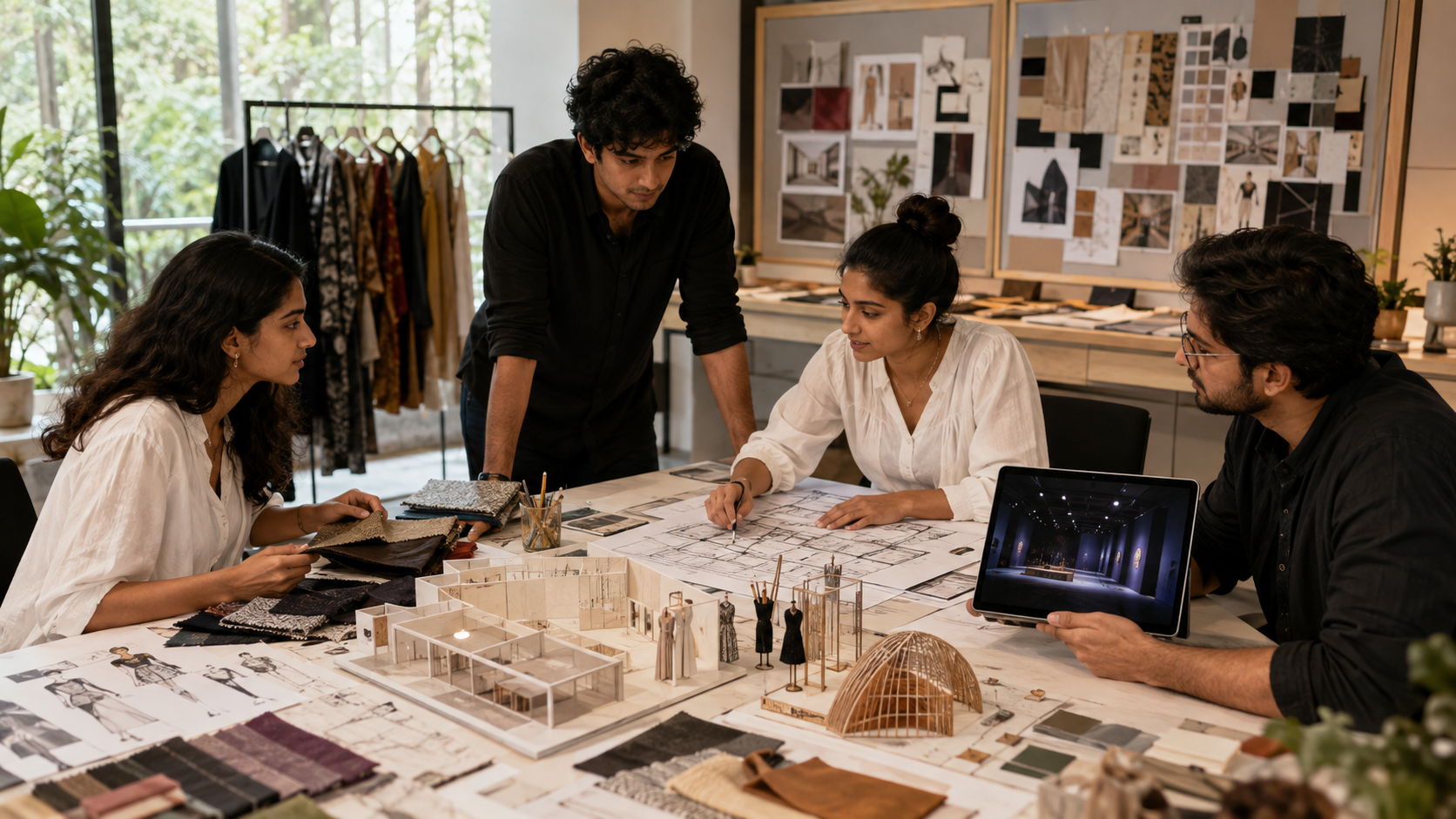
Exhibition and set design are highly collaborative.
A project may involve:
- Exhibition designer
- Set designer
- Interior designer
- Graphic designer
- Fashion stylist
- Curator
- Architect
- Lighting designer
- Sound designer
- Animator
- Fabricator
- Event producer
- Photographer
- Technical director
Each professional contributes a different type of knowledge.
The exhibition designer must understand enough about each discipline to coordinate the complete experience.
Role of the Fashion Designer
A fashion designer may provide:
- Garments
- Collection concept
- Fabric story
- Styling direction
- Cultural references
The set should communicate the collection without making the garments difficult to see.
Role of the Interior or Spatial Designer
The spatial designer may develop:
- Layout
- Circulation
- Display structures
- Materials
- Furniture
- Technical drawings
This role ensures that the concept functions as a real physical environment.
Role of the Graphic Designer
The graphic designer may create:
- Visual identity
- Typography
- Signage
- Information panels
- Printed material
- Digital graphics
- Wayfinding
Graphic elements connect information with the physical space.
Role of the Fashion Communicator
A fashion communicator may coordinate:
- Storytelling
- Styling
- Visual merchandising
- Media content
- Event experience
- Audience communication
This is why exhibition and set design are relevant to fashion communication education. LSOD’s curriculum specifically connects fashion communication with visual merchandising, store design, set design, display and exhibit design, and fashion-event production.
Accessibility in Exhibition and Set Design
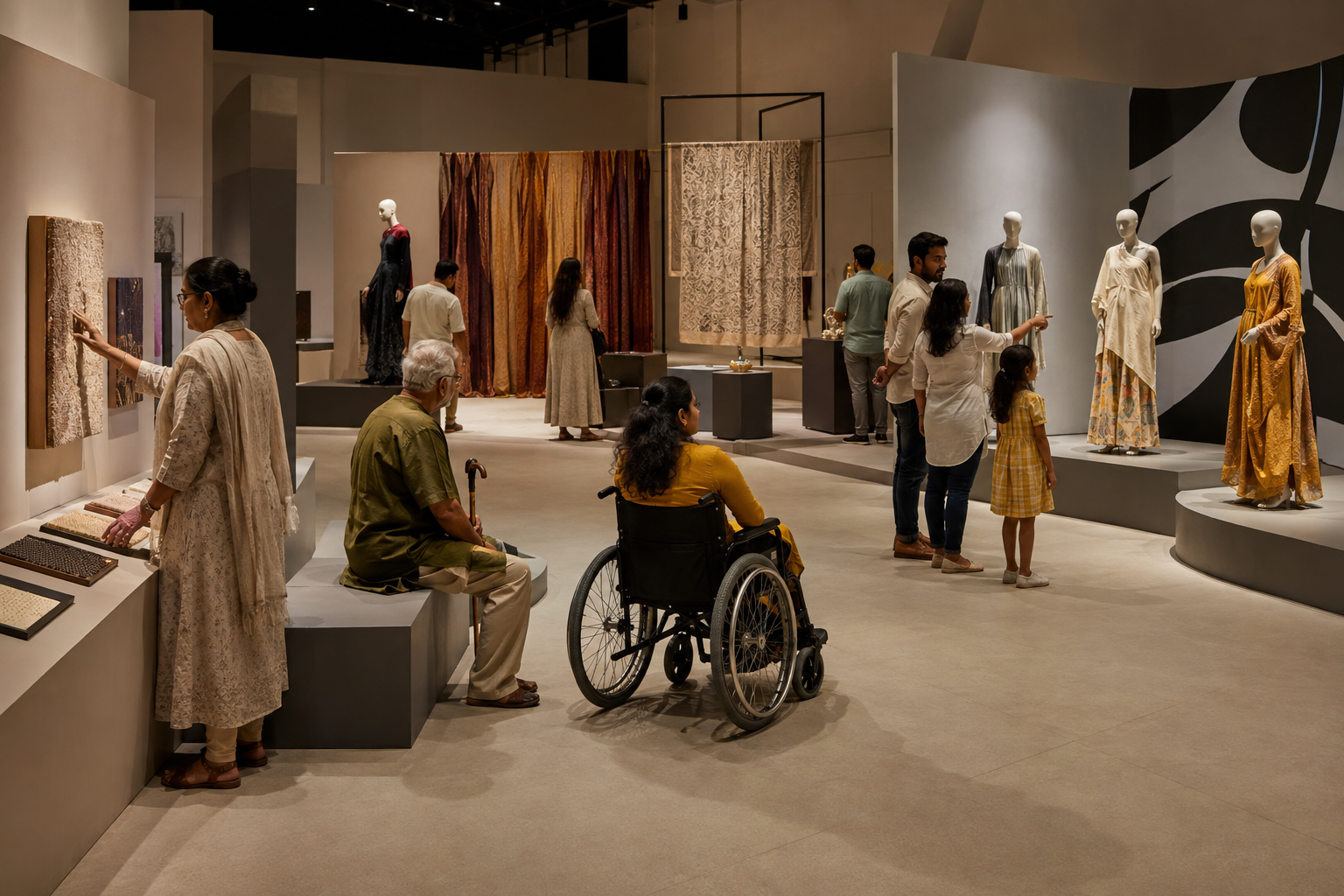
An environment should be designed for the widest practical range of visitors.
Accessibility considerations may include:
- Step-free entrances
- Wide pathways
- Appropriate display heights
- Seating
- Clear signs
- Strong colour contrast
- Captions
- Transcripts
- Audio description
- Tactile elements
- Reduced sensory intensity
- Quiet areas
Display information should be readable by both standing and seated visitors.
Interactive elements should not require only one type of movement or physical ability.
Accessibility improves the experience for many people, including older visitors, children, people carrying bags and visitors who are temporarily injured.
Common Exhibition and Set Design Mistakes
Starting With Decoration
Props and colours should come after the concept and visitor journey have been defined.
Ignoring the Audience
A design should respond to who will use the space, what they know and how they are likely to behave.
Overcrowding the Space
Too many objects, graphics and effects can make the main story difficult to understand.
Weak Visitor Flow
Visitors should not become trapped, confused or forced to cross active performance areas.
Using Technology Without Purpose
Digital media should support information, interaction or storytelling.
Poor Lighting
Incorrect lighting can hide details, distort colours and create uncomfortable glare.
Unreadable Graphics
Small text, poor contrast and excessive information can make an exhibition difficult to understand.
Ignoring Construction Reality
A beautiful rendering may be impossible to build safely within the available budget and timeline.
Forgetting the Closing Process
Temporary exhibitions require plans for dismantling, storage, reuse and material disposal.
Allowing the Set to Overpower the Content
The environment should support garments, objects, performers or products rather than compete with them.
Skills Required for Exhibition and Set Design
Students interested in this field should develop skills in:
- Concept development
- Research
- Drawing
- Model making
- Spatial planning
- Visual storytelling
- Colour
- Materials
- Lighting
- Typography
- Technical drawing
- Three-dimensional visualisation
- Presentation
- Teamwork
- Budget awareness
- Problem solving
Relevant study areas commonly include drawing, model building and drafting, while professional work may involve developing concepts, interpreting briefs and planning displays or production environments.
Software may support the process, but it does not replace design thinking.
Students may use tools such as:
- Adobe Photoshop
- Adobe Illustrator
- AutoCAD
- SketchUp
- Revit
- Blender
- Three-dimensional rendering software
- Video-editing software
- Presentation tools
Career Opportunities in Exhibition and Set Design
Career options may include:
- Exhibition designer
- Set designer
- Scenic designer
- Display designer
- Experience designer
- Installation designer
- Fashion-show set designer
- Museum exhibition designer
- Retail-display designer
- Production designer
- Event designer
- Projection designer
- Visual merchandiser
- Exhibition coordinator
Set and exhibition professionals may work in film, television, theatre, museums, historical institutions, live events, retail, advertising and commercial exhibitions.
Many projects are temporary or freelance-based, making professional relationships, portfolios and practical production experience particularly valuable.
How Design Students Can Practice Exhibition and Set Design
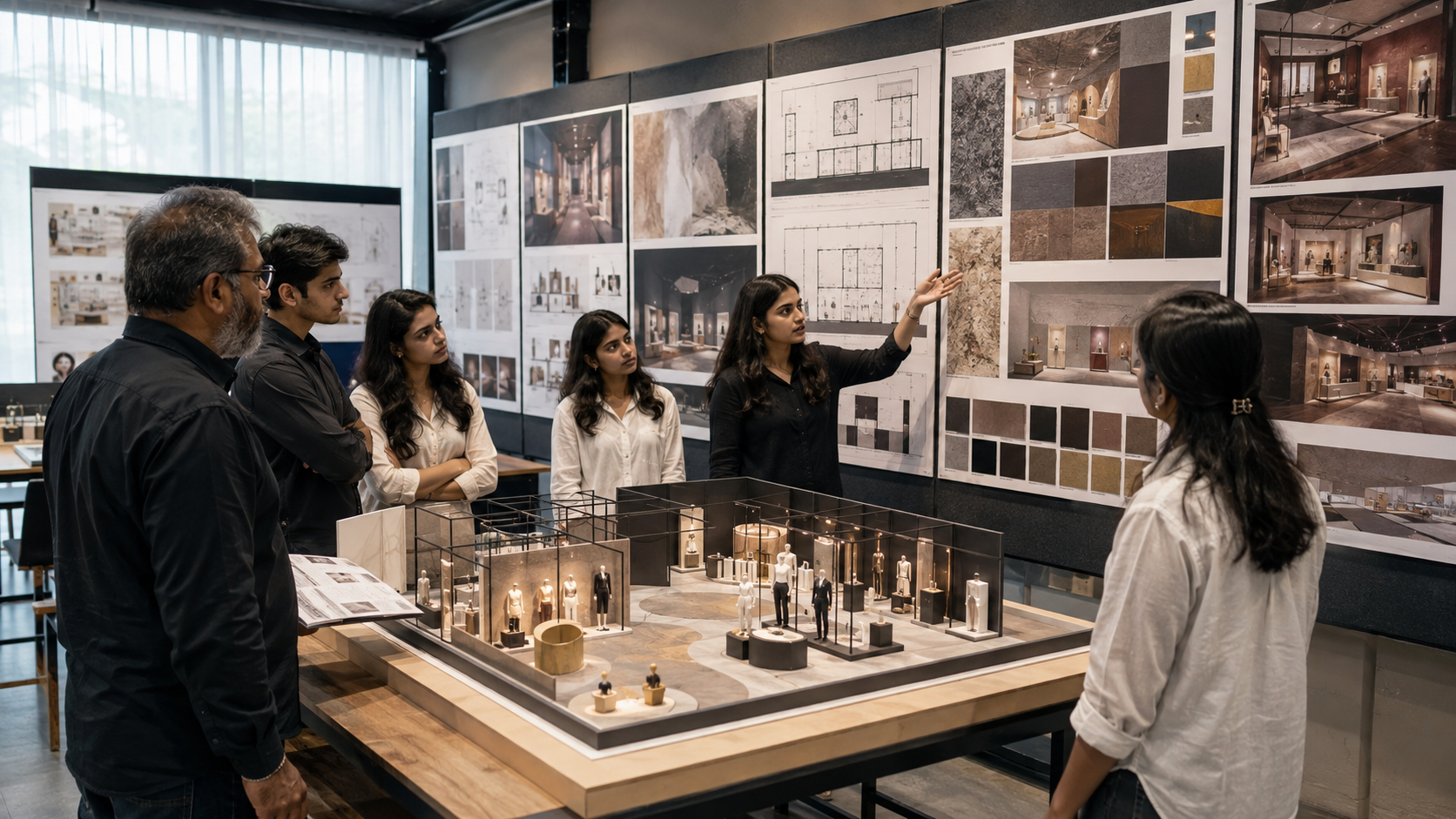
Students can create a complete exhibition-design project without constructing a full-size environment.
First, choose a subject such as:
- A fashion designer
- A textile tradition
- A student collection
- A social issue
- A cultural movement
- A fictional film
- A product launch
Then develop:
- A project brief
- Audience profile
- Research board
- Concept statement
- Mood board
- Colour and material palette
- Floor plan
- Visitor-flow diagram
- Display or set sketches
- Lighting concept
- Graphic and typography system
- Scale model or digital render
- Construction details
- Final presentation
The project should explain the reason behind every major decision.
Students should show how the environment supports the subject, how visitors move through the space and how visual elements create a consistent experience.
A strong project demonstrates creativity, communication, technical understanding and awareness of the audience.
Conclusion
Exhibition and set design transform stories, garments, objects and ideas into physical experiences.
Through spatial planning, lighting, graphics, materials, sound and interaction, designers influence what visitors notice, how they move and what they remember.
The field requires more than creating an attractive environment. A successful design must support the content, respond to the audience, function safely and communicate a clear narrative.
As physical and digital experiences become more connected, exhibition and set designers have access to new tools such as projection, interactive media and mixed reality. However, technology is effective only when it strengthens the story and improves the visitor experience.
For design students, exhibition and set design offer a valuable opportunity to combine fashion communication, graphic design, interior design, visual merchandising and event production. It encourages designers to think beyond individual products and create complete environments that people can enter, explore and experience.