
Digital Fashion and Virtual Runways: The Future of Fashion Design Careers
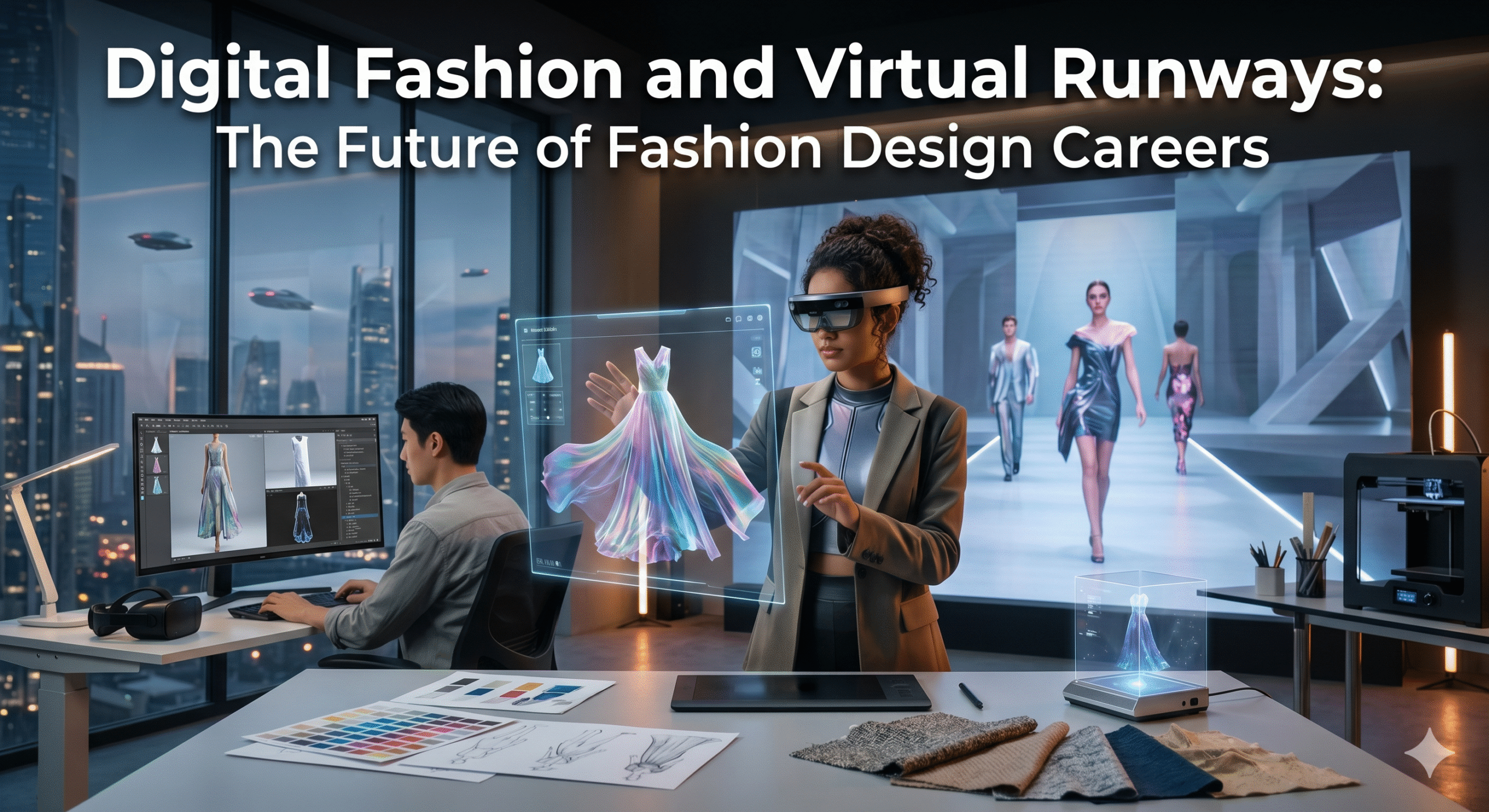
Fashion is no longer limited to fabric, sketches, and physical runways. Today, fashion is also moving into digital spaces where designers can create virtual garments, style avatars, present collections online, and experiment with designs without producing physical samples.
In 2026, digital fashion, AI styling, virtual runways, and 3D garment visualization are becoming important parts of the fashion industry. For students who want to build a career in fashion design, understanding these new trends can open many exciting opportunities.
Digital fashion is not replacing traditional fashion. Instead, it is giving designers a new way to express creativity, reduce waste, and reach global audiences.
What is Digital Fashion?

Digital fashion means creating clothing in a virtual format instead of making it physically first. These garments can be used for online styling, gaming avatars, social media, virtual fashion shows, and digital portfolios.
Digital fashion can include:
- 3D garments
- Virtual outfits
- Avatar styling
- Digital fashion illustrations
- Online fashion collections
- AI-assisted design concepts
For fashion design students, this trend is important because it allows them to experiment freely. They can test silhouettes, colors, textures, and patterns digitally before moving to real fabric production.
Virtual Runways Are Changing Fashion Shows
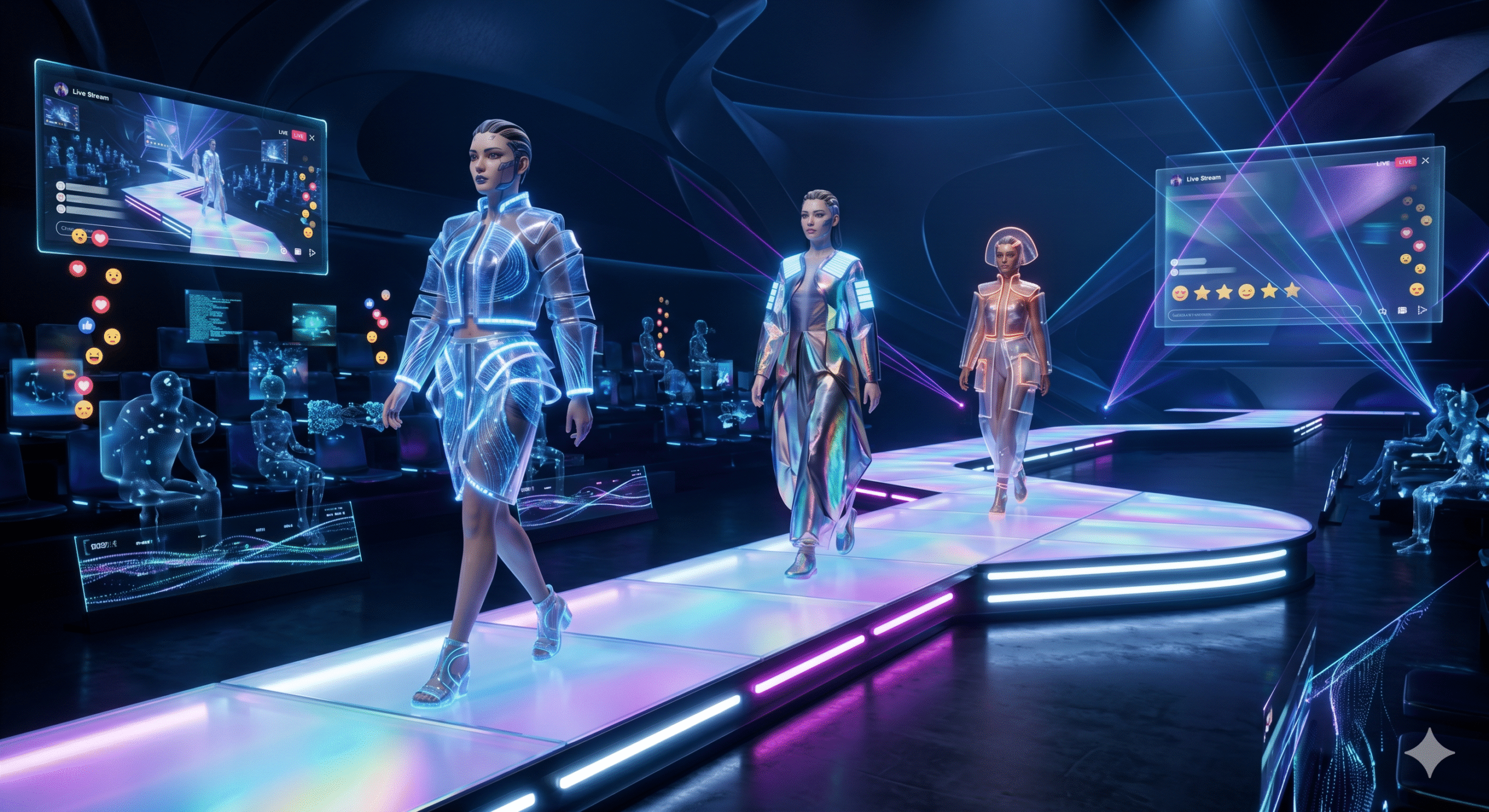
Traditional fashion shows need physical venues, models, lighting, production teams, and large budgets. Virtual runways make it possible to showcase collections online with digital models and 3D environments.
Virtual runways are useful because they:
- Reach global audiences
- Reduce event production costs
- Allow more creative presentation
- Support digital-first fashion brands
- Give students a platform to showcase work online
For young designers, virtual runways can be a powerful way to present portfolios. A student can create a digital collection and share it with institutes, brands, clients, or online audiences.
AI Styling is Creating New Fashion Experiences

AI styling is becoming popular because it helps people choose outfits based on body type, occasion, color preference, season, and personal style. Many fashion brands are also using AI to understand customer choices and suggest better products.
AI can help fashion designers with:
- Trend research
- Color combination ideas
- Outfit recommendations
- Customer style analysis
- Collection planning
- Personalized fashion suggestions
But AI cannot replace the fashion designer’s imagination. A designer still needs creativity, cultural awareness, fabric knowledge, and emotional understanding. AI can support the process, but the designer gives meaning to the final look.
3D Garment Design Helps Reduce Waste

One of the biggest benefits of digital fashion is that it can reduce waste. In traditional fashion design, many samples are created before final production. This can lead to fabric wastage, extra cost, and more time consumption.
With 3D garment design, students and professionals can:
- Create virtual samples
- Check garment fitting digitally
- Test fabric fall and movement
- Try different colors and prints
- Reduce physical trial samples
- Save time during design development
This makes fashion design more sustainable and efficient. It also teaches students how technology and responsibility can work together in the fashion industry.
Future Fashion Designers Need Digital Skills
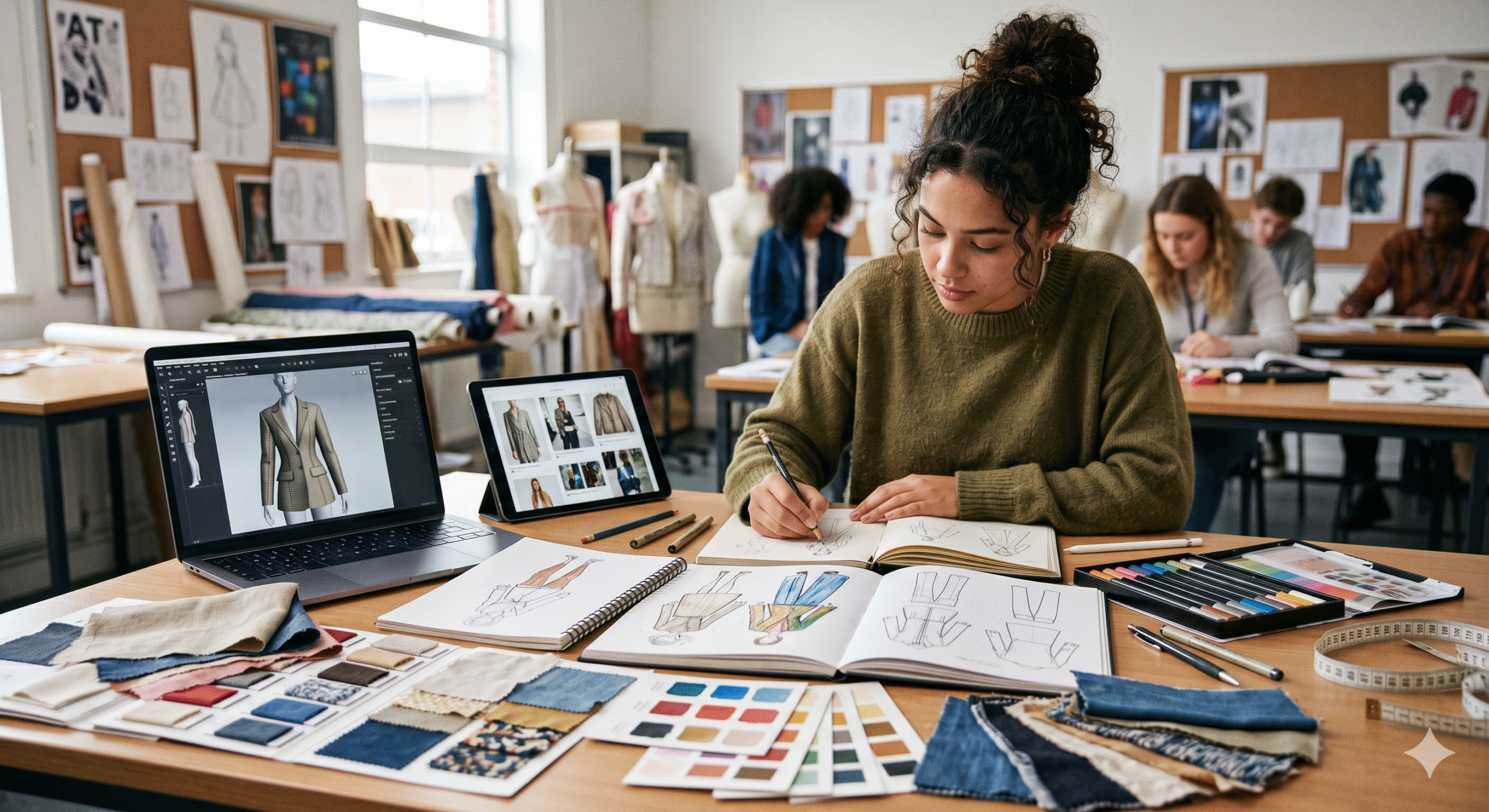
The future of fashion design belongs to students who can combine creativity with technology. Traditional skills like sketching, draping, stitching, fabric study, and color theory are still very important. But now, digital skills are also becoming necessary.
Important skills for future fashion designers include:
- Fashion illustration
- Fabric and textile knowledge
- Color theory
- Digital sketching
- 3D garment visualization
- AI tool awareness
- Styling and storytelling
- Portfolio presentation
- Sustainable design thinking
A successful designer is not only someone who follows trends. A successful designer understands people, culture, technology, and the future of fashion.
Conclusion
Digital fashion and virtual runways are changing the way designers create, present, and share fashion. These trends are opening new career paths for fashion students, especially in areas like digital styling, 3D fashion, virtual collections, gaming fashion, and online fashion branding.
For aspiring fashion designers, this is the right time to learn both traditional and digital skills. Fashion will always need creativity, but the tools used to express that creativity are changing.
Students who understand digital fashion today will be better prepared for the fashion careers of tomorrow.