Fashion as Self-Expression: The Biggest Style Shift of 2026
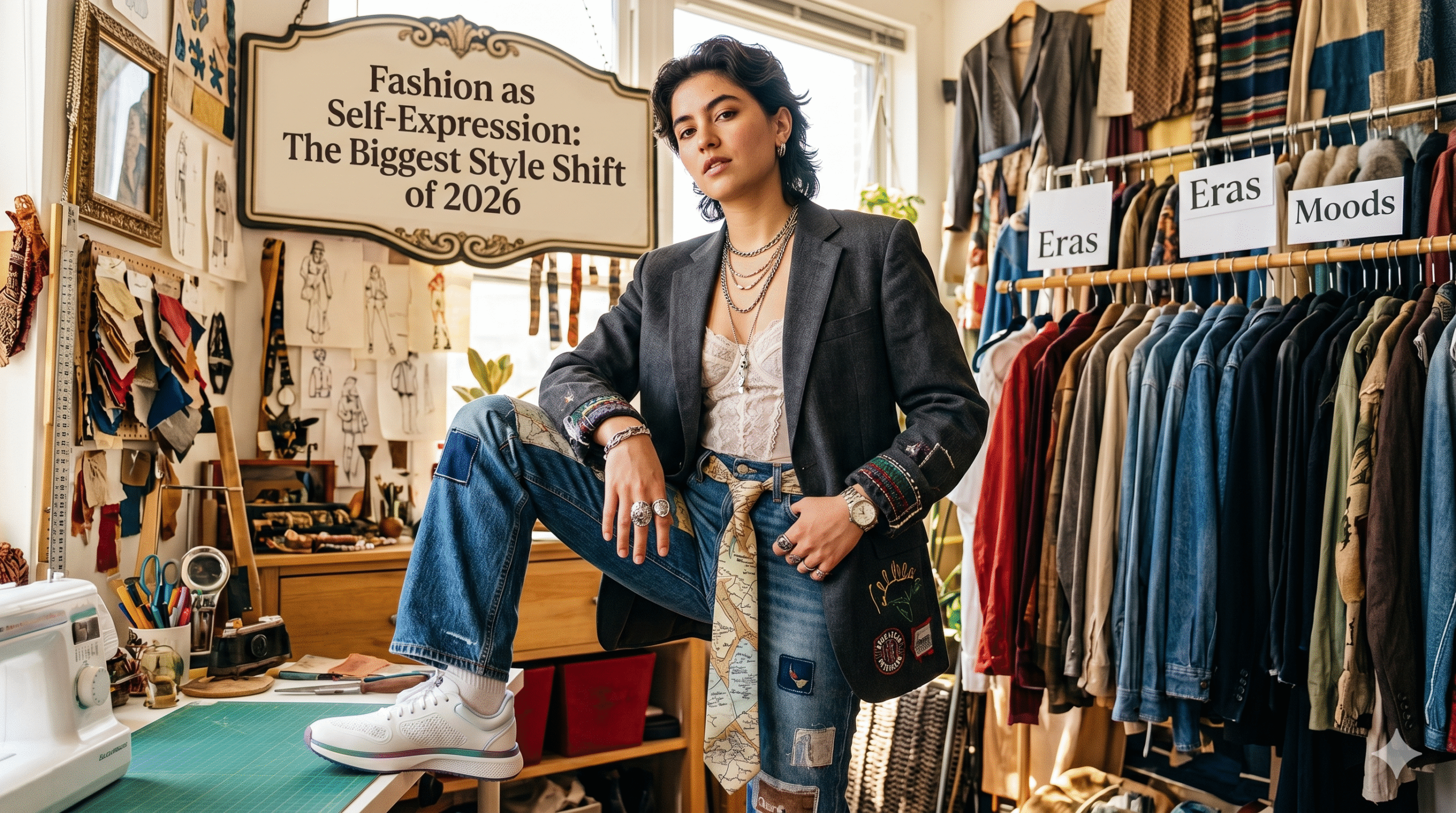
If the early 2020s taught us anything, it was that chasing micro-trends is an exhausting, unsustainable game. We bounced from “quiet luxury” to “Y2K revival” and endless “core” aesthetics faster than our wardrobes—or our wallets—could keep up. But as we navigate through 2026, a massive sartorial rebellion has permanently altered the industry.
The biggest style shift of the year isn’t a specific color palette, a hemline length, or a fabric choice. It is a fundamental psychological shift: the radical reclaiming of fashion as pure, unfiltered self-expression. We are witnessing the death of the “in-crowd” uniform and the birth of radical individuality.
Today, the fashion world is no longer asking, “What’s trending this season?” Instead, it is asking, “Who are you, and how does your clothing tell your story?” In this comprehensive guide, we will explore why 2026 is the year we officially stopped dressing for the algorithm and started dressing for ourselves, and how this movement is reshaping global retail, sustainability, and personal identity.
The Evolution of Style: How We Got to 2026
To understand the magnitude of this shift, we have to look at the cultural fatigue that preceded it. The road to 2026 was paved with algorithmic burnout, environmental awakening, and a global re-evaluation of what truly matters.
The Decline of Fast Fashion and Micro-Trends
For nearly a decade, social media platforms dictated global style. Algorithms pushed a homogenized “look of the week,” resulting in millions of people purchasing cheap, fast-fashion items just to participate in a fleeting internet moment. This created a culture of extreme disposability. Clothes lost their meaning; they became mere props for content creation, worn once for a photograph and then discarded into overflowing landfills.
By late 2025, consumer fatigue hit an all-time high. People realized that dressing like a carbon copy of an influencer did not bring confidence—it brought a crisis of identity. The realization that millions of people globally were unboxing the exact same mass-produced haul videos sparked a severe backlash against hyper-consumerism. This backlash became the foundation of the self-expression movement. Consumers started demanding depth, narrative, and longevity from their garments.
The Post-Pandemic Psychological Shift
We also cannot ignore the lingering psychological effects of the past few years. After periods of isolation and a fundamental restructuring of how we work and live, individuals began prioritizing authenticity over conformity. When the boundaries between office wear, lounge wear, and evening wear dissolved during the remote-work revolution, what remained was simply personal wear. People realized that comfort and style do not have to be mutually exclusive, and forcing oneself into uncomfortable, restrictive clothing simply to meet outdated societal expectations no longer made sense.
The Economic Drivers of the Style Shift
In addition to psychological factors, global economics played a massive role. With fluctuating economies and inflation affecting disposable income, the “buy cheap, buy twice” mentality faded. Consumers in 2026 are adopting an investment mindset. They would rather spend more on a single, perfectly tailored piece that genuinely reflects their soul than buy ten cheap items that offer no emotional connection. This economic reality forced buyers to look inward and ask, “What do I actually love?” before swiping their cards.
Core Elements of the 2026 Fashion Revolution
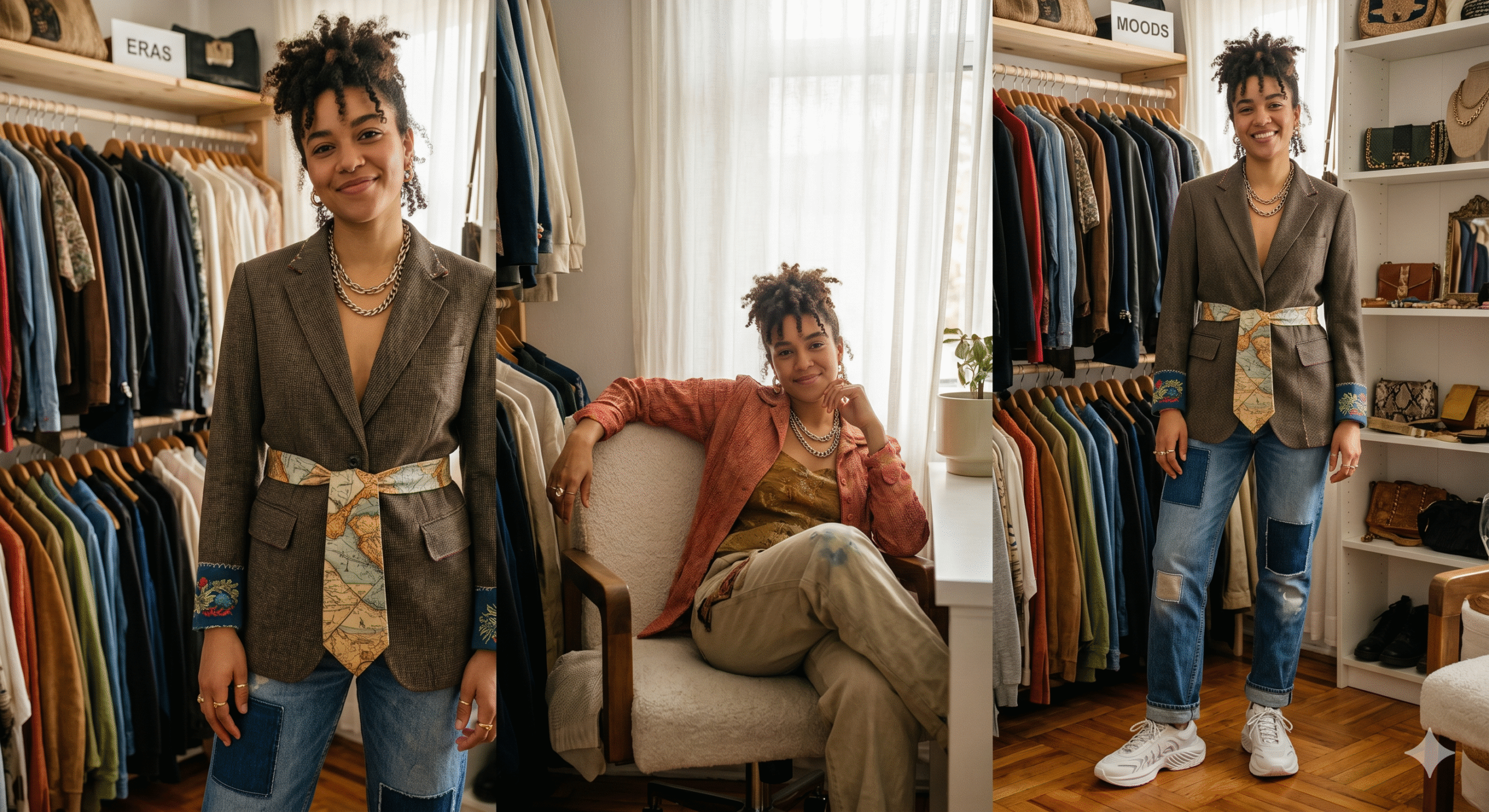
The “fashion as self-expression” movement isn’t just a philosophy; it has tangible visual markers. Wardrobes are no longer categorized by seasons, but by personal eras. Here are the core pillars defining wardrobes in 2026:
1. Personalized Maximalism: More is YOU
For years, minimalism was touted as the ultimate sign of sophistication. The “capsule wardrobe” of basic neutrals ruled the internet. In 2026, minimalism hasn’t disappeared, but it has been eclipsed by Personalized Maximalism. This isn’t about wearing loud colors just for the sake of being obnoxious; it’s about curating a densely packed visual identity that feels incredibly rich and specific to the wearer.
- Heirloom Meets High Street: The modern wardrobe is a highly eclectic mix of timelines and price points. It is completely normal to see someone wearing their grandfather’s vintage silk tie as a belt, paired with 3D-printed, hyper-modern sneakers and a tailored high-street blazer.
- The Rejection of “Rules”: Clashing patterns? Mixing navy and black? Wearing heavy silver chains with delicate gold rings? The old rules of fashion have been entirely discarded. If a combination resonates with your internal mood, it is considered a sartorial success. People are layering textures to create visual tension that speaks to their complex personalities.
2. Wearable Biographies and Sustainable Identity
Sustainability in 2026 is no longer just a corporate buzzword or a guilt-driven marketing tactic; it is a key component of personal style. Consumers are finding immense pride in clothes that carry a history. Your wardrobe is now expected to be a “wearable biography.”
- Visible Mending as Art: Taking inspiration from the Japanese art of Kintsugi (repairing broken pottery with gold), individuals are repairing their clothes with contrasting threads, bold patches, and intricate embroidery. The wear and tear are celebrated as chapters of a garment’s life. A frayed cuff or a patched knee is a badge of honor.
- Archival Hunting: Sourcing pieces from specific eras—like 1990s grunge, 1970s bohemian, or 1950s workwear—and blending them together allows people to align their external look with their internal aesthetic affinities. Archival fashion platforms have seen a massive surge.
3. The Eradication of Gendered Racks
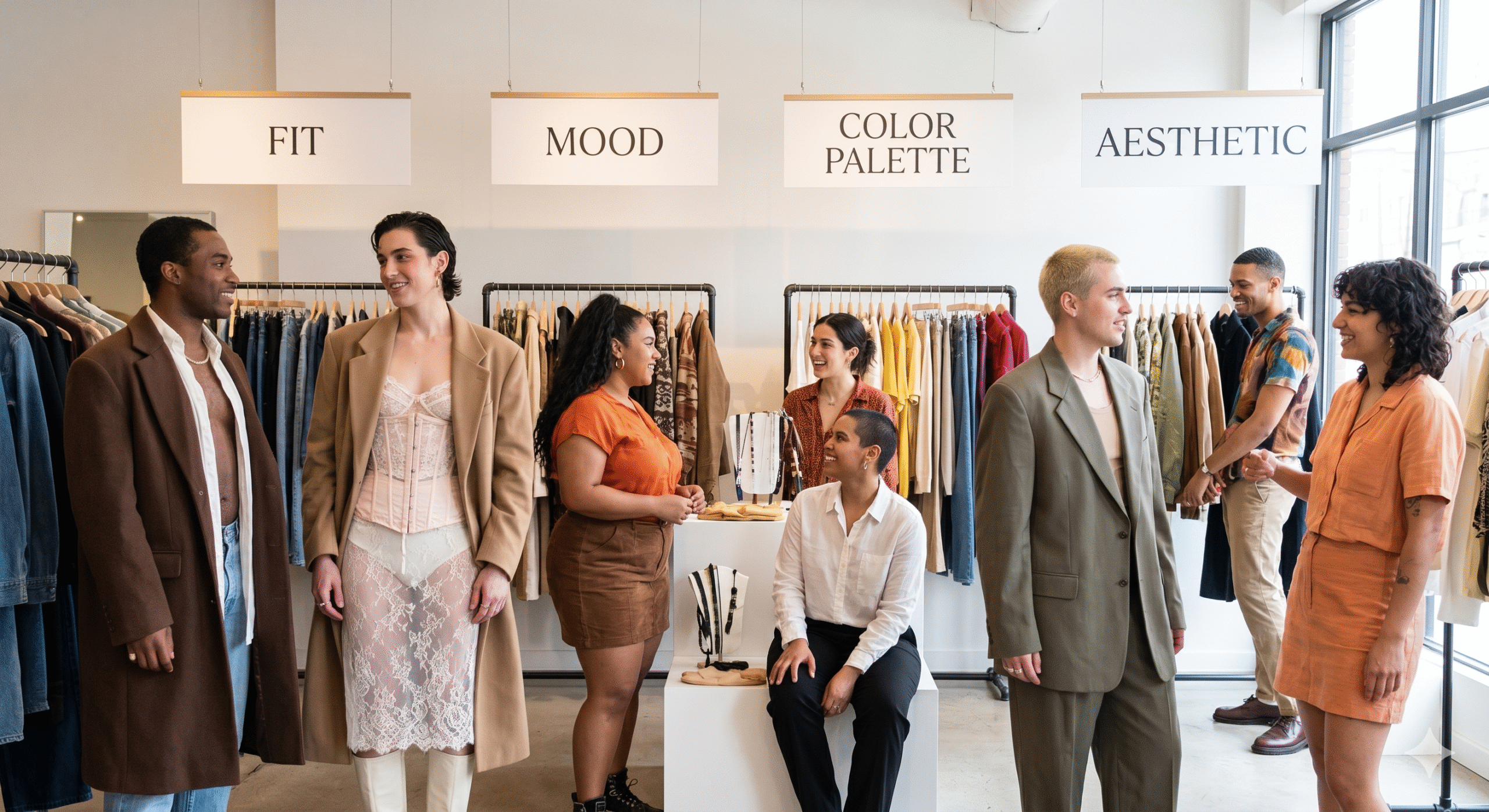
Perhaps the most visually striking and culturally significant element of the 2026 style shift is the complete blurring of traditional gender lines. Fashion has finally caught up with the sociological understanding that fabric inherently has no gender.
- Fluid Silhouettes: Boxy, oversized tailoring and broad-shouldered coats are being embraced universally. Conversely, delicate fabrics like lace, chiffon, and structural corsetry are appearing heavily in what was traditionally considered menswear.
- The Retail Revolution: Forward-thinking brands and boutique stores have officially started dismantling the rigid “Men’s” and “Women’s” sections. Stores are now increasingly curated by fit, mood, color palette, and aesthetic. You shop for how you want to feel, forcing the supply chain to rethink sizing around diverse body types.
4. Tech-Integrated Mood Wear
Technology and fashion have finally merged in a way that feels organic rather than gimmicky. In 2026, self-expression is literally woven into the threads of our garments.
- Chromatic Shift Fabrics: We are seeing the mainstream rise of garments embedded with smart-threads that subtly change hue based on body temperature, heart rate, or the surrounding environment. Your clothing makes your outfit a living extension of your current mood.
- Digital Twinning: As our physical and digital lives merge, people are purchasing digital assets that mirror their real-life wardrobes, allowing them to express their exact, highly curated style in virtual workspaces and digital communities.
5. The Artisan Renaissance and Hyper-Local Sourcing
As a direct rebellion against globalized, identical clothing, 2026 has seen a massive resurgence in hyper-local, artisanal fashion. People are actively seeking out independent designers, local weavers, and regional craftspeople. Wearing a jacket hand-loomed by an artisan carries far more cultural cachet than wearing a recognizable luxury logo. This shift is about connection—knowing exactly whose hands made your clothes.
How to Embrace the “Fashion as Self-Expression” Movement
Transitioning from a trend-follower to a self-expressive dresser doesn’t happen overnight. It requires introspection and a willingness to break your own fashion habits. Here is a strategic approach:
Step 1: Conduct a Brutal Wardrobe Audit
Pull everything out of your closet. Hold each item and ask yourself not “Is this in style?” but rather, “Does this feel like me?” If an item was purchased solely because you saw it on a viral video but it makes you feel uncomfortable, it’s time to donate or upcycle it. Create three piles:
- Pieces you love unconditionally.
- Pieces that need repair or alteration.
- Pieces that belong to a past version of you.
Step 2: Identify Your “Core Aesthetic Anchors”
Find three to five words that describe your ideal internal state, and translate those into clothing. Don’t look at fashion magazines for this; look at art, architecture, cinema, and nature.
- If your words are Strong, Grounded, and Creative, your anchors might be structured blazers, raw denim, and hand-crafted artisan jewelry.
- If your words are Free, Ethereal, and Bold, your anchors might be flowing organic cottons, sheer layers, and chunky, bright footwear.
Step 3: Master the Art of DIY
You don’t need a fashion degree to customize your clothing. Buy a denim jacket and cover it in enamel pins that represent places you’ve traveled. Learn basic embroidery to stitch your favorite quote onto the cuff of your shirt. Distress the hems of your jeans exactly how you like them. The goal is to ensure that your garment cannot be perfectly replicated by anyone else in the world.
Step 4: Invest in Statement Accessories
In a world where self-expression is key, accessories are the ultimate identifiers. A vintage watch, a bespoke pair of eyeglasses, or a handcrafted leather belt can completely change the narrative of an outfit. In 2026, the focus is less on buying entire new outfits and more on collecting high-quality, deeply personal accessories.
The Impact on Global Fashion Brands
This massive shift in consumer behavior is forcing a pivot in the business of fashion. Brands that rely on churning out thousands of micro-trends a week are seeing their engagement metrics and sales plummet.
The Shift in Marketing Strategies
Digital marketers in the fashion space are completely rewriting their playbooks. The old strategy of inducing “FOMO” (Fear Of Missing Out) to sell a trending item no longer works. The new marketing language is centered around empowerment, individuality, and longevity. Landing pages and ad campaigns now focus on how a piece of clothing can be styled in fifty different ways to suit fifty different personalities.
The Rise of Customization Services
To survive, major retailers are introducing in-house customization hubs. When you buy a pair of jeans, you are immediately offered on-site tailoring, distressing, laser-engraving, and patching services. Brands are realizing that they are no longer selling finished products; they are selling the raw materials for their customers’ self-expression.
The Death of the Mega-Influencer
Brands are shifting their budgets away from celebrities and mega-influencers who promote unattainable, homogenized lifestyles. Instead, they are partnering with micro-creators, artists, and niche style leaders who champion unique, authentic aesthetics. The goal is no longer mass appeal; it is deep, genuine community resonance.
Conclusion: Dressing for the Main Character
The 2026 style shift is profoundly liberating. It grants us the permission to be complex, contradictory, and entirely authentic. It tells us that it is perfectly acceptable to wear a sharp, structured business suit with heavily distressed combat boots, or to mix vintage polka dots with futuristic metallic fabrics. It frees us from the exhausting treadmill of keeping up with internet trends.
Fashion is no longer a strict set of rules handed down by elite editors and runways. It is a blank canvas. This year, the hierarchy has been dismantled. You are the artist, your body is the gallery, and your wardrobe is your daily masterpiece.
As we move forward into the rest of the decade, the message is clear. Embrace your quirks. Celebrate your history through your garments. Wear what makes you feel invincible, regardless of what the person next to you is wearing.
Remember this: the most uncool thing you can be is a replica. True luxury, in 2026 and beyond, is simply being yourself.