How Global Trends Influence Indian Designers
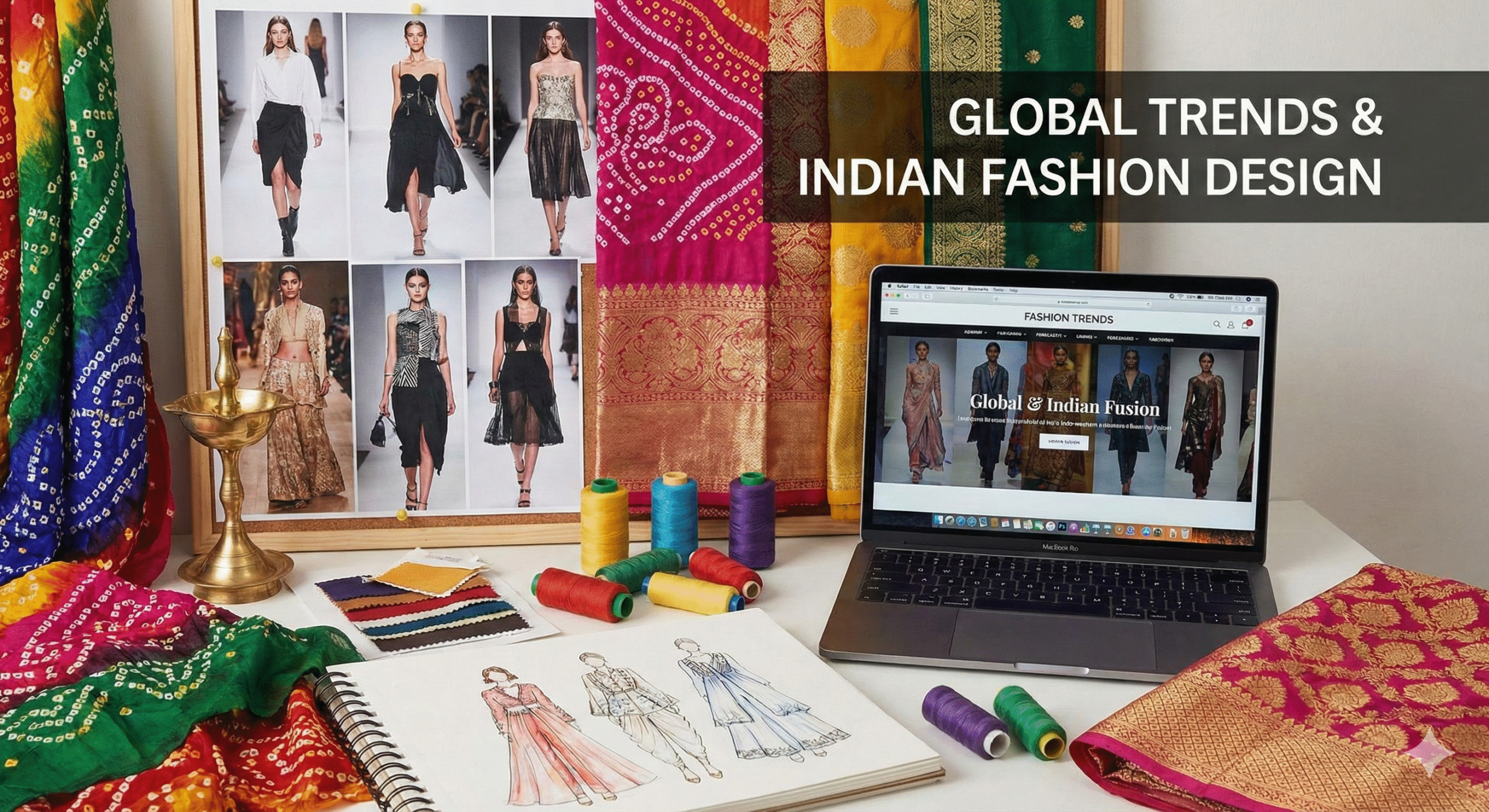
Indian design has never grown alone. For centuries, trade and travel shaped Indian textiles, buildings, and crafts. Today, the speed of change is much faster. Global trends reach Indian designers within hours. Ideas move quickly across borders.
But influence does not mean copying. Indian designers do not imitate blindly. They study global ideas and adapt them to local culture. They mix outside inspiration with Indian tradition. This creates work that feels modern yet rooted.
The Role of the Internet
The internet has changed everything. Designers can watch fashion shows, study new products, and follow global brands in real time. Social media and online platforms make ideas easy to access.
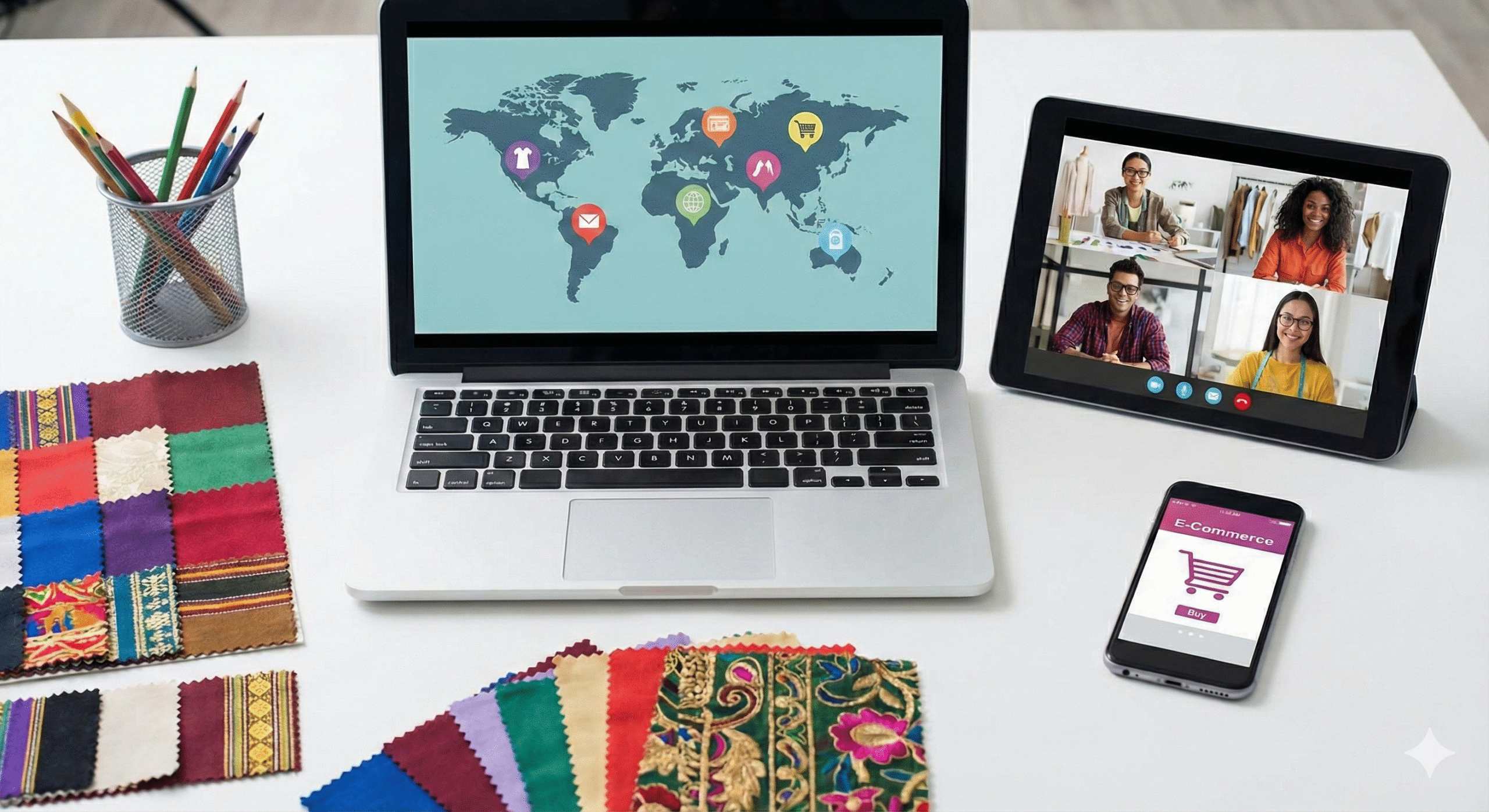
This exposure has raised standards. Designers now focus more on quality, detail, and storytelling. They compare their work with global creators. Many think about international audiences, not just local buyers.
Digital access also helps young designers. Even those in small towns can learn about global trends. They do not need to travel abroad to gain exposure. This has increased creativity across India.
Sustainability Matters More
Sustainability is now a global priority. People talk about climate change, waste, and fair labor. These ideas affect design industries around the wor
In India, many traditional practices are already sustainable. Handloom weaving and natural dyes have existed for years. Community-based production systems support local workers.
Global awareness has renewed interest in these traditions. Designers now use organic fabrics, recycled materials, and zero-waste methods. Consumers ask where products come from. Brands respond with more transparency.
Instead of replacing tradition, global trends have helped revive it.
The Rise of Fusion Design
Fusion design is very common today. Designers mix global styles with Indian craft. A modern dress may feature traditional embroidery. A simple home may include handmade Indian décor.
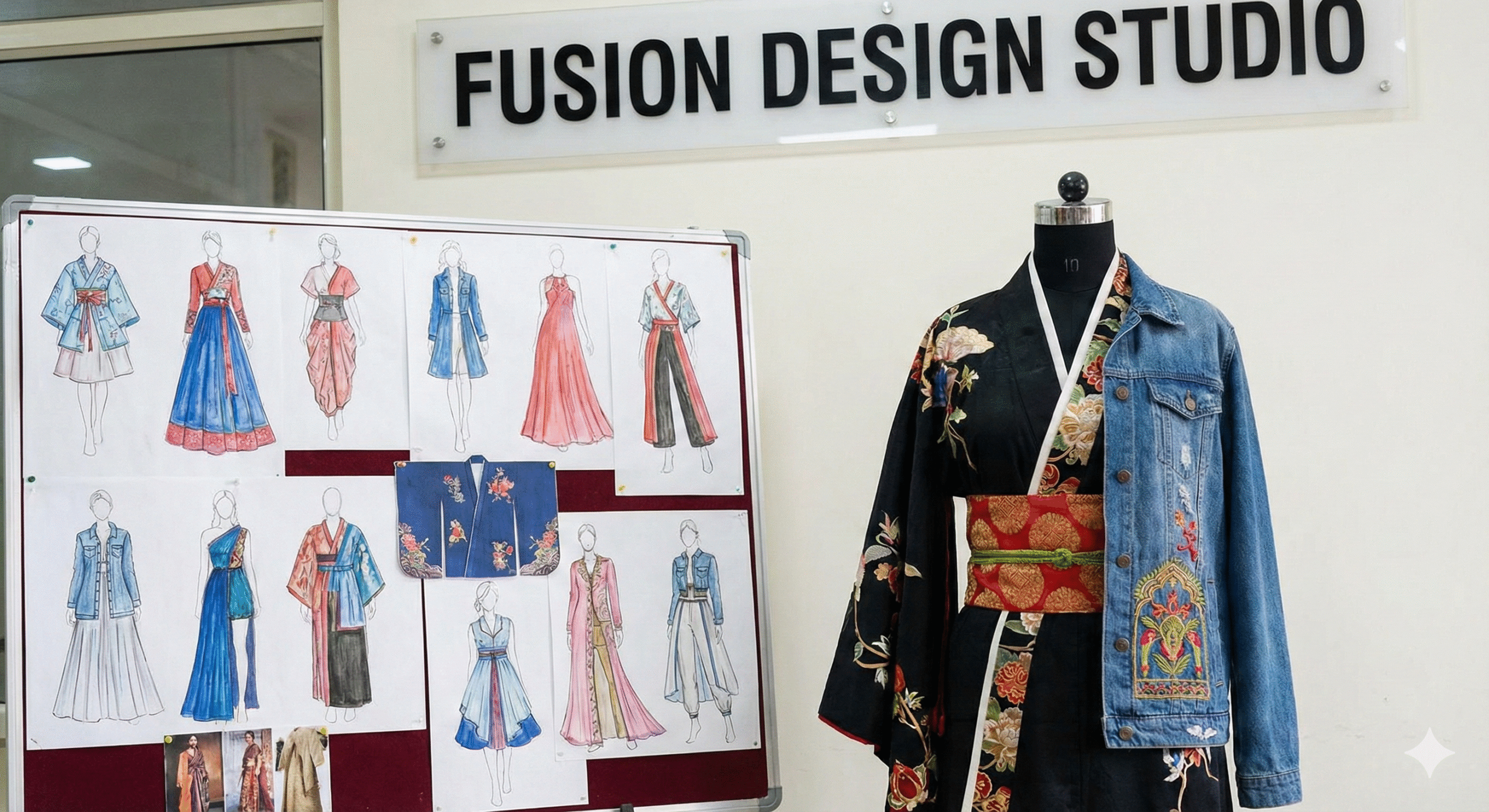
This blend shows confidence. Designers do not choose between global or local identity. They combine both. Western cuts meet Indian fabrics. Global colors mix with regional patterns.
Fusion helps designers reach global markets. At the same time, they stay connected to their roots.
Technology Changes the Process
Technology has improved design work. Tools like CAD software and 3D modeling increase speed and accuracy. Designers can show ideas to clients anywhere in the world.
Online meetings and digital portfolios remove location limits. Social media helps designers build strong brands.
Global competition means presentation matters. Designers must communicate clearly and professionally.
Changing Consumer Tastes
Indian consumers are more aware of global styles. Travel and online shopping have raised expectations. Buyers look for quality and thoughtful design.
At the same time, many people value Indian craft more than before. They want products that feel modern but reflect culture. Designers who balance both succeed.
Global Education and Exposure
Many Indian designers study abroad or attend global workshops. They learn research methods, branding skills, and market strategy. They return with broader views.
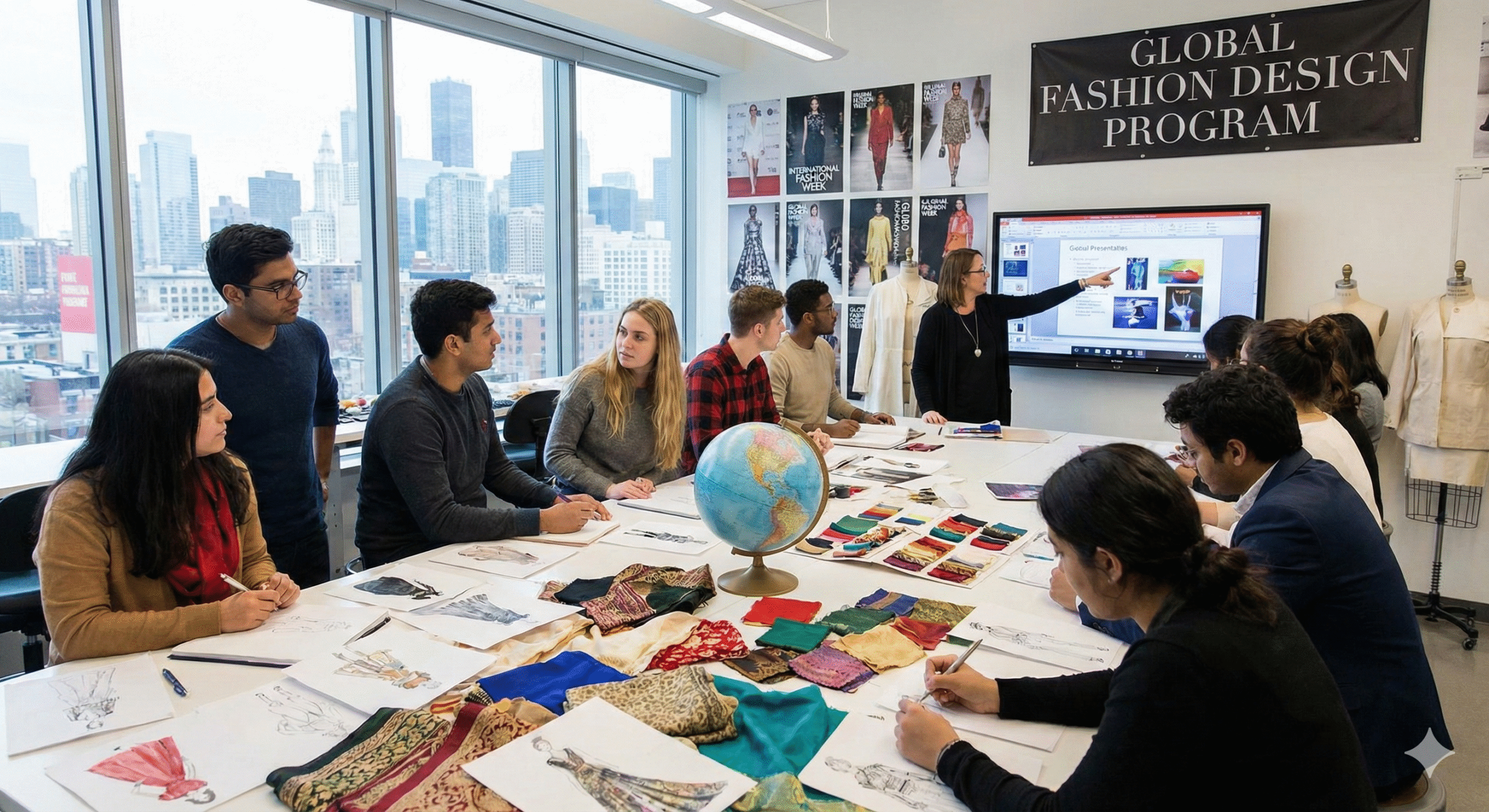
This has made the design industry more structured and professional.
Finding the Right Balance
The main challenge is balance. Too much copying can weaken identity. Ignoring global change can slow growth.
Successful designers adapt trends without losing tradition. They respect regional textiles and craft skills. Global ideas help refine their work, not replace it.
A Two-Way Exchange
Influence goes both ways. Indian embroidery and textiles inspire designers worldwide. Global brands work with Indian artisans.
Indian designers are not just followers. They shape global trends too.
Conclusion
Global trends strongly affect Indian design. They bring new tools, ideas, and standards. Yet Indian design remains rooted in culture and craft.
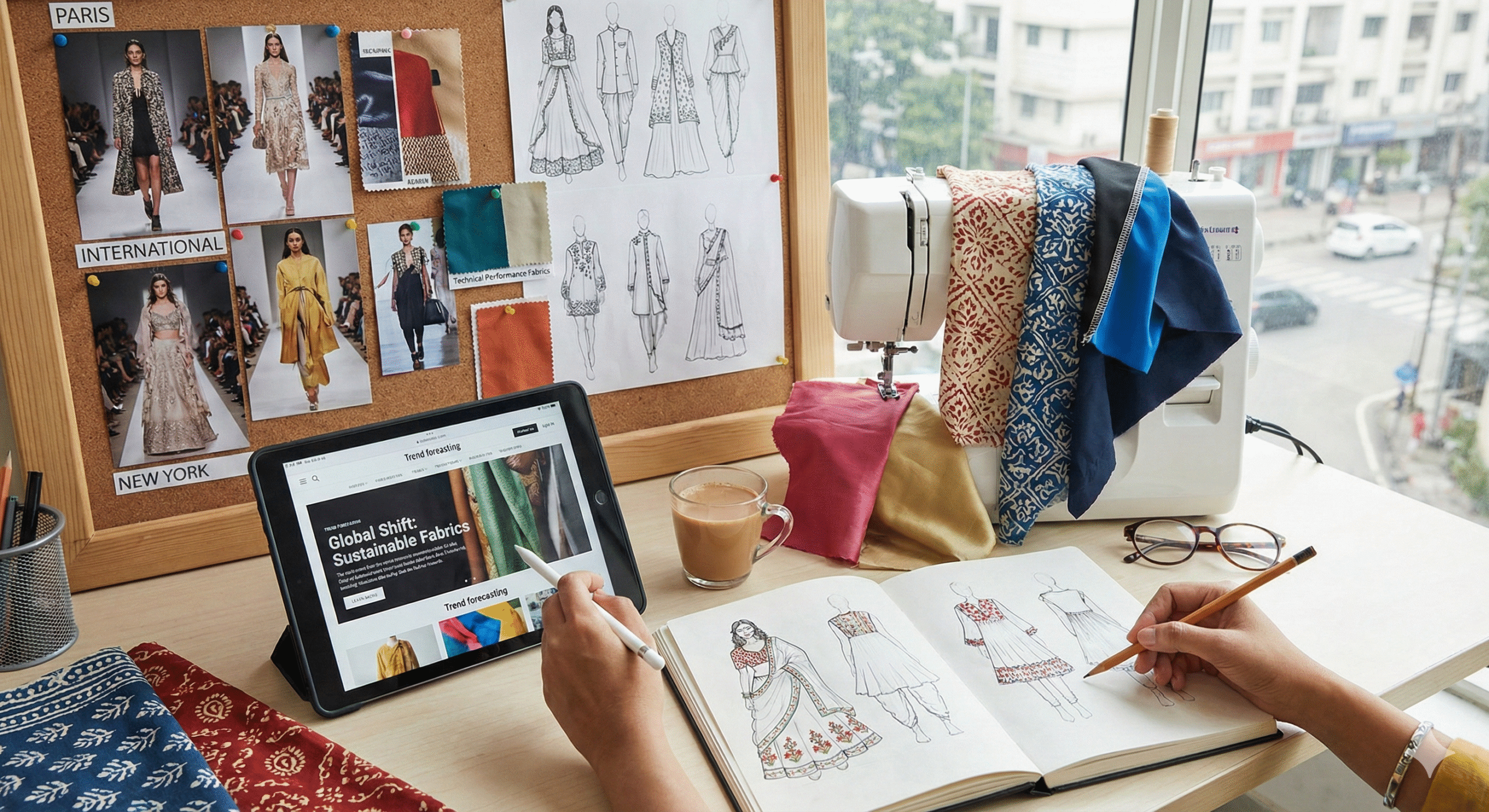
The strength of Indian designers lies in balance. They combine global awareness with local identity. In a connected world, this blend creates work that feels both modern and meaningful.