
Re-wearable Bridal Wear: How Designers Are Creating Lehengas You Can Wear Beyond the Wedding Day
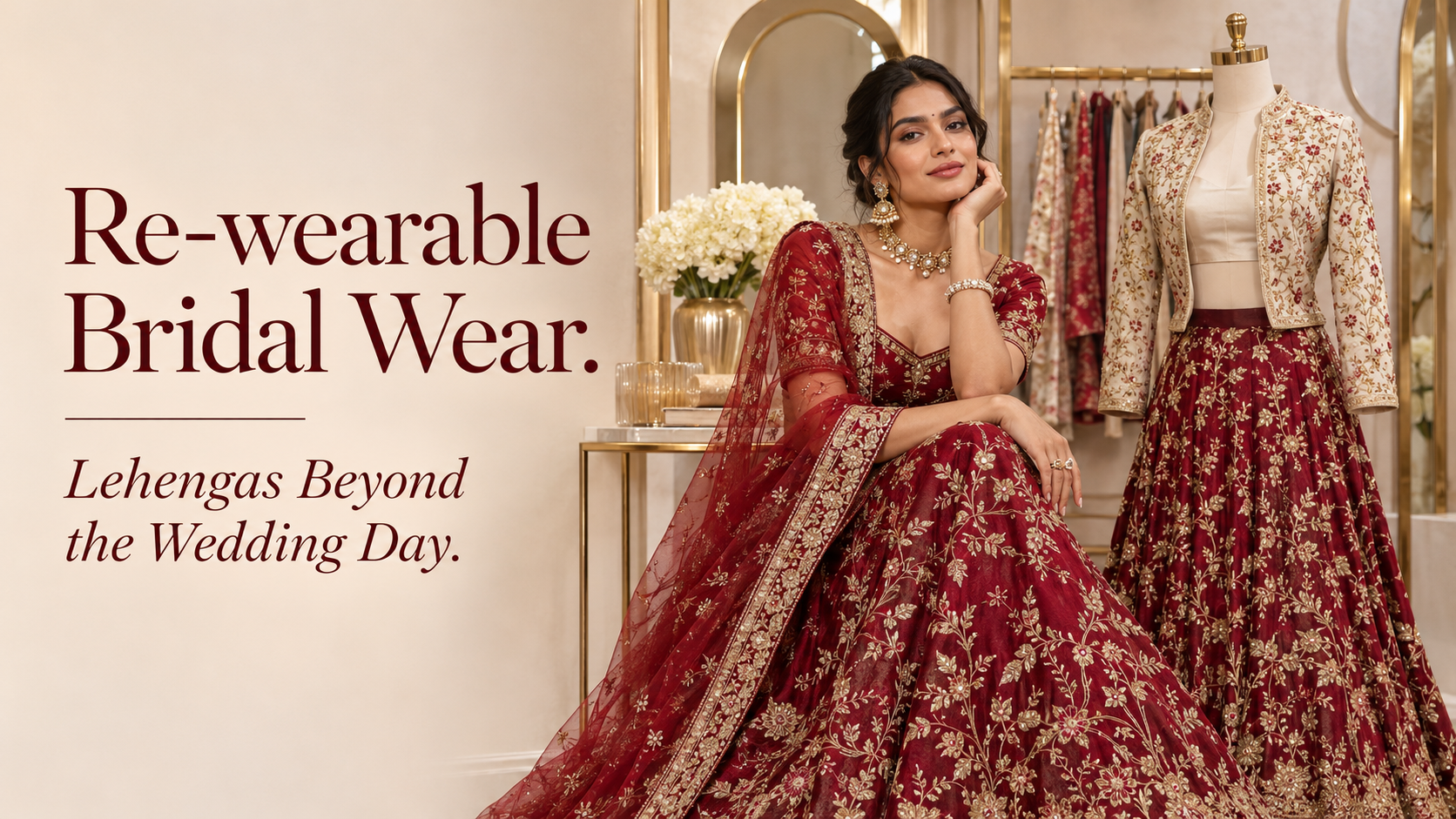
An Indian bridal lehenga is often one of the most carefully chosen outfits in a woman’s wardrobe. Months of planning go into selecting the fabric, colour, embroidery, silhouette and finishing details. Yet after the wedding celebrations are over, this beautiful garment may spend years carefully packed away, waiting for another occasion that rarely arrives.
But what if a bridal lehenga could become part of a wardrobe rather than remain a memory preserved in storage?
This question is influencing a new approach to Indian occasionwear. Fashion designers are exploring re-wearable bridal wear, creating garments that retain the elegance and emotional significance of a wedding ensemble while offering possibilities for future celebrations.
From detachable layers and interchangeable blouses to lightweight fabrics and modular silhouettes, bridal fashion is becoming more adaptable.
For aspiring fashion designers, the shift presents an exciting creative challenge: how can a garment designed for one unforgettable day remain relevant for years?
What Is Re-wearable Bridal Wear?
Re-wearable bridal wear refers to wedding clothing designed or adapted so that it can be worn again for different occasions.
Instead of treating the bridal outfit as a single, inseparable ensemble, designers consider how individual components can function independently.
A traditional lehenga generally includes three main elements:
- Lehenga skirt: The lower garment, often featuring embroidery, surface decoration or elaborate fabric construction.
- Blouse or choli: The fitted upper garment, which can be designed in traditional or contemporary styles.
- Dupatta: The draped fabric that completes the bridal look.
In conventional bridal styling, these elements are coordinated to create one complete look.
Re-wearable design introduces greater flexibility. The same lehenga skirt might be paired with a simple blouse for Diwali, while its embroidered choli could be worn with a saree or tailored trousers.
The objective is not to remove the grandeur of bridal fashion. It is to extend the usefulness of carefully designed garments beyond the original celebration.
Why Is Re-wearable Bridal Fashion Gaining Attention?
Indian weddings celebrate craftsmanship, culture and personal expression through elaborate clothing.
However, traditional bridal garments can be difficult to rewear because of their weight, dramatic silhouettes, intricate embellishments or highly coordinated styling.
A heavily embroidered lehenga may look magnificent during the wedding ceremony but feel excessive for smaller celebrations.
Designers are increasingly recognising that customers may want both emotional value and practical versatility.
Changing Wardrobe Priorities
Many shoppers are becoming more selective about purchasing occasionwear that they may only wear once.
Instead of viewing every celebration as a reason to purchase an entirely new outfit, some consumers prefer clothing that can be restyled in multiple ways.
This makes re-wearable bridal wear relevant to people who value distinctive fashion but also want greater usefulness from their purchases.
Growing Interest in Responsible Fashion
Sustainable fashion discussions are encouraging designers to consider garment durability, repairability and reuse.
A bridal outfit that can be worn repeatedly may reduce the need for additional occasionwear purchases.
However, rewearability does not automatically make a garment sustainable. Fabric production, embellishment methods, dyeing, transport, care requirements and actual frequency of use all influence its environmental impact.
The strongest designs consider these factors together.
Greater Demand for Personalisation
Modern bridal styling offers room for both traditional and contemporary influences.
Some brides prefer elaborate ceremonial clothing, while others favour simpler silhouettes and lighter fabrics.
Re-wearable design allows both preferences to coexist within the same outfit through removable components, interchangeable layers and thoughtful construction.
1. Modular Design: Creating One Bridal Outfit With Multiple Possibilities
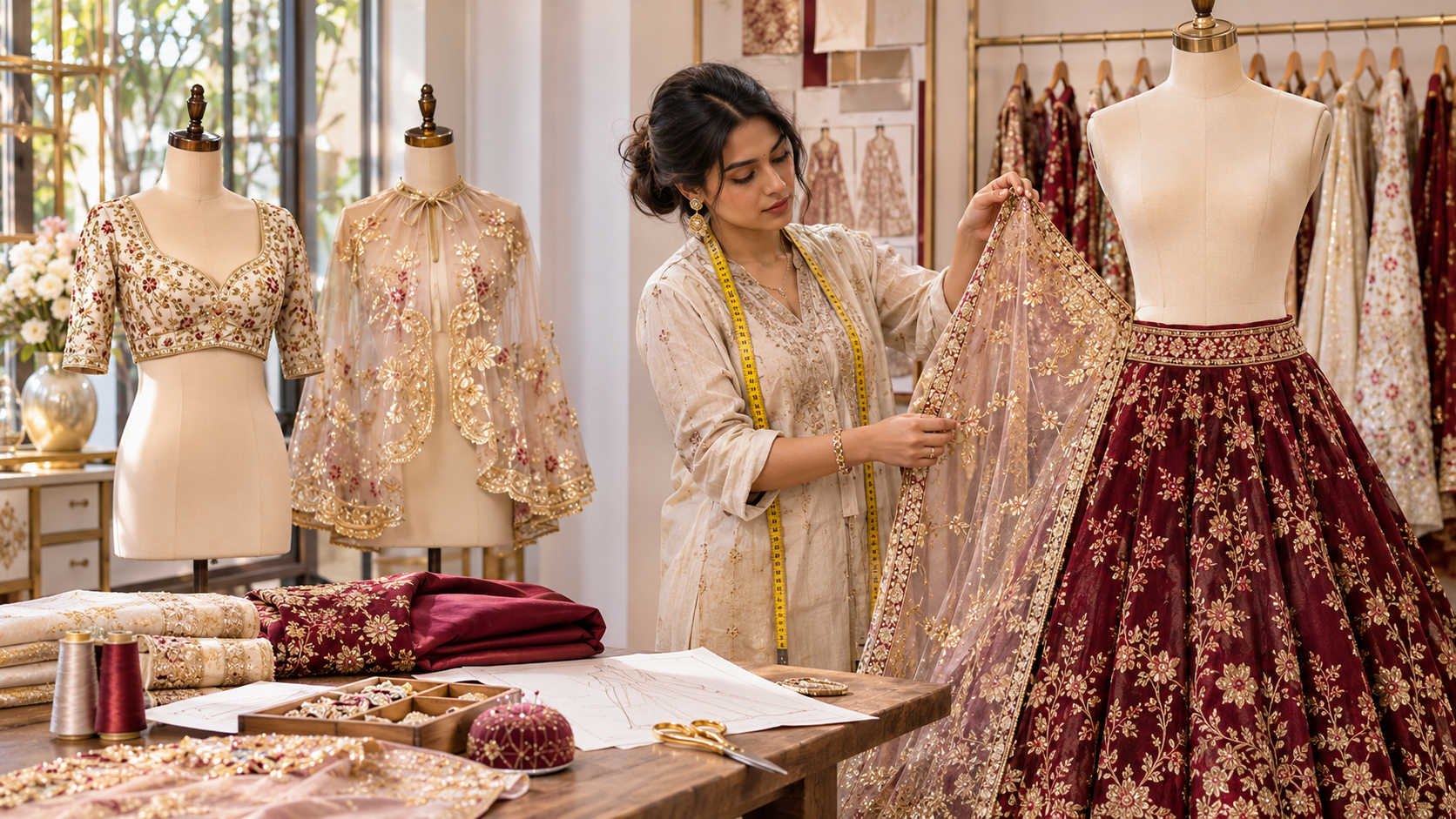
One of the most interesting developments in bridalwear is modular fashion.
Modular garment design uses components that can be separated, exchanged or combined to create different looks.
For bridal lehengas, this might involve detachable skirts, removable capes, interchangeable blouses or decorative layers.
Detachable Overskirts and Can-Can Layers
Traditional bridal lehengas sometimes use stiff net or can-can layers to create volume.
While this structure contributes to a dramatic wedding silhouette, it can make the garment bulky and difficult to wear for smaller events.
Designers can explore detachable volume layers that allow a lehenga to retain its elaborate shape during the wedding ceremony while offering a softer silhouette for later occasions.
The construction requires careful attention to secure fastenings, waist comfort, weight distribution and the appearance of the skirt after the layers are removed.
Interchangeable Blouses
Instead of creating a blouse that works only with one skirt, designers can develop versatile separates.
A richly embroidered bridal blouse might later be paired with a plain silk saree, a contrasting lehenga skirt or wide-leg trousers.
Similarly, the original bridal skirt can be restyled with a minimal silk blouse or an understated cropped jacket.
This approach creates more wardrobe combinations without requiring an entirely new outfit.
Removable Capes and Jackets
A cape, embroidered jacket or structured outer layer can add visual drama to a wedding ensemble.
When designed as an independent garment, the same piece can be worn later over a dress, saree or simple festive outfit.
Designers must ensure that the detachable element looks complete on its own and that the base garment remains attractive after it is removed.
Successful modular design involves more than adding hooks or buttons. It requires planning each component as a functional piece of clothing.
2. Lightweight Fabrics That Make Bridal Lehengas Easier to Rewear
Fabric selection strongly influences how often a bridal outfit can be worn.
Heavily structured garments may be suitable for elaborate wedding photographs and ceremonial appearances, but they can become uncomfortable during long celebrations.
Designers are therefore exploring ways to balance rich visual detail with manageable weight and movement.
Silk and Silk Blends
Silk remains important in Indian bridal fashion because of its drape, lustre and cultural significance.
Depending on the weave and construction, silk and silk-blend fabrics can support different silhouettes, from structured lehengas to softer flowing skirts.
Designers can select fabrics based on the desired finish, durability, weight and ability to be restyled.
Georgette and Chiffon
Georgette and chiffon are useful for fluid drapes and lighter silhouettes.
These fabrics can work well in dupattas, flowing skirts and contemporary layered garments.
However, some lightweight fabrics are delicate and require appropriate support when carrying heavy embroidery.
A successful design must balance the appearance of the fabric with the strength required for its embellishments.
Organza and Tissue
Organza and tissue fabrics can introduce volume, transparency, shimmer or a sculptural quality without relying entirely on heavy decorative layers.
They are particularly useful when designers want a dramatic effect through fabric structure rather than excessive embellishment.
Their suitability for repeated wear depends on the fabric quality, garment construction and maintenance requirements.
Fabric Performance Matters
Aspiring designers should evaluate more than how a textile looks on a mood board.
Important considerations include:
- Comfort during extended wear
- Fabric weight and movement
- Resistance to damage
- Compatibility with embroidery
- Cleaning and storage requirements
- Suitability for alterations
- Long-term appearance
Thoughtful textile selection can make the difference between a beautiful ceremonial garment and a genuinely versatile one.
3. Smarter Embroidery Placement and Surface Ornamentation
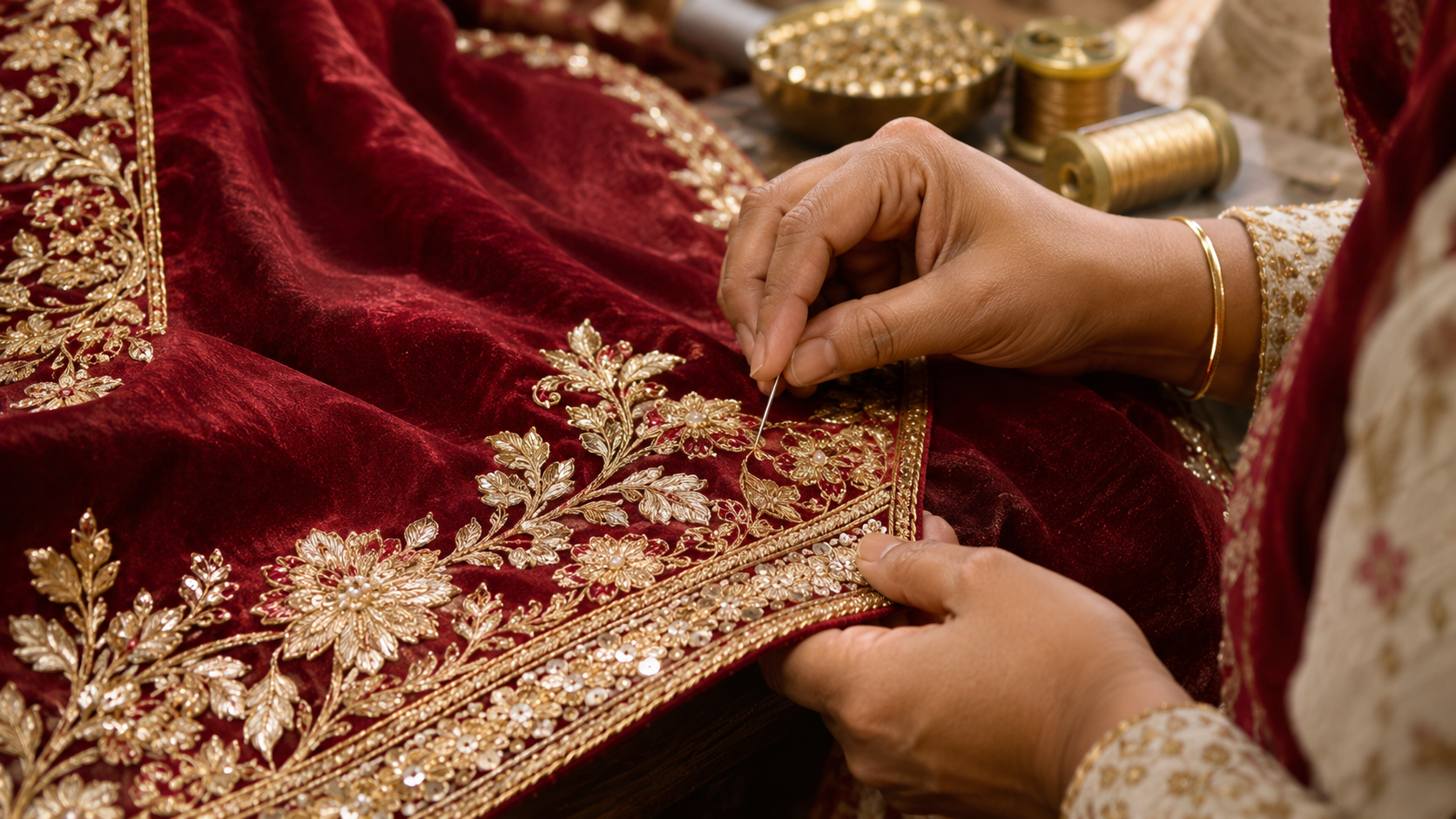
Indian bridal fashion is celebrated for techniques such as zardozi, gota patti, mirror work, zari embroidery and intricate hand embellishment.
These techniques represent valuable craftsmanship and contribute to the distinctive character of traditional wedding clothing.
Re-wearable bridal design does not require abandoning them.
Instead, designers can reconsider where and how ornamentation is applied.
Focused Embroidery
A lehenga with concentrated embroidery along the border, waist or selected panels may be easier to restyle than one with dense, equally heavy embellishment across every surface.
The visual impact comes from thoughtful placement, proportion and contrast.
Statement Blouses
Designers can create richly decorated blouses as the primary statement element.
The blouse can remain visually distinctive when worn with a simpler saree, skirt or pair of trousers.
This gives traditional embroidery a continuing role beyond the original bridal ensemble.
Detachable Embellished Elements
Decorative belts, capes, panels or accessories can be designed as removable components.
For example, an embroidered waist belt could complete a ceremonial lehenga before being used with an Anarkali or another festive outfit.
However, detachability must be integrated carefully. Heavy decorative elements require reliable attachment points, and exposed fastenings should not compromise the garment’s appearance.
The aim is to preserve craftsmanship while making the overall design more adaptable.
4. Versatile Bridal Blouses: From Wedding Choli to Statement Top
The bridal blouse offers particularly interesting opportunities for rewearability.
A conventional choli may be designed specifically to match the embroidery, neckline and proportions of a particular lehenga.
A more versatile blouse considers how those details will work with additional garments.
Fashion designers can explore:
- Structured blouses with clean necklines
- Corset-inspired tops with comfortable construction
- Sleeved blouses suitable for saree styling
- Short jackets that can be worn separately
- Peplum blouses paired with straight trousers
- Blouses with removable sleeves or decorative overlays
For example, a gold embroidered blouse originally paired with a red bridal lehenga might later complement an ivory silk saree.
A contemporary corset-style blouse could be styled with tailored trousers for an evening event, provided its structure, fit and decoration are appropriate for that setting.
The technical challenge lies in creating a garment that works across different combinations without losing its original design identity.
5. Colour Palettes and Silhouettes Designed for Longevity
Colour is one of the strongest expressions of bridal identity.
Traditional reds, maroons and deep jewel tones remain meaningful choices for many Indian brides. Re-wearable design does not require replacing these colours with neutrals.
Instead, designers can create versatility through styling, fabric combinations and adaptable garment proportions.
Neutral and Tonal Combinations
Champagne, ivory, muted gold, dusty rose and other restrained tones can be combined with contrasting pieces for future occasions.
Tonal embroidery may also make a garment easier to coordinate with different accessories.
Traditional Colours With Modern Styling
A red bridal skirt can be restyled with an understated cream blouse, a contrasting silk top or a simpler dupatta.
The original wedding jewellery can be replaced with lighter accessories to change the overall formality.
Timeless Silhouettes
Classic A-line skirts, panelled lehengas and carefully balanced flares can offer flexible styling possibilities.
Designers should consider whether the silhouette depends on heavy inner structure or can maintain its shape with less volume.
A well-proportioned garment is more likely to adapt successfully to different occasions than one constructed solely for a dramatic first appearance.
6. How to Rewear a Bridal Lehenga for Different Occasions
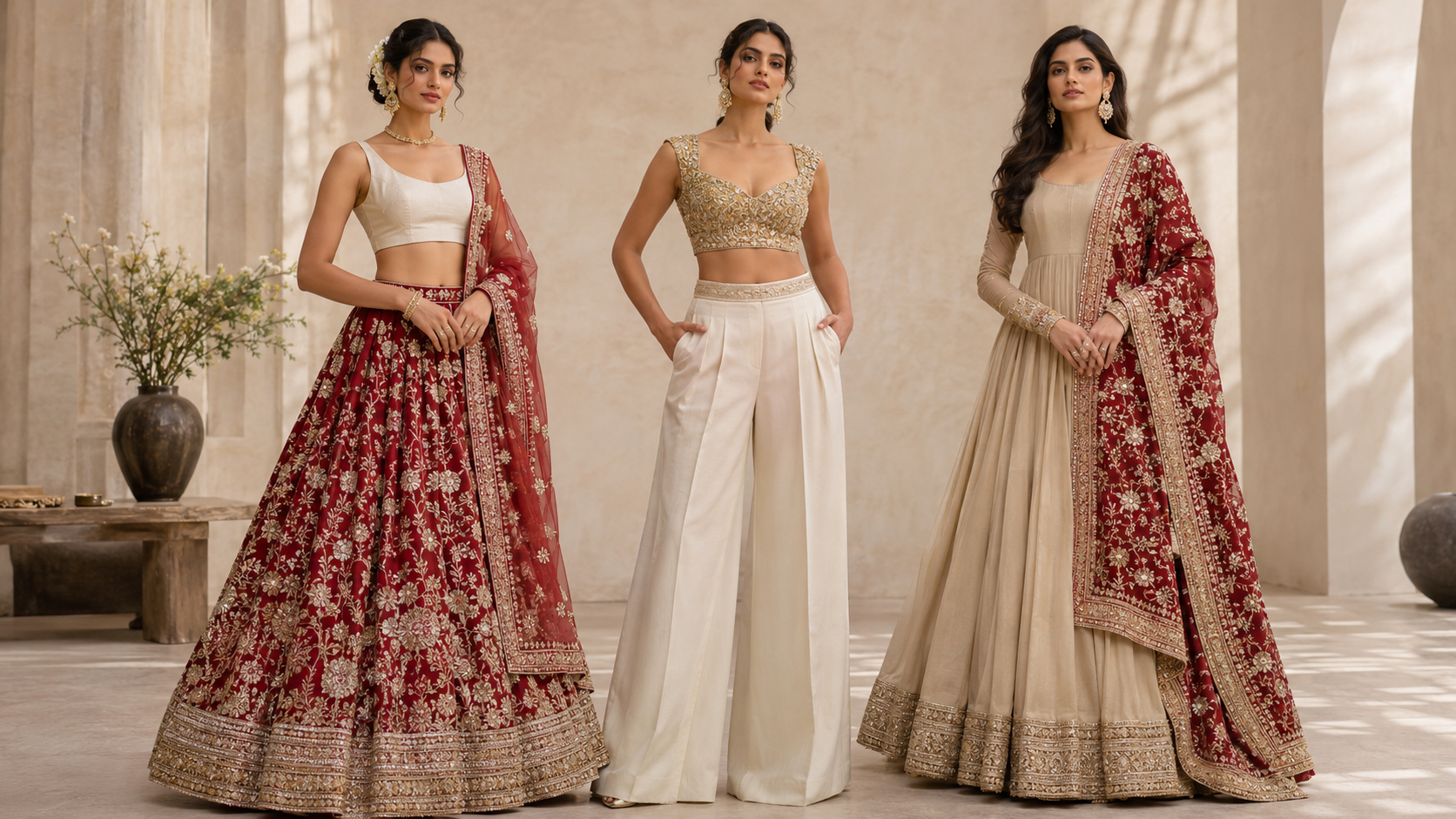
One of the most useful ways to understand re-wearable bridal design is to examine how a complete ensemble can be broken into separate looks.
Consider a hypothetical bridal outfit featuring an embroidered silk skirt, structured blouse and ornate dupatta.
Look 1: Diwali Celebration
Pair the bridal lehenga skirt with a simple silk blouse in a complementary colour.
Replace the heavy wedding dupatta with a lighter drape and choose understated jewellery.
The original skirt retains its elegance while the overall look feels more suitable for a festive gathering.
Look 2: Friend’s Wedding
Wear the original embroidered blouse with a contrasting skirt or an elegant saree.
This creates a new outfit while retaining the craftsmanship of the bridal ensemble.
Look 3: Family Function
Style the embellished dupatta over a plain Anarkali suit.
The detailed embroidery becomes the focal point of a simpler outfit.
Look 4: Reception or Evening Event
Pair a versatile bridal corset or blouse with tailored wide-leg trousers and minimal accessories.
The combination creates a contemporary occasionwear look without recreating the entire bridal ensemble.
Look 5: Anniversary Celebration
Rewear the original lehenga skirt with a different blouse, a lighter jacket or a draped stole.
Small changes in styling, jewellery and hairstyle can help the same garment feel appropriate for a new celebration.
These examples demonstrate why designers should think about future styling possibilities before the garment is constructed.
The strongest re-wearable outfits are not simply garments that can be altered later. They are designed from the beginning to offer different combinations.
7. Indian Designers Exploring Re-wearable Bridal Fashion
The growing conversation around versatile bridalwear is visible in contemporary Indian fashion collections and styling projects.
Punit Balana’s MOH Collection
In August 2026, designer Punit Balana introduced MOH, a collection developed around the idea of festive clothing with a life beyond one occasion.
Its separates include waistcoats, corsets, blouses and other versatile pieces that can be combined with different garments.
The emphasis on fluid construction and adaptable styling demonstrates how occasionwear can be planned for multiple uses at the design stage.
Mishru’s Reframed Project
Mishru’s Reframed project explores ways to restyle bridal couture after the wedding.
The project demonstrates how an embroidered bridal corset can work with denim or trousers, while a lehenga skirt can be paired with a simpler top.
This approach illustrates an important design principle: garments do not always need to be permanently altered to gain a second life.
Sometimes, changing the combination is enough.
For fashion students, these examples show how creative styling, fabric selection and garment construction can work together to extend the usefulness of traditional occasionwear.
8. Rewearability and Sustainable Bridal Fashion
Re-wearable bridal wear has an important connection to the wider discussion of responsible fashion.
Creating garments for repeated use encourages designers to think beyond the initial sale or wedding celebration.
However, sustainability requires more than simply describing an outfit as reusable.
A garment’s environmental impact depends on several factors, including material sourcing, manufacturing, embellishment, packaging, transport, care and disposal.
Rewearability can contribute to more responsible consumption when the garment is genuinely used again instead of being replaced by additional purchases.
Designing for Durability
Strong seams, reliable closures, appropriate linings and durable embellishment methods can help garments withstand repeated use.
Making Alterations Possible
Adjustable waistbands, adequate seam allowances and thoughtfully constructed blouses may make future alterations easier.
However, alterations should be planned carefully because changes to embroidered or highly structured garments can be technically difficult.
Supporting Repair and Upcycling
A damaged border, an outdated silhouette or a poorly fitting blouse does not necessarily mean the entire garment must be discarded.
Professional repair or redesign may allow valuable textiles and craftsmanship to remain in use.
Readers interested in this subject can explore LSOD’s article on upcycling in fashion and giving old clothes new life.
By combining durability, repairability and versatile styling, designers can approach sustainability as a practical design consideration rather than a marketing label.
9. The Challenges of Designing a Re-wearable Bridal Lehenga
Creating a truly re-wearable lehenga requires technical understanding.
A garment may look adaptable in a fashion illustration but behave differently when constructed and worn.
Maintaining Balance and Proportion
A detachable overskirt changes how weight is distributed around the waist.
Designers must ensure that removing the layer does not distort the base garment’s shape or fit.
Concealing Fastenings
Removable components may require hooks, buttons, zips, ties or other secure construction methods.
These should be accessible and durable without becoming uncomfortable or distracting.
Supporting Heavy Embroidery
Elaborate surface decoration can place stress on lightweight fabrics.
Appropriate reinforcement, lining and embroidery placement are important to maintaining garment quality.
Preserving Comfort
A blouse intended to work with both a lehenga and trousers must allow comfortable movement in both combinations.
Designers should conduct fitting and movement tests rather than relying only on mannequin presentation.
Managing Production Costs
Multiple detachable elements and carefully finished separates may increase pattern-development, sampling and manufacturing complexity.
Designers need to consider whether the additional versatility provides genuine value to the wearer.
The best solution is not necessarily the most complicated garment. Often, a well-designed three-piece ensemble offers greater practical versatility than a heavily engineered convertible outfit.
10. How Fashion Design Students Can Create a Re-wearable Bridal Collection
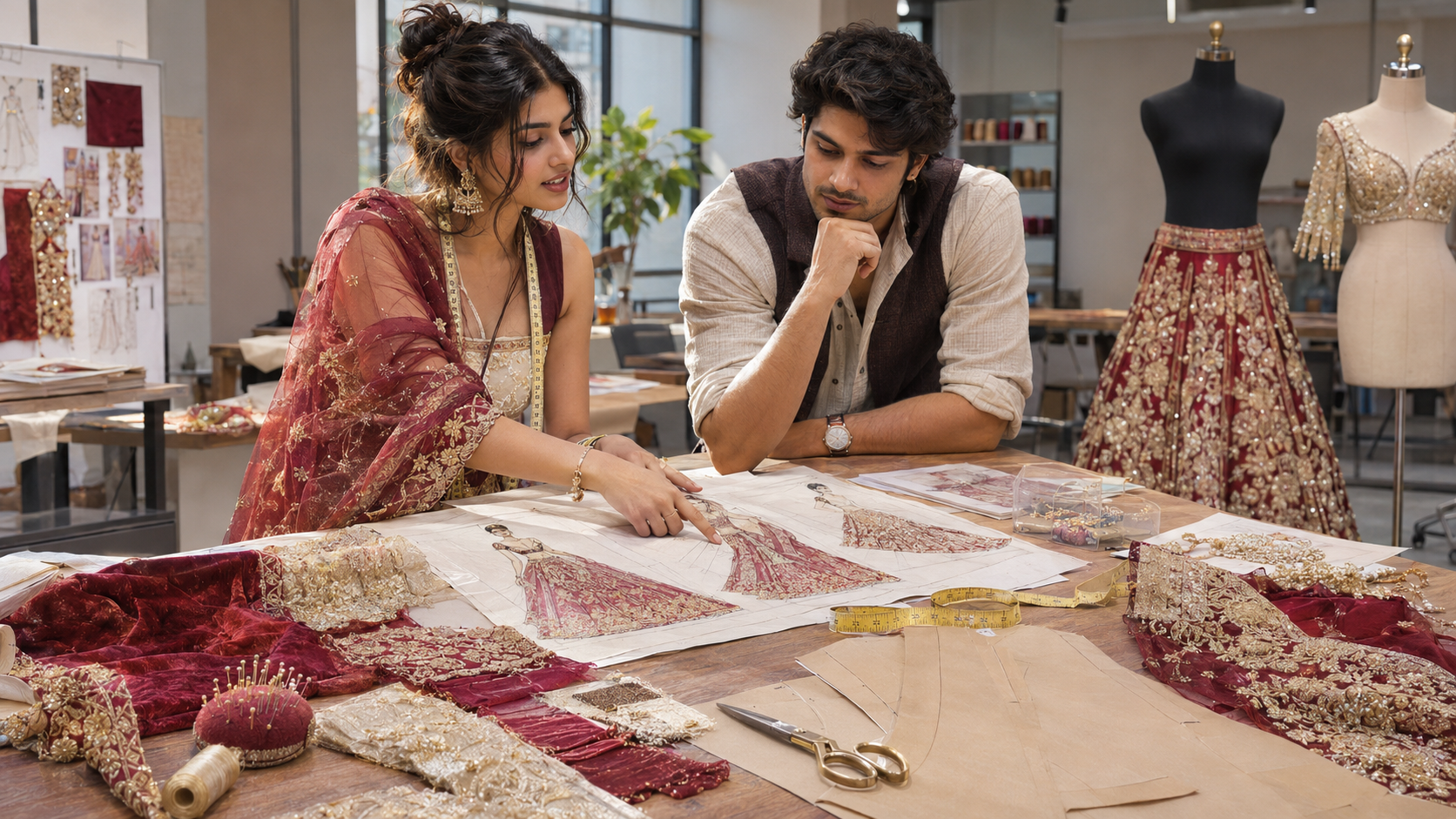
For aspiring fashion designers, re-wearable bridalwear provides a strong theme for a collection or portfolio project.
It brings together traditional craftsmanship, contemporary styling, textile research and garment engineering.
A student could develop a collection around the concept of One Bridal Ensemble, Multiple Occasions.
Step 1: Research Bridal Clothing and User Needs
Study traditional lehenga silhouettes, regional textiles, embroidery techniques and contemporary wedding styling.
Speak with potential wearers about comfort, garment weight, maintenance and the occasions for which they might reuse bridal clothing.
Step 2: Develop a Design Concept
Create mood boards exploring colours, textures, traditional craft techniques and adaptable silhouettes.
Define which components of the garment will be interchangeable or detachable.
Step 3: Experiment With Fabric and Construction
Test how different fabrics respond to pleating, embroidery, layering and removable fastenings.
Develop sample pieces to understand how structural changes affect the garment’s fit and appearance.
Step 4: Create and Test a Prototype
Construct a prototype of the selected ensemble.
Evaluate comfort, movement, closure security, durability and the appearance of each individual component.
Test how the outfit looks when the skirt, blouse and outer layers are styled separately.
Step 5: Build a Portfolio Presentation
A strong presentation could include:
- Inspiration and research boards
- Technical fashion illustrations
- Fabric and embroidery samples
- Pattern-development work
- Garment construction details
- Photographs of the complete bridal look
- Three or more alternative styling combinations
- Fit-testing observations and improvements
This process helps demonstrate that successful fashion design involves both visual creativity and practical problem-solving.
Students interested in understanding garment construction, textiles, pattern development and collection design can explore the Diploma in Fashion Design at Leher School of Design.
Developing adaptable clothing concepts can be a valuable way to apply these foundational skills to contemporary Indian fashion.
11. The Future of Bridal Fashion: From Single-Occasion to Long-Term Wardrobe Design
Bridal fashion will continue to celebrate elaborate craftsmanship, regional traditions and highly personalised clothing.
Re-wearable design does not suggest that every bride must choose a minimal outfit or abandon ceremonial grandeur.
Instead, it introduces another design priority: longevity.
Future bridal collections may explore increasingly flexible separates, adjustable fits, replaceable decorative components and silhouettes that adapt to different occasions.
Made-to-measure design and digital pattern-making tools may also support more personalised approaches to fit and garment development.
At the same time, skilled artisans and traditional embroidery techniques can remain central to Indian bridalwear.
The opportunity lies in combining heritage craftsmanship with contemporary garment engineering.
For designers, this means thinking beyond the first appearance of a garment and considering its complete relationship with the wearer.
Will it remain comfortable? Can it be repaired? Can its components be styled independently? Will its construction allow future adjustments?
These questions may become increasingly relevant as customers reconsider the long-term value of occasionwear.
Conclusion
Re-wearable bridal wear reflects an evolving approach to Indian wedding fashion, where beauty, craftsmanship and practicality can exist together.
Through modular silhouettes, detachable layers, versatile blouses, thoughtful fabric selection and adaptable styling, designers can create bridal lehengas with possibilities far beyond the wedding ceremony.
The goal is not to make every bridal outfit casual or understated. It is to ensure that the garment’s beauty and craftsmanship can continue to be appreciated.
For aspiring fashion designers, re-wearable bridalwear offers a meaningful opportunity to explore innovation while respecting Indian textile traditions.
A thoughtfully designed bridal lehenga can become more than an outfit worn for one special occasion. It can become a treasured part of a wardrobe, carrying its original memories into new celebrations for years to come.