UI/UX Design vs Graphic Design: Which Career Should Students Choose in 2026?
Design is one of the most exciting career fields for creative students. Today, design is everywhere — in websites, mobile apps, social media posts, advertisements, packaging, brand logos, digital products, posters, and online shopping experiences. But when students start exploring design courses, they often get confused between UI/UX Design and Graphic Design.
Both fields are creative, both require visual thinking, and both offer strong career opportunities. However, they are not the same.
Graphic design focuses on visual communication. It is about creating attractive and meaningful visuals for branding, advertising, print, digital media, packaging, and marketing.
UI/UX design focuses on digital product experience. It is about designing websites, mobile apps, dashboards, software interfaces, and digital journeys that are easy, useful, and enjoyable for users.
In 2026, both UI/UX design and graphic design are important career options. Brands need strong visuals to attract people, and digital businesses need smooth user experiences to retain customers. This is why students should understand the difference between both fields before choosing a design career.
What Is UI/UX Design?

UI/UX design is the process of designing digital products such as websites, mobile apps, web applications, software dashboards, and online platforms.
UI means User Interface. It focuses on how a digital product looks. This includes buttons, icons, colors, typography, spacing, screens, layouts, menus, forms, and visual elements.
UX means User Experience. It focuses on how a digital product works and how users feel while using it. UX design includes user research, problem-solving, user flow, navigation, wireframing, testing, and improving the overall experience.
For example, when someone opens a food delivery app, UI design decides how the app screens look, where the buttons are placed, what colors are used, and how the menu appears. UX design decides whether the user can easily search restaurants, add items to cart, apply coupons, make payment, and track the order without confusion.
UI/UX design is a mix of creativity, psychology, technology, research, and problem-solving.
What Does a UI/UX Designer Do?
A UI/UX designer works on digital products and makes them user-friendly. Their job is not only to make screens beautiful but also to make them easy to use.
A UI/UX designer may work on websites, mobile apps, landing pages, eCommerce platforms, learning apps, fintech apps, healthcare apps, travel apps, SaaS dashboards, and business software.
Their work usually includes understanding user problems, creating user personas, planning user journeys, making wireframes, designing app or website screens, creating prototypes, testing designs, and improving the final product.
A UI/UX designer often works with product managers, developers, business teams, content writers, and marketing teams.
The main goal of UI/UX design is to create a digital experience that is useful, simple, attractive, and smooth.
What Is Graphic Design?

Graphic design is the art of creating visual content to communicate a message. It is used in branding, advertising, social media, print media, packaging, posters, brochures, magazines, websites, and digital campaigns.
A graphic designer uses images, typography, colors, shapes, layouts, and composition to create designs that attract attention and communicate clearly.
For example, when a brand launches a new product, a graphic designer may create the product logo, packaging design, social media creatives, posters, banners, brochures, advertisements, and brand identity visuals.
Graphic design is important because people often notice visuals before reading text. A strong design can make a brand look professional, memorable, and trustworthy.
Graphic design is ideal for students who enjoy drawing, visual composition, branding, color combinations, typography, and creative communication.
What Does a Graphic Designer Do?
A graphic designer creates visual designs for communication and branding. Their work can be used online as well as offline.
A graphic designer may create logos, posters, social media posts, website banners, flyers, brochures, packaging, business cards, advertisements, magazine layouts, brand guidelines, presentation designs, and digital campaign creatives.
They work with brands, agencies, startups, media companies, fashion labels, interior brands, educational institutes, events, and corporate companies.
The main goal of graphic design is to communicate a message visually in a clear, attractive, and memorable way.
Graphic designers often work with marketers, business owners, content teams, photographers, printers, and creative directors.
UI/UX Design vs Graphic Design: Main Difference
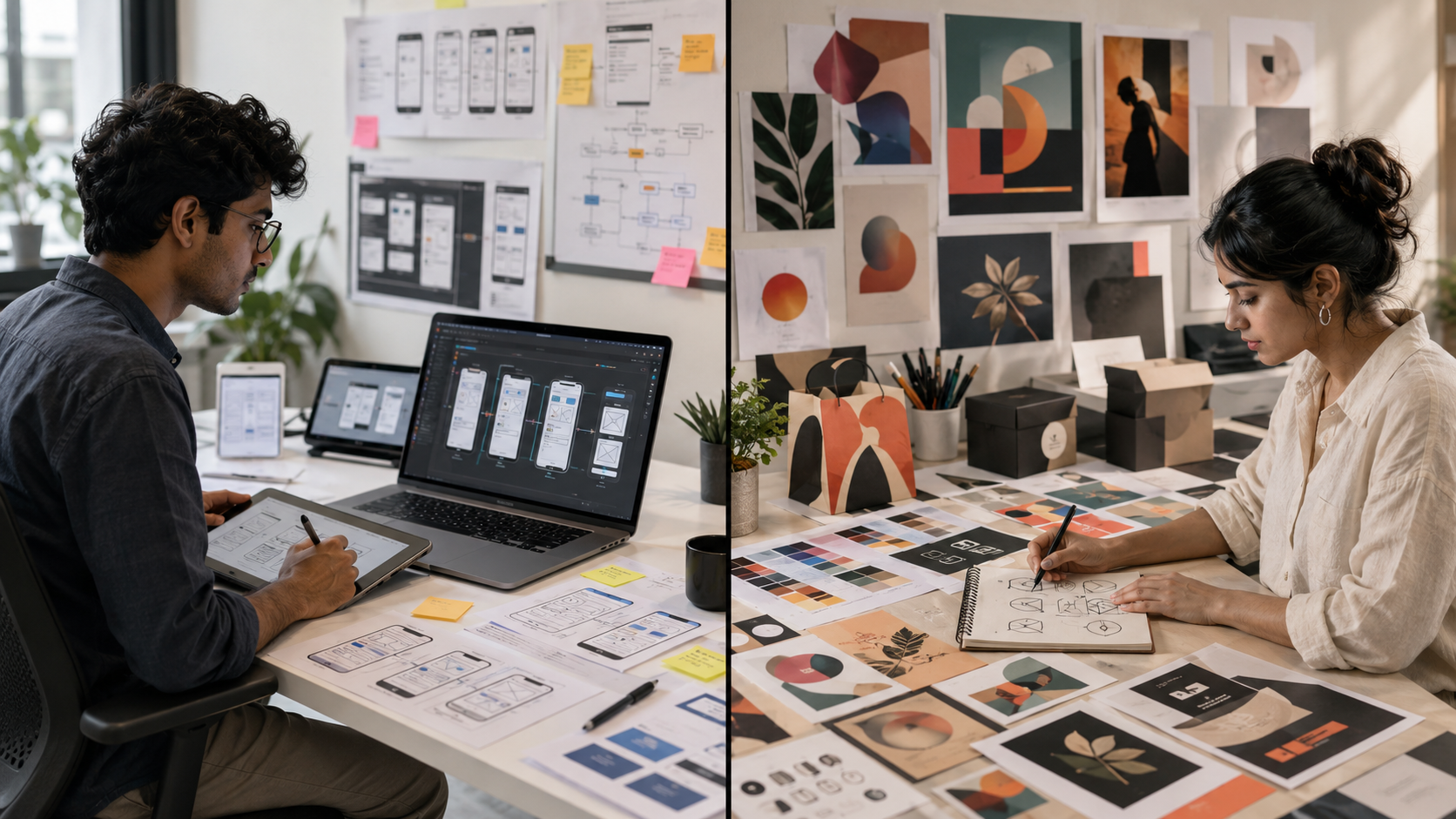
UI/UX design and graphic design both use visual design skills, but their purpose is different.
Graphic design is mainly about communication and visual identity. It helps brands communicate messages through visuals.
UI/UX design is mainly about interaction and user experience. It helps users complete tasks easily on digital platforms.
A simple way to understand the difference is this:
Graphic design answers the question: How should this message look visually?
UI/UX design answers the question: How should this digital product work for the user?
Graphic designers create visuals that people see. UI/UX designers create digital experiences that people use.
Both fields are valuable, but they require different thinking styles and skill sets.
Comparison Between UI/UX Design and Graphic Design
| Point | UI/UX Design | Graphic Design |
| Main Focus | Digital product experience | Visual communication |
| Core Work | Websites, apps, dashboards, user flows, prototypes | Logos, posters, branding, social media, packaging |
| Best For Students Who Like | Problem-solving, apps, websites, user psychology | Visual art, branding, colors, layouts |
| Main Output | Interactive digital screens and prototypes | Static or motion-based visual designs |
| Key Skills | User research, wireframing, prototyping, usability, interface design | Typography, composition, branding, color theory, layout design |
| Common Tools | Figma, Adobe XD, Sketch, Miro, FigJam | Photoshop, Illustrator, InDesign, Canva, CorelDRAW |
| Career Roles | UI Designer, UX Designer, Product Designer, Web Designer | Graphic Designer, Brand Designer, Visual Designer, Packaging Designer |
| Success Measured By | Usability, user satisfaction, task completion, conversions | Visual impact, brand recall, engagement, communication clarity |
Skills Required for UI/UX Design
UI/UX design requires creative thinking as well as logical problem-solving. A UI/UX designer should understand users, business goals, and digital behavior.
Important skills required for UI/UX design include user research, wireframing, prototyping, information architecture, user journey mapping, interface design, visual hierarchy, typography, color theory, responsive design, usability testing, and basic understanding of development.
A UI/UX designer should also have good communication skills because they need to explain design decisions to developers, clients, and product teams.
Students who enjoy mobile apps, websites, digital products, technology, and problem-solving may find UI/UX design interesting.
Skills Required for Graphic Design
Graphic design requires strong visual sense and creative communication. A graphic designer should understand how to use colors, fonts, images, shapes, and layout to create attractive designs.
Important skills required for graphic design include typography, color theory, composition, branding, layout design, image editing, illustration basics, print design knowledge, social media design, packaging design, and creative concept development.
A graphic designer should also understand brand personality. For example, a luxury brand needs a different visual style than a youth fashion brand or a children’s product brand.
Students who enjoy posters, logos, branding, art, colors, photography, and visual storytelling may find graphic design more suitable.
Tools Used in UI/UX Design and Graphic Design

Both UI/UX designers and graphic designers use digital tools, but the tools are often different.
UI/UX designers commonly use Figma, Adobe XD, Sketch, Miro, FigJam, InVision, and prototyping tools. Figma is one of the most popular tools for UI/UX because it allows designers to create wireframes, interfaces, prototypes, and collaborative design systems.
Graphic designers commonly use Adobe Photoshop, Adobe Illustrator, Adobe InDesign, Canva, CorelDRAW, Procreate, and other visual design tools. Photoshop is useful for image editing and social media creatives, while Illustrator is widely used for logos, vector graphics, icons, and branding.
However, tools are only one part of design. A good designer should first understand design principles, creativity, layout, user needs, and communication. Tools can help execute ideas, but strong thinking creates strong design.
Career Opportunities in UI/UX Design
UI/UX design has become an important career option because businesses are moving online. Every digital platform needs a good user experience, whether it is an eCommerce website, mobile app, education platform, banking app, healthcare platform, travel portal, or business dashboard.
Popular career options in UI/UX design include UI Designer, UX Designer, Product Designer, Web Designer, App Designer, UX Researcher, Interaction Designer, Information Architect, Design System Designer, and Usability Analyst.
A UI designer mainly focuses on the visual design of screens. A UX designer focuses more on research, user journey, and experience. A product designer often works on both user experience and business goals.
UI/UX designers can work in IT companies, startups, design agencies, product companies, eCommerce platforms, fintech companies, education technology companies, and freelance projects.
Career Opportunities in Graphic Design
Graphic design also offers many career options because every business needs visual communication. From small businesses to large brands, everyone needs design for promotion, identity, and communication.
Popular career options in graphic design include Graphic Designer, Brand Designer, Visual Designer, Social Media Designer, Packaging Designer, Advertising Designer, Print Designer, Motion Graphic Designer, Illustrator, and Creative Designer.
Graphic designers can work in advertising agencies, digital marketing agencies, media houses, publishing companies, fashion brands, interior brands, educational institutes, event companies, startups, and corporate marketing teams.
They can also work as freelancers and create designs for different clients such as logos, posters, social media creatives, brochures, packaging, and brand identity kits.
Which Career Has Better Scope in 2026?
Both UI/UX design and graphic design have good scope in 2026, but the type of opportunity is different.
UI/UX design has strong demand because digital products are increasing. Businesses want websites and apps that are easy to use, fast, attractive, and conversion-focused. This creates opportunities for students who understand user behavior, interface design, and digital product thinking.
Graphic design also has strong demand because brands need continuous visual content for social media, advertising, packaging, branding, events, and marketing campaigns. With more businesses promoting themselves online, graphic designers are needed for daily creative communication.
UI/UX design may be more suitable for students who want to work in digital product companies, IT companies, startups, and app-based businesses.
Graphic design may be more suitable for students who want to work in branding, advertising, social media, print, packaging, visual identity, and creative communication.
The best career depends on the student’s interest, skills, and personality.
Which Is Better for Creative Students?
There is no single better option. UI/UX design and graphic design both offer creative careers.
Choose UI/UX design if you like apps, websites, digital products, problem-solving, user psychology, wireframes, prototypes, and technology.
Choose graphic design if you like posters, logos, colors, branding, visual layouts, social media creatives, packaging, and advertising.
If you like both, you can start with graphic design basics and then move toward UI/UX design. Many UI/UX designers begin with graphic design because visual design skills are useful in interface design.
Similarly, many graphic designers learn UI/UX later to expand their career opportunities in digital design.
Can Graphic Designers Become UI/UX Designers?
Yes, graphic designers can become UI/UX designers. In fact, many UI/UX designers started their careers as graphic designers.
Graphic designers already understand color, typography, layout, spacing, and visual hierarchy. These skills are useful in UI design.
However, to become a UI/UX designer, a graphic designer needs to learn additional skills such as user research, wireframing, prototyping, usability testing, user flows, design systems, and digital product thinking.
The shift from graphic design to UI/UX design is possible with the right training and practice.
Can UI/UX Designers Do Graphic Design?
UI/UX designers can do some graphic design work, especially when it is related to digital interfaces. They often work with icons, illustrations, banners, visual hierarchy, and layout.
However, graphic design is a separate field with its own depth. A professional graphic designer may have stronger skills in branding, print design, packaging, advertising layouts, and visual campaigns.
A UI/UX designer who also understands graphic design can create more polished and visually strong digital products.
Importance of Portfolio in Both Careers
A portfolio is very important for both UI/UX design and graphic design careers.
For UI/UX design, a portfolio should show app screens, website layouts, wireframes, user flows, prototypes, case studies, and design process. It should explain the problem, solution, user journey, and final design.
For graphic design, a portfolio should show logos, posters, social media creatives, packaging, branding projects, typography work, brochures, and visual campaigns.
Students should not only show final designs. They should also show their thought process, inspiration, rough ideas, and improvement steps.
A strong portfolio can help students get admission, internships, freelance projects, and job opportunities.
Role of AI in UI/UX and Graphic Design
AI is changing the design industry, but it is not removing the need for designers. Instead, it is changing how designers work.
AI tools can help generate ideas, create design variations, improve images, suggest layouts, write content, and speed up repetitive tasks. But human designers are still needed for strategy, creativity, user understanding, brand thinking, emotional connection, and final decision-making.
In UI/UX design, AI can help with user research summaries, wireframe ideas, content suggestions, and prototype support. But designers still need to understand real users, business goals, and usability.
In graphic design, AI can help create visual concepts, image references, layout options, and creative inspiration. But designers still need to understand brand identity, composition, typography, printing, and communication.
Students should learn AI tools, but they should not depend only on AI. Strong design fundamentals are still important.
What Should Students Learn First?
Students who are completely new to design should start with basic design principles. These include color theory, typography, layout, spacing, visual hierarchy, composition, creativity, and presentation.
After learning the basics, students can choose their specialization.
If they are interested in digital products, apps, websites, and user experience, they can move toward UI/UX design.
If they are interested in branding, posters, packaging, social media, and advertising, they can move toward graphic design.
Students can also learn both fields step by step. A combination of graphic design and UI/UX design can create better career flexibility.
UI/UX Design Course vs Graphic Design Course
A UI/UX design course usually teaches user research, wireframing, prototyping, app design, website design, user flow, usability testing, design systems, responsive design, and portfolio case studies.
A graphic design course usually teaches typography, color theory, branding, logo design, poster design, social media creatives, packaging design, image editing, print design, and visual communication.
Both courses are useful, but students should choose based on their career interest.
A good design course should include practical projects, software training, portfolio development, mentor feedback, and real-world assignments.
Freelancing Opportunities
Both UI/UX design and graphic design offer freelancing opportunities.
UI/UX designers can work on website design, mobile app design, landing page design, dashboard design, UX audit, prototype creation, and startup product design.
Graphic designers can work on logo design, social media posts, brochures, posters, packaging, brand identity, business cards, presentations, and advertising creatives.
Freelancing is a good option for students who want to build experience, earn while learning, and work with different clients.
However, freelancing requires discipline, communication skills, time management, and a strong portfolio.
Future of UI/UX Design and Graphic Design
The future of UI/UX design and graphic design is connected to digital transformation, branding, AI tools, online businesses, and customer experience.
UI/UX design will continue to grow because users expect simple, fast, and smooth digital experiences. Businesses will need designers who can make digital platforms more useful and conversion-friendly.
Graphic design will also continue to be important because brands need strong visual identity, social media content, packaging, advertisements, and creative communication.
The designers who grow the most will be those who understand both creativity and strategy. Students should focus on design fundamentals, digital tools, communication skills, portfolio quality, and continuous learning.
How to Choose the Right Design Career
Before choosing between UI/UX design and graphic design, students should ask themselves a few simple questions.
Do you enjoy solving user problems? Do you like apps and websites? Do you want to design digital products? Do you like research and user behavior? If yes, UI/UX design may be a better choice.
Do you enjoy creating posters, logos, layouts, color combinations, brand visuals, and social media designs? Do you like visual storytelling and advertising? If yes, graphic design may be a better choice.
Students should also explore both fields before making a final decision. Trying small projects can help a lot. For example, design a mobile app screen as a UI/UX project and design a poster or logo as a graphic design project. The project you enjoy more can guide your career direction.
Conclusion
UI/UX design and graphic design are both strong career options for creative students in 2026. Graphic design focuses on visual communication, branding, advertising, posters, packaging, and marketing creatives. UI/UX design focuses on digital product experience, websites, mobile apps, wireframes, prototypes, and user journeys.
Graphic design is best for students who enjoy visual storytelling, colors, typography, branding, layouts, and creative communication. UI/UX design is best for students who enjoy digital products, problem-solving, user psychology, app design, website design, and technology.
Both fields require creativity, practice, software knowledge, and a strong portfolio. Students should choose the field that matches their interest and working style.
In the modern design industry, the best designers are those who keep learning and adapting. Whether students choose UI/UX design, graphic design, or a combination of both, they can build a successful creative career with the right skills, practical training, and portfolio.